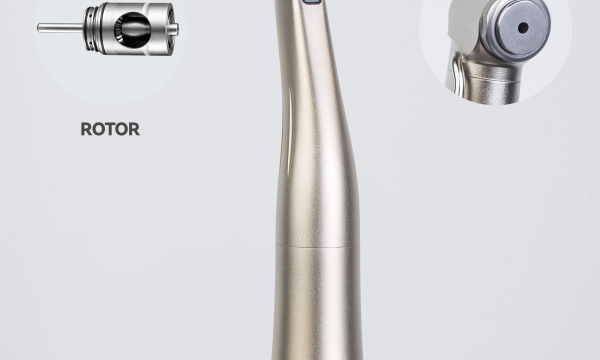
A cupboard containing several handpieces can still leave a clinic short of the model it needs. Some instruments may be in processing, awaiting a part, assigned to another room or incompatible with the available coupling. A purchasing plan based only on total instrument count hides those differences.
Dental handpiece rotation stock should be planned from the clinic’s actual equipment groups, availability records and approved workflow. This guide helps managers and procurement teams organize that evidence. It does not prescribe a clinical processing method, a minimum number per chair or a universal professional pack.
Define a usable stock group before counting instruments
Group instruments by the model and configuration that the clinic’s qualified team has approved for the intended equipment. Record the connection or coupling, relevant accessories and current instruction reference. A high-speed turbine, a low-speed attachment and an implant contra-angle should not be counted as interchangeable simply because all are called handpieces.
Use the handpiece product range to prepare the model list. For replacement high-speed instruments, the handpiece interface comparison guide provides a separate review of connections, supplied parts and operating documents. Inventory planning starts after that compatibility question is resolved.

Separate owned quantity from available quantity
Create a status record for each instrument or traceable set using identifiers already supported by the clinic’s system. Do not engrave or alter equipment merely to follow this article; any identification method must be suitable for the device and the clinic’s approved process. Record its location, model group and current status.
| Inventory status | What the record should show | Purchasing implication |
|---|---|---|
| Ready and available | Applicable release completed by the responsible team | Can contribute to current availability within its approved group |
| In use or allocated | Current location and assignment | Must not be counted again as a spare elsewhere |
| In processing | Tracked within the approved processing workflow | Not available simply because the instrument is physically nearby |
| Held or under review | Reason, responsible person and next decision | Exclude from ready stock until appropriately released |
| In repair or retired | Service reference or recorded disposition | Do not include a promised repair as an available instrument |
Reconcile the statuses at a consistent review point. A single instrument must not appear in two locations or be counted both as ready stock and repair reserve. Keep uncertain quantities visible rather than filling a gap with an assumed return date.
Observe turnaround without changing the processing rules
Ask the responsible clinic team to record when a stock group leaves availability and when it is appropriately released again. The purpose is to understand actual turnaround and bottlenecks, not to set a faster clinical process. Note delays caused by transport, missing accessories, equipment availability or unresolved release checks.
The CDC’s handpiece guidance calls for reprocessing between patients under the manufacturer’s instructions. Purchasing targets must not shorten or bypass required steps. The clinic’s qualified infection-prevention team controls the process and release criteria; this stock worksheet does not establish that an instrument is safe to use.
For an equipment purchase, keep the separate handpiece and autoclave compatibility review linked to the model group. An inventory shortage does not establish that an alternative cycle, lubricant or instrument is acceptable.
Review demand by compatible group and time window
Use the clinic’s own allocation history to identify when each group is needed simultaneously. Total appointments or total chairs alone may not describe demand for a particular configuration. Keep the analysis at equipment level; patient names or clinical case details are not needed in a supplier stock enquiry.
Compare availability and demand over the same period. A weekly total can look sufficient while a particular session has no ready instrument of the required group. Record the shortfall, its timing and the reason before deciding that every shortfall requires another purchase.
A missing compatible coupling or delayed transport may be the constraint rather than the handpiece count. The maintenance-station planning guide addresses equipment placement and workflow coordination. Resolve those practical gaps alongside the quantity decision.

Keep repair reserve distinct from daily rotation stock
Rotation stock covers instruments moving through the clinic’s normal workflow. A repair reserve addresses a different uncertainty: equipment may remain unavailable beyond that usual turnaround. Review actual service history, parts-identification delays and confirmed supplier information rather than adopting a fixed percentage.
Record instruments sent for service, expected review dates, confirmed findings and unresolved questions. If a repair return is uncertain, keep it outside the ready quantity. When a loan or replacement is offered, the qualified team still needs to approve the exact model, configuration and applicable instructions.
Decide who can authorize a purchase, transfer or temporary substitution. A record of that decision helps prevent duplicate orders when one person sees a shortage while another has already arranged a replacement. Commercial response times and warranty coverage must be confirmed separately.
Convert the identified gap into a controlled order
Once the clinic has an evidence-based quantity decision, specify the model group, required quantity and included accessories. Distinguish additional rotation units from replacements for retired stock. Otherwise the equipment register can grow on paper while the intended reserve remains unchanged.
Use the handpiece bulk-order guide for configuration, packaging and receiving control. Do not assume that a pack contains a full year’s supply, universal couplings or service parts unless the quotation explicitly defines them.
After receipt and the clinic’s required acceptance steps, update the register and remove retired assets from the active count. Review whether the purchase addressed the recorded shortage. Keep that conclusion separate from claims about treatment speed, patient comfort or clinical outcomes.
Recheck the register when the equipment mix changes
A newly installed coupling, a different handpiece revision or an instrument transferred between rooms can change which stock group is usable. Ask the responsible team to review that change before merging quantities. Keep the old identifier and disposition history so an instrument removed from one room does not disappear from the service record.
For recurring reviews, use the same definitions of ready, allocated, processing and repair status. Changing the definitions between counts can create an apparent stock improvement without adding usable equipment or resolving the original bottleneck.
Frequently asked questions
How many handpieces should a clinic buy per chair?
This guide establishes no universal ratio. Review compatible model groups, simultaneous allocation, actual processing turnaround and repair unavailability with the responsible clinic team before setting a quantity.
Can all spare handpieces be placed in one interchangeable pool?
No equivalence should be assumed. Keep approved model, coupling, accessory and instruction requirements attached to each group, and resolve substitution questions before counting an instrument as available.
Does lubrication make a used handpiece ready again?
No. Maintenance is not a substitute for the complete manufacturer-directed processing and release workflow. The clinic’s qualified personnel should determine the applicable steps and readiness status.
What should be measured after adding reserve stock?
Review model-specific availability, recorded shortages, instruments held for review and repair status. Do not convert an inventory improvement into an unsupported claim about clinical performance or revenue.
Scope: This is procurement and inventory guidance, not a reprocessing protocol, clinical recommendation or product approval. Confirm specifications with the supplier and processing requirements with qualified professionals.
RIXI Medical is a dental equipment manufacturer and supplier in Foshan, China. Request model and coupling information for a stock review with your approved instrument groups and proposed order quantities.
Need Dental Equipment Pricing or Configuration Details?
Contact RIXI Medical for model comparison, distributor pricing, packaging information, OEM/ODM requirements and after-sales support.
Request Product Information