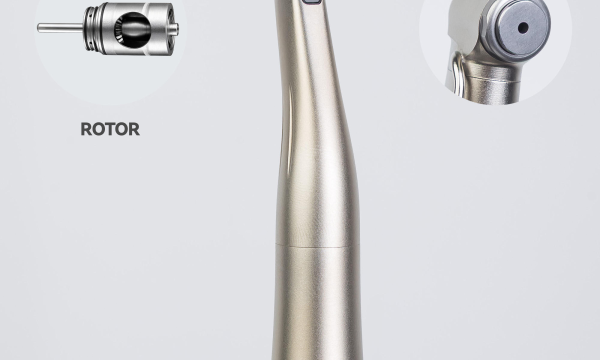
Two high-speed handpieces can look similar in a catalog yet require different couplings, air and water settings, spare parts, and service routines. For a clinic replacing a failed instrument, compatibility comes first. For a distributor building a repeatable range, the question is whether each model can be specified, supported, and reordered without ambiguity. This guide sets out a practical comparison process for both buyers.
RIXI Medical is a dental equipment manufacturer and supplier based in Foshan, China. The checks below reflect a supplier’s view of product configuration and order handover. They are general procurement guidance; ask for the current specification sheet and instructions for the exact model under consideration.
Start with the equipment already in the operatory
Before comparing advertised speed or bearing material, record the existing hose connection, coupling, drive air arrangement, water supply, and available light connection. A handpiece described simply as “high speed” is not necessarily interchangeable with another unit. Ask the supplier to identify the exact connector and compatible coupling by part number, with photographs or a drawing of the mating interface. If an adapter is proposed, request the full assembled configuration rather than assuming an adapter solves every air, water, and light mismatch.
For a multi-chair order, make an equipment schedule showing chair or delivery-unit model, connection type, intended handpiece variant, coupling, and spare parts. The dental handpiece range is a useful starting point for reviewing the available product family; the schedule is what prevents a mixed order from arriving with the wrong connections.

Compare operating characteristics in the same context
A free-running speed figure alone is a weak basis for selection. Buyers should ask how the supplier measures it, at which inlet pressure, and whether the figure refers to a specific model and coupling. Ask for the recommended operating range in the model manual, then have a qualified technician confirm that the chair and supply meet the instructions. Do not transfer a number from one handpiece family to another.
Head size and shape affect physical access, while the balance and grip affect how the instrument feels in use. The relevant dimensions belong on a drawing, preferably with the head, neck, overall length, and weight stated for the exact variant. If possible, evaluate a sample with the intended coupling and typical grip. A photograph taken from a flattering angle cannot establish clearance or balance.
Spray arrangements and lighting also deserve separate checks. Request photographs of the spray ports and a description of the light source, coupling requirements, and replaceable parts. “LED” may refer to a light in the coupling or a different configuration; verify what is included in the quote. Ask how water flow and spray are checked during acceptance, following the supplier’s manual and the clinic’s own protocols.
A comparison sheet that avoids mixed specifications
Use the same fields for every quoted variant. A blank field is a question to resolve before purchase, not a reason to fill it from a similar model’s brochure.
| Item to compare | Evidence to request | Why it matters to the buyer |
|---|---|---|
| Connection and coupling | Interface drawing, part numbers, included components | Prevents an incompatible delivery-unit order |
| Operating range | Current model manual and test conditions | Allows a like-for-like technical review |
| Head and grip | Dimensions, weight, sample evaluation where practical | Clarifies access and handling preferences |
| Spray and illumination | Port images, light source and coupling description | Defines what the quoted configuration actually includes |
| Bur retention and service parts | Chuck instructions, spare-part list, service process | Supports safe handover and future repairs |
| Reprocessing and support | Model instructions, warranty terms, local service route | Shows what the owner must arrange after delivery |
Bearings, chucks, and maintainability
Bearing descriptions such as steel, ceramic, or hybrid are useful only alongside a model-specific bill of materials or specification. They do not by themselves prove a particular lifespan, noise level, or repair interval. Ask whether a cartridge or bearing assembly is replaceable, which tools or service provider are required, and how the buyer obtains the correct parts. If a supplier offers several grades, request a written difference sheet that separates verified components from marketing names.
For the chuck, confirm the intended bur shank and the manufacturer’s inspection and replacement instructions. A push-button description does not prove retention performance for every bur. Ask how the supplier checks the assembly before shipment and what information the receiving team should record if a sample fails inspection. Clinics should follow the handpiece and bur manufacturers’ instructions and their own qualified staff’s protocols.
Plan the service handover before placing a repeat order
Distributors need more than a carton of instruments. Agree on model codes, coupling codes, serial or lot traceability, spare cartridges or other approved parts, user instructions, and the escalation route for defects. Ask whether the quoted warranty covers the handpiece body, bearings, chuck, and coupling on the same terms; obtain the exclusions and claim process in writing. Avoid assuming any standard warranty duration.
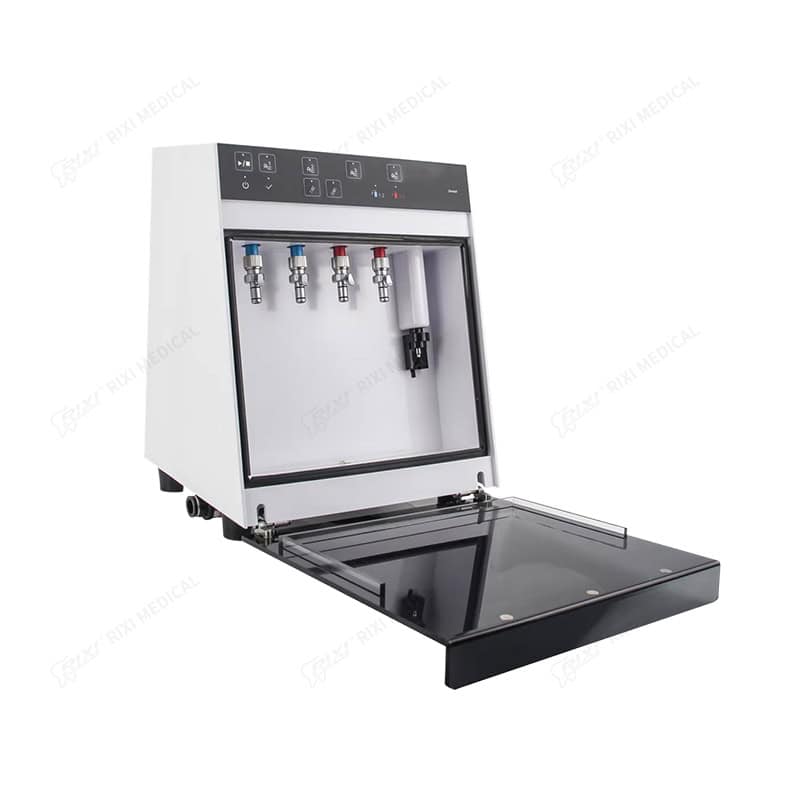
For clinics, the handover should identify who verifies installation, how users receive the manufacturer’s cleaning, lubrication, and sterilization instructions, and where to find replacement parts. Do not apply a universal temperature, cycle, oil quantity, or servicing interval to every model. The handpiece oiling machine buyer guide addresses equipment choices for a maintenance station; the oiling machine product page shows one available equipment option. Confirm compatibility with the specific handpiece instructions before adding it to a package.
What to put in a supplier request
Send the planned quantity by model, existing chair and coupling details, intended market, and whether the order is for direct clinic use or distribution. Ask for a current specification sheet, connection drawing, included-components list, instructions for use and reprocessing, spare-part list, packaging details, and written warranty and service terms. Requirements for documentation and market access vary by jurisdiction; have the appropriate local professional review them rather than relying on a generic catalog claim.
For a first order, request a representative sample and a documented acceptance checklist before scaling the same configuration. Record the model, coupling, visible finish, supplied accessories, connection fit, and the result of checks performed under the manufacturer’s instructions. This creates a reference for repeat orders and service discussions without inventing a performance benchmark. RIXI’s technical support page provides a route to request product documentation or clarify a handover item.
Frequently asked questions
Is the highest advertised RPM the best choice?
No single speed figure settles a purchase. Compare each model under its stated conditions and check connection, head dimensions, spray, serviceability, and the manual before selecting a configuration.
Can one coupling serve every high-speed handpiece?
Do not assume so. Request the interface and part numbers for the exact handpiece, coupling, and delivery unit, then confirm the assembled set with the supplier.
Does a ceramic bearing guarantee longer life?
No. Bearing material alone cannot establish service life. Request the actual component specification, maintenance instructions, replacement process, and warranty terms for the model.
What should a distributor request with the first shipment?
Ask for a model and accessory manifest, instructions, traceability information, approved spare parts, service escalation contact, and written warranty procedure matched to the quoted variants.
Scope note: This is procurement guidance, not a model specification or clinical protocol. Confirm technical values and reprocessing instructions in the current manufacturer documents and consult locally qualified professionals for installation and market requirements.
For a model-specific comparison, request specifications and connection drawings with your delivery-unit details and intended order configuration.
Need Dental Equipment Pricing or Configuration Details?
Contact RIXI Medical for model comparison, distributor pricing, packaging information, OEM/ODM requirements and after-sales support.
Request Product Information