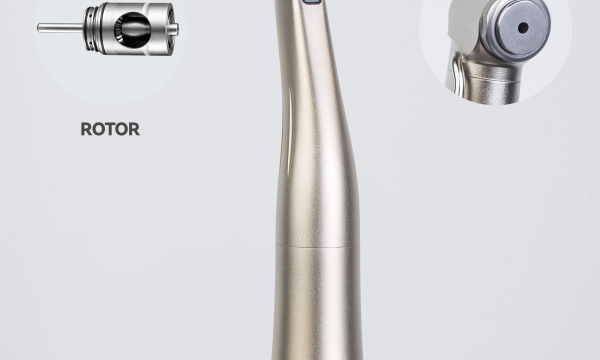
A dental handpiece bulk order is difficult to correct after production if the quotation, approved sample and packing list describe different configurations. A familiar-looking body can still hide a different coupling, spray arrangement, chuck system or service part. For a distributor, group practice or private-label buyer, the first task is therefore not to negotiate carton quantity. It is to make every unit in the order traceable to one approved specification.
This guide focuses on order control rather than comparing clinical performance. Buyers who are still choosing between instrument types should begin with our high-speed handpiece comparison. Once the model family is chosen, the steps below help convert that decision into a repeatable wholesale order.

Build the order around an approved configuration
Start with a sample or a fully documented reference model. Assign it a buyer-side SKU and record the supplier model code, connection type, head and chuck design, spray configuration, light or non-light version, and any matching coupling. If several variants will share similar packaging, give each one a clearly different SKU and label color. The purpose is to prevent sales, purchasing and receiving teams from using informal names such as “standard high speed” for products that are not interchangeable.
At RIXI Medical, a dental equipment manufacturer and supplier in Foshan, China, we recommend that distributor orders reference a signed specification sheet or approved-sample identifier. The purchase order should state which document controls if wording in the quotation, artwork and packing list conflicts.
Specify what is inside each bulk pack
“Bulk pack” can mean an outer carton of individually boxed instruments, a tray of unboxed units, or a kit that includes couplings and service tools. Do not rely on the phrase alone. Ask the supplier to provide a packing hierarchy that shows the unit pack, inner carton and master carton. It should list every included accessory and identify items that are optional.
| Order-control field | What the buyer should record | Why it matters |
|---|---|---|
| Model identity | Supplier code, buyer SKU and approved-sample reference | Stops similar bodies from being mixed under one description |
| Interface | Connection or coupling designation and matching unit requirements | Helps avoid an order that cannot connect to the installed equipment |
| Working-end configuration | Head size, chuck method, spray and illumination option | Keeps the ordered variant aligned with the buyer’s product range |
| Pack contents | Instrument quantity plus couplings, tools and manuals, if included | Prevents an accessory assumption from becoming a receiving dispute |
| Service identity | Compatible cartridge, O-rings, wrench or other replaceable parts | Lets the distributor build a realistic after-sales stock plan |
| Labeling | SKU, model, batch reference and any buyer-approved artwork | Supports warehouse traceability and variant separation |
Exact specifications are model-specific. Request current drawings, instructions and compatibility documentation for the model being ordered; do not transfer dimensions or maintenance rules from another handpiece simply because it looks similar.
Freeze compatibility before quantity
The handpiece must match the intended dental unit or coupling, as well as the buyer’s established service routine. Ask for clear photographs or drawings of the connection, the supplier’s stated operating requirements, and the compatible coupling code where one is used. If the buyer distributes to more than one market, separate the variants in the order rather than assuming one configuration will suit every installed base.
A distributor should also decide whether replacement turbines or cartridges are field-serviceable within its own support model. Request part numbers and service instructions before setting a spare-parts ratio. Our dental handpiece product category provides a useful starting point for discussing the available product family, while the exact compatibility record should remain attached to the purchase order.

Control changes between the quote and production
After approval, require written notice before the supplier changes a component, finish, label, accessory, packaging layout or service part. A substitute may be acceptable, but the buyer needs enough information to assess compatibility and inventory impact before production. For OEM/ODM orders, lock the artwork revision, language version and label position in the same way.
Use a short change-control rule in the purchase order: no unapproved substitution, and any proposed change must be linked to a revised drawing, specification or sample. This is especially important when multiple sales regions or private-label customers receive products from the same production run.
Plan service support as part of the purchase
A wholesale order is incomplete if no one can identify the correct consumables or replacement parts later. Ask which components are replaceable, how they are ordered, what tools are needed and which maintenance steps belong to the supplier’s instructions. Build a simple service matrix that links each handpiece SKU to its coupling, cartridge or turbine reference, seals, chuck tools and applicable lubricant guidance.
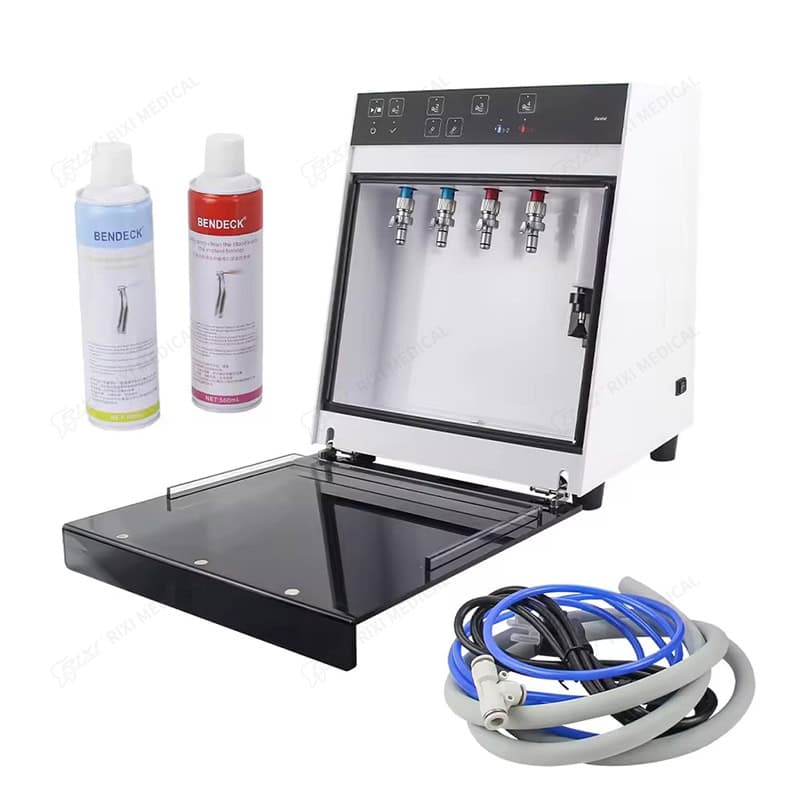
Maintenance procedures differ by model. The manufacturer’s instructions and the clinic’s locally approved processing protocol should govern cleaning, lubrication and sterilization. Our handpiece lubricant compatibility guide explains why procurement should confirm both the instrument and the lubricant or applicator rather than buying them independently. Buyers evaluating automated support equipment can also review the handpiece oiling machine product page.
Use receiving checks that can catch a mixed batch
Before the shipment is released into inventory, compare the packing list, carton labels and a sample of units against the approved record. Check that the buyer SKU and supplier code agree, that the connection and visible configuration match the reference, and that included accessories are present. Record the supplier batch or lot identifier shown on the product or packaging where available.
A practical receiving plan also defines what happens when one sampled carton fails. The response may be a wider inspection, quarantine or supplier review, depending on the buyer’s quality procedure. Agree on that process before shipment so the warehouse is not forced to improvise.
Distributor receiving checklist
- Match the purchase order, packing list and carton quantities.
- Confirm model codes and private-label artwork revisions.
- Compare connection, head, chuck, spray and light options with the approved sample.
- Check that declared accessories and service tools are present.
- Inspect packaging for mixed labels or visibly different variants.
- Record nonconformities with photographs and the relevant batch reference.
- Keep unverified stock separate until the discrepancy is resolved.
Keep infrastructure questions separate from the handpiece order
For air-driven equipment, the wider system still matters. A handpiece order does not replace a review of compressor capacity, air treatment, tubing condition or dental-unit service requirements. The dental air compressor sizing guide outlines the information a clinic or contractor should gather for that separate decision. Installation and utility requirements vary, so confirm them with the equipment supplier and locally qualified professionals.
Questions to send with a wholesale inquiry
- Which exact model code and connection are quoted?
- Which drawings, instructions and compatibility documents are available?
- What is included in the unit pack, inner carton and master carton?
- Which service parts match this revision of the product?
- How will model, batch and OEM artwork revisions appear on labels?
- What approval step is required before any component or packaging substitution?
Scope note: This is general procurement guidance, not a model specification, clinical protocol or destination-market compliance opinion. Confirm the current product specification with the supplier and ask locally qualified professionals to review installation, processing and regulatory requirements that apply to your market.
Frequently asked questions
What should a dental handpiece bulk pack include?
There is no universal pack definition. The supplier should state the number of instruments, individual packaging, couplings, tools, manuals and service accessories included. Put that list in the purchase order rather than relying on a catalog headline.
Can two handpieces with the same connection be treated as the same SKU?
Not safely. Connection is only one field. Head, chuck, spray, illumination, service parts and maintenance instructions may differ. Keep a separate approved record for every sellable SKU.
How many spare turbines or cartridges should a distributor order?
The answer depends on the installed fleet, service model, supplier support and the replaceable parts specified for that exact product. Ask for part identity and service instructions first, then set stock according to your own replacement history and support commitment.
What should be checked before approving OEM packaging?
Confirm the buyer SKU, supplier model code, artwork revision, language, accessory list, label position and batch-traceability fields. Approve a final proof and state that substitutions or layout changes need written authorization.
For a controlled quotation, send RIXI Medical your required model family, connection, pack structure, labeling needs and destination. You can request specifications or drawings through technical support, or use the contact page for distributor pricing and OEM/ODM discussions.
Need Dental Equipment Pricing or Configuration Details?
Contact RIXI Medical for model comparison, distributor pricing, packaging information, OEM/ODM requirements and after-sales support.
Request Product Information