A handpiece maintenance station occupies little floor area, yet poor planning can create crossed workflows, oil residue near clean supplies and delays when adapters or lubricant cannot be found. The station should support a clear sequence while remaining accessible for cleaning, replenishment and qualified service.
This guide is for clinic planners, managers, contractors and procurement teams coordinating equipment placement. It provides general equipment-planning guidance. The final process must follow each handpiece and device manual, the clinic’s approved protocol and locally qualified advice.
Map the handpiece journey before drawing cabinets
Document how used handpieces arrive, where external cleaning occurs, when internal maintenance is performed, how excess lubricant is managed and where instruments move next. The sequence must not be guessed from a room rendering. Staff need enough landing space to keep incoming instruments, maintenance supplies and processed items distinct.
Walk through the proposed route with the clinic’s responsible team. Record doorways, sink use, trolley movement, waste handling and points where staff must change direction. A narrow gap that appears acceptable on a plan may become obstructed when a machine lid is open or a tray is placed on the bench.
Keep the equipment decision separate from the clinical protocol. Planning can identify space, utilities, access and storage; it does not establish a processing sequence or release criteria. Those decisions belong to the clinic’s qualified personnel using the applicable instructions.
Request model data before cabinetry is fixed
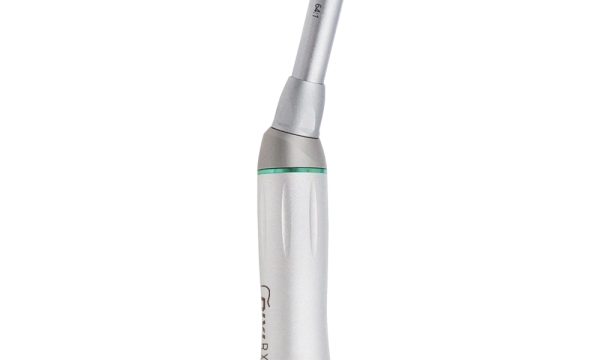
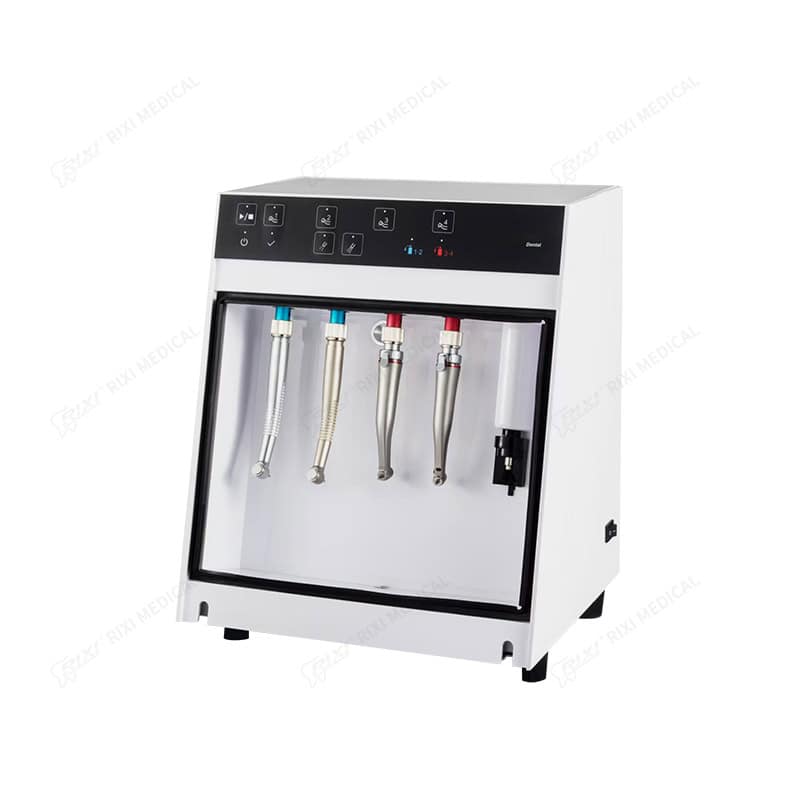
For the proposed dental handpiece oiling machine, request overall dimensions, lid or door movement, required service clearance, electrical supply, compressed-air specification if applicable, connection locations and cleaning access. Confirm these details for the ordered configuration, not a visually similar catalogue model.
| Planning item | Detail to confirm | Handover evidence |
|---|---|---|
| Bench position | Stable support, operating clearance and cleanable surfaces | Installed position checked against the approved drawing |
| Compressed air | Model-specific pressure, quality, connection and isolation | Connection identified and compared with supplier data |
| Electrical supply | Voltage, frequency, plug, rated input and cable route | Correct variant and accessible supply documented |
| Consumables | Approved lubricant, filters, adapters and replacement storage | Initial stock and reorder references recorded |
| Service envelope | Access to panels, residue areas and replaceable components | No cabinetry or wall blocks the stated service access |
| Documents | Current manuals, drawings and accessory list | Revisions filed with the installed equipment record |
Use the oiling-machine comparison guide to review adapters, lubricant delivery, mist control and service boundaries. A room drawing should not lock the project into a machine before those compatibility questions are resolved.
Separate working zones and storage responsibilities
Do not place clean handpieces or packaging supplies in a splash or residue zone. Where one room contains several processing stages, use a clear direction of travel and assigned bench areas. The clinic should decide how zones are marked and controlled under its approved process; the equipment layout should make that decision practical.
A dental storage cabinet may help organize unopened supplies, adapters and documentation, but its position and cleanability must suit the planned workflow. Avoid deep storage behind the machine where staff cannot see a leaking container or retrieve an adapter without moving equipment.
Assign locations for lubricant containers, replacement filters, small adapters, wipes and removable machine parts. Keep each item identifiable. A drawer labelled only “handpiece parts” can mix machine adapters, chair-side couplings and manual applicators that serve different interfaces.
Plan utilities without relying on generic assumptions
Not every maintenance unit has the same air or electrical requirement. Give the contractor the current supplier sheet for the ordered variant. The drawing should show the air connection, electrical outlet or isolator, cable and hose route, and any access needed to close or disconnect utilities.
Do not hide a connection behind fixed joinery simply because it looks cleaner. Staff and service personnel may need to inspect a hose, read a label or isolate the unit. Route cables and hoses so they do not cross walking paths, press against a hot surface or prevent the equipment from being moved as described in its instructions.
If the model requires compressed air, confirm the specified pressure range, connector and air-quality requirements. A nearby dental air line is not automatic approval. Compare the supplier data with the clinic’s installed system and have locally qualified contractors resolve any infrastructure question.
Coordinate maintenance equipment with the next stage
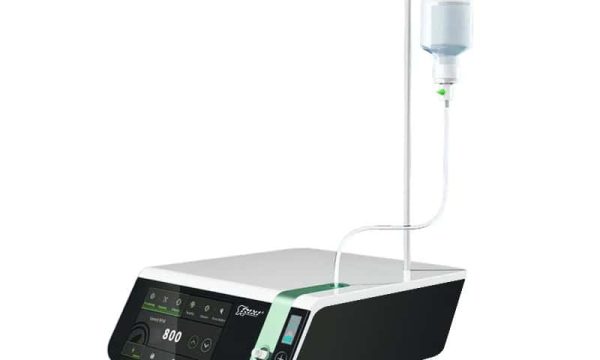
An oiling machine is not a sterilizer. The clinic should document what happens after maintenance and follow the handpiece manufacturer’s current instructions. If a tabletop unit is being considered, obtain separate specifications for the digital tabletop dental sterilizer and confirm chamber, tray, utility, water, drainage, drying and service requirements independently.
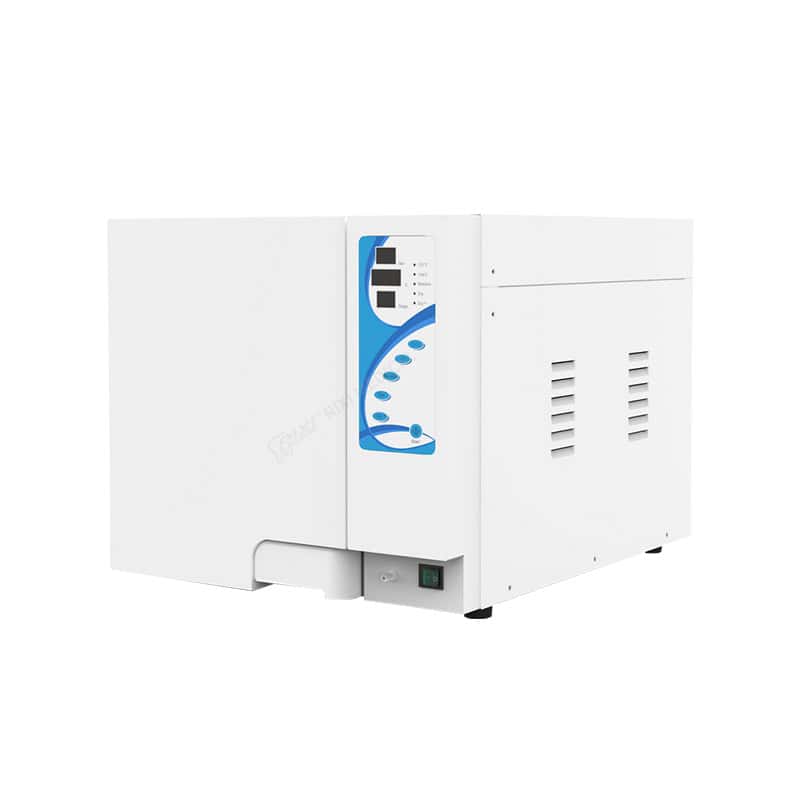
Keep a linked handpiece and autoclave compatibility record for the proposed equipment set. Chamber capacity, a familiar program name or a catalogue temperature does not prove compatibility with every handpiece. Current instructions for both devices control the comparison.
Design the bench for cleaning, opening and service
Mark the full movement of lids, covers, drawers and removable containers on the drawing. Include space for the operator’s hands and for placing a removed part without crossing into another zone. If a machine has residue-collection areas, confirm that staff can reach them under the documented operator procedure.
Service access is a separate envelope. Ask which panels, filters or internal areas require qualified service and how much clearance the technician needs. A machine can fit perfectly for daily operation while remaining impossible to service without removing a cabinet or sink.
Choose surrounding surfaces and joints with the clinic’s cleaning plan in mind. Avoid unsupported claims that one material is universally suitable. The final specification should be reviewed against local building requirements, chemical exposure, load and the actual equipment instructions.
Prepare adapters and consumables for handover
Before the room opens, reconcile the supplied adapters with the approved handpiece list. The oiling-machine adapter checklist helps record the machine side, instrument side, included quantity and reorder reference. Unsupported fittings should not be placed in a general drawer and treated as available.
Store the approved lubricant reference and current instructions with the equipment record. The lubricant compatibility guide separates formulation, delivery format and connector fit. This matters when a clinic has manual applicators and an automatic reservoir in the same room.
Use a two-part acceptance walk-through
First, the contractor and supplier should confirm physical installation: model, variant, location, utilities, clearances, supplied parts and accessible documentation. Second, the clinic’s responsible team should walk through its approved workflow using the installed space. These reviews have different owners and should not be collapsed into one signature.
- Verify the installed position against the approved equipment drawing.
- Confirm power and air connections are accessible and correctly identified.
- Check that lids, doors and service panels open without obstruction.
- Record supplied adapters, consumables and removable components.
- Confirm designated storage does not mix incompatible accessories.
- Place manuals and model information where staff can retrieve them.
- Assign responsibility for cleaning, replenishment and fault reporting.
- Record unresolved issues, an owner and a closure date before routine use.
During the workflow walk-through, look for crossing movement, insufficient landing space, awkward cable or hose routes and supplies stored in the wrong zone. Correcting those details before routine operation is easier than altering fixed cabinetry later.
Plan records without inventing a universal schedule
Inspection and maintenance intervals depend on the exact device, handpieces, workload and instructions. Keep a simple record of operator cleaning, consumable replacement, observed leaks or unusual operation and authorized service actions. Qualified service personnel should handle work outside the operator instructions.
When a model, adapter, lubricant, cabinet arrangement or processing device changes, review the layout and handover record again. A change that seems small can affect clearance, identification or storage responsibilities.
Frequently asked questions
Where should an oiling machine sit in the workflow?
Place it according to the clinic’s approved sequence, with incoming handling separated from clean storage and the next processing stage clearly defined. Confirm exact clearances and utilities from the ordered model documents.
Does every oiling machine require compressed air?
No universal assumption is safe. Confirm the exact air and electrical specification before contractors install connections or fabricate cabinetry.
How much service clearance should be provided?
Use the supplier’s current drawing and service guidance for the exact model. Operating clearance and qualified-service clearance may be different.
What should be included in project handover?
Include drawings, model and serial information, utilities, adapters, manuals, approved consumables, storage locations, cleaning responsibilities, support contacts and an unresolved-issues list.
Scope note: Confirm exact product requirements with the supplier and all room, infection-control, installation and compliance decisions with qualified local professionals.
RIXI Medical is a dental equipment manufacturer and supplier based in Foshan, China. To request dimensions, connection details, distributor documentation or OEM/ODM information, contact RIXI Medical.
Need Dental Equipment Pricing or Configuration Details?
Contact RIXI Medical for model comparison, distributor pricing, packaging information, OEM/ODM requirements and after-sales support.
Request Product Information