Two dental chair quotations can look comparable while describing materially different packages. One may include the operating light, delivery system, suction components and stool; another may list only the chair base and expect the buyer to add accessories later. A price-only comparison hides the differences that determine installation work, service responsibility and the final delivered configuration.
This dental chair quote comparison guide gives clinic owners, distributors and procurement teams a controlled worksheet for placing supplier offers on the same basis. It is distinct from a dental chair manufacturer audit, which evaluates factory controls and engineering evidence. Here, the objective is to normalize quotations before a model or supplier is shortlisted.
Freeze the requirement before requesting prices
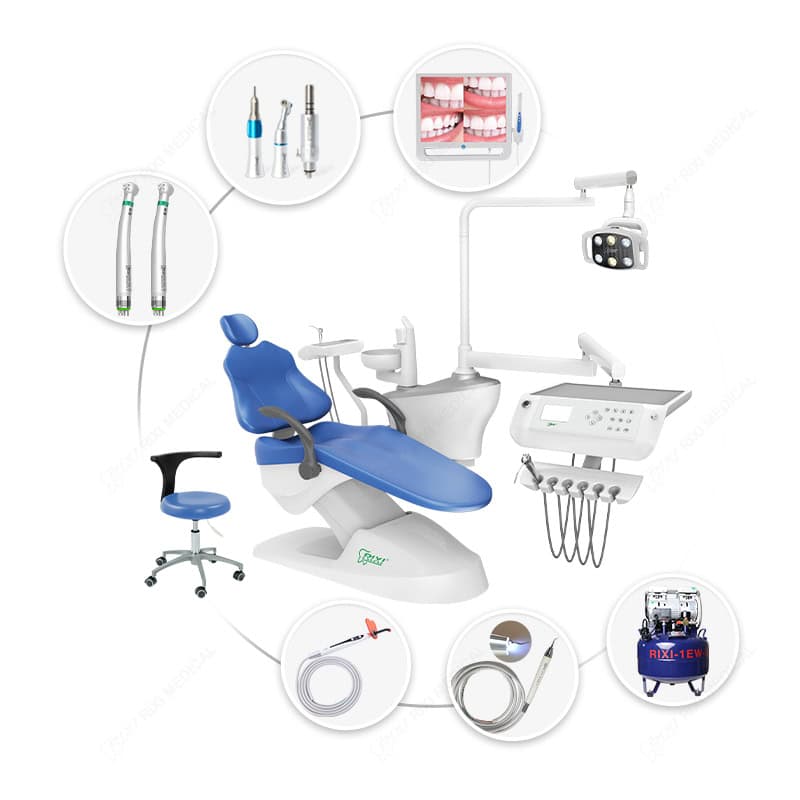
Start with a one-page requirement that every bidder receives. Name the intended room, utility conditions, delivery style, light, cuspidor, suction interface, handpiece connections, controls, upholstery, stool, monitor or camera provisions, packaging and documentation. Mark optional items separately so they do not disappear inside an apparently lower base price.
Use the same terminology for every supplier, but allow them to explain model-specific alternatives. If the clinic has not finalized room utilities, request the supplier’s drawings and limits rather than assuming that different chair models share the same connection points.
Normalize every quotation into a common matrix
Copy each offer into a buyer-controlled comparison table. Do not rely on supplier labels such as standard, premium or complete. Those terms may describe different equipment bundles.
| Comparison area | Buyer record | Evidence to request |
|---|---|---|
| Exact identity | Model, revision, upholstery code and voltage/frequency | Quotation, specification and product label example |
| Chair and base | Motion system, control locations, headrest, armrests and base configuration | Current specification and dimensional drawing |
| Delivery system | Instrument positions, tubing, holders, controls and included connections | Configuration sheet and interface list |
| Assistant side | Suction holders, controls, tray and accessory scope | Photograph or marked drawing of the quoted assembly |
| Light and display | Included model, mounting, power and control method | Separate specification where applicable |
| Utilities | Power, air, water, drainage and suction requirements | Installation drawing and preparation limits |
| Documents | Manuals, packing list, parts identification and installation information | Sample document pack and revision dates |
| Service scope | Diagnostic route, spare-parts identification and responsibility boundaries | Written handover and escalation process |
Distinguish included, optional and buyer-supplied items
Use three statuses for every component: included in the quoted price, optional with a separate line, or supplied by the buyer or another contractor. A blank cell should mean unresolved, not included. This prevents a missing compressor connection, adapter, stool or mounting component from appearing only during installation.
When comparing an R1 integrated dental chair with an R5 chair package, buyers should use current model documents to identify the actual quoted configuration. Product pages are useful starting points, but photographs and model families do not establish the final order scope.
Compare installation and service consequences
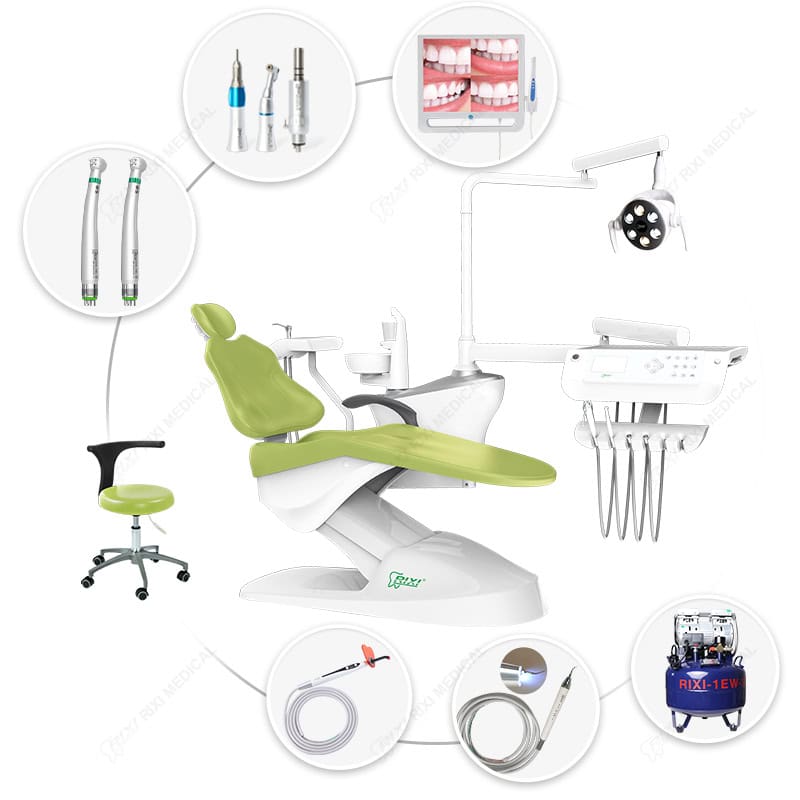
A difference in base, delivery arm, cuspidor, monitor mount or utility box can change the contractor’s preparation and the technician’s service access. Ask for plan dimensions, fixing details, connection locations and clearance requirements. Requirements vary by model and destination, so local contractors should approve the final drawings before site work.
Serviceability also belongs in the quotation comparison. Record how covers are removed, which routine parts are identified, what diagnostic information is available and how a replacement part is matched to a model revision. A vague promise of support is not equivalent to a documented technical escalation route.
Keep stools and accessories inside the workflow review
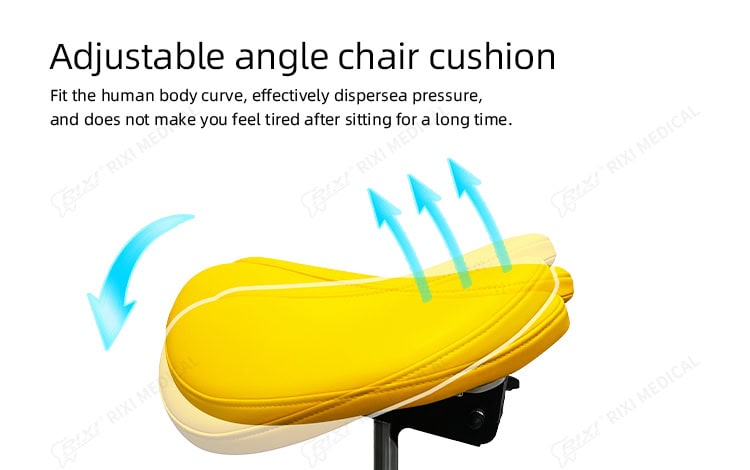
An operator stool, assistant stool, storage unit or camera may be quoted outside the chair package but still affects reach, circulation and room layout. Identify who will use each accessory and where it will be parked or serviced. Do not assume that one stool range suits every user; sample checks should cover adjustment range, controls, stability, upholstery and clearance with the selected chair.
Use a sample to close unresolved quotation items
A sample should verify the exact configuration being considered, not a showroom chair with different options. Prepare an acceptance sheet covering delivered identity, visible components, motion and controls, instrument holders, light movement, assistant access, utility interfaces, service panels and supplied documents.
The existing dental chair sample evaluation checklist provides a more detailed test method. Any unresolved difference between the sample and the quotation should be closed in writing before a larger order.
Control revisions after supplier selection
Convert the approved quotation into a controlled configuration record. Name the model, options, colors, accessories, drawings, document revisions and packaging requirements. Require written review when a component, interface, appearance or supplier document changes.
For distributor and OEM/ODM orders, the product name on the label, manual, packing list and sales material should refer to the same approved configuration. Keep an acceptance sample or photographic record when practical, and define who approves substitutions.
Final quote-comparison checklist
- Every supplier received the same requirement.
- Exact models and revisions are identified.
- Included, optional and buyer-supplied items are separated.
- Utilities, dimensions and installation drawings are available.
- Accessories are linked to users and room workflow.
- Documents, service scope and escalation responsibilities are compared.
- A representative sample closes material uncertainties.
- The approved configuration has a change-control owner.
Scope note: This article provides general procurement guidance. It does not establish model-specific performance, installation or regulatory requirements. Confirm the exact specification with the supplier and consult locally qualified contractors and professionals.
Frequently asked questions
Why are two “complete” dental chair quotations different?
Complete is not a controlled specification. Suppliers may include different delivery systems, lights, suction components, stools, accessories, documents or installation support. Compare line items and interfaces instead of labels.
Should the lowest base price be shortlisted first?
Only after the scope is normalized. A lower base price may exclude accessories, site work, documentation or service items that another quotation includes.
What should remain unresolved in the comparison table?
Any item without current evidence. Mark it open and assign an owner rather than filling the gap with an assumption.
When is a supplier quotation ready for approval?
When the exact configuration, interfaces, exclusions, drawings, document pack, sample acceptance and change responsibilities are clear enough to create a controlled purchase order.
Buyers can review the current RIXI dental chair range and request a model-specific configuration sheet, drawings and itemized quotation for comparison.
Need Dental Equipment Pricing or Configuration Details?
Contact RIXI Medical for model comparison, distributor pricing, packaging information, OEM/ODM requirements and after-sales support.
Request Product Information