A factory name, product catalog and sample quotation do not tell a buyer how consistently a dental chair will be built. The useful question is whether the manufacturer can show how a defined configuration moves from approved drawings and component records to assembly, inspection, packing and after-sales documentation.
This guide is for clinic groups, distributors and OEM/ODM buyers comparing a dental chair product range. It focuses on evidence that can be reviewed during an on-site or remote factory audit. It does not replace model testing, destination-market compliance review or a qualified installer’s assessment.
Define the buying program before the audit
An audit becomes vague when the buyer has not fixed the intended configuration. Start with the model, voltage and frequency, upholstery color, delivery-system arrangement, suction interface, light type, accessory list, branding, language requirements and expected packaging format. Request a configuration sheet that identifies included, optional and excluded items. If a specification is model-specific, ask the supplier to confirm it in writing rather than assuming it applies across the whole range.
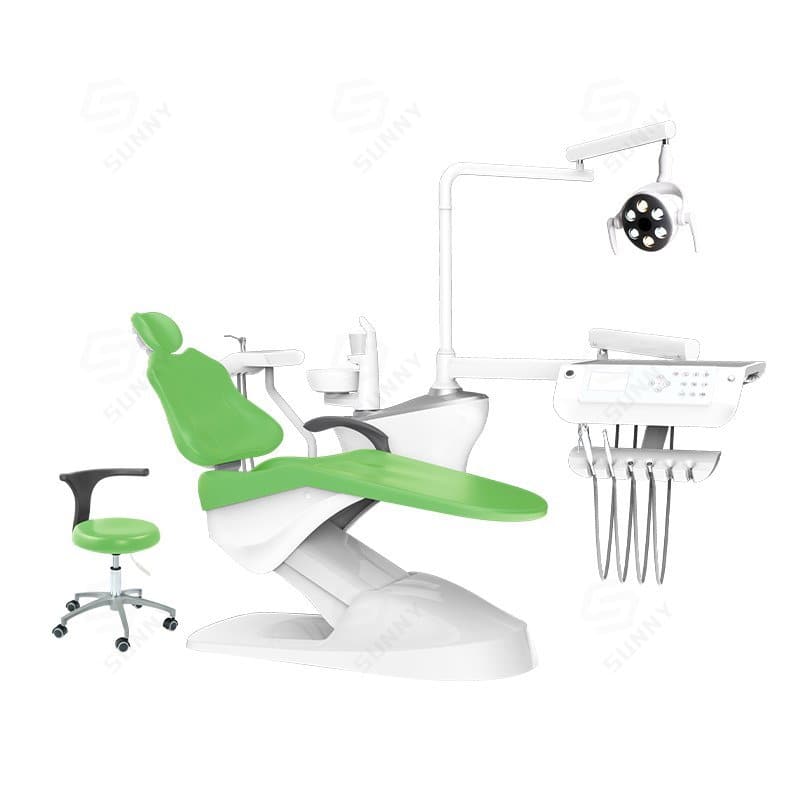
For example, the R1 integrated chair configuration and the R5 chair with accessory options should be evaluated against their own drawings and component lists. A photograph of one model is not evidence for another.
Map who controls each manufacturing responsibility
A dental chair supplier may design some parts, source others, assemble the unit, perform final checks and coordinate export documentation. Buyers should identify who owns each step. Ask which components are made in-house, which are purchased, who approves alternate suppliers and who can authorize a change to the bill of materials. The purpose is not to demand that every part be produced under one roof. It is to understand where responsibility sits when a component, drawing or process changes.
Useful evidence includes an organization chart for the project, approved-supplier records for critical components, a controlled bill of materials, assembly instructions, inspection criteria and the person responsible for releasing finished units. A confident verbal answer is helpful, but a controlled record is easier to use when orders repeat months later.

Review engineering control, not just finished appearance
A chair can look correct while hiding configuration or service risks. The audit should connect visible workmanship to the records that define it. Follow one product family through the following control points.
| Control area | Evidence to request | Risk it helps expose |
|---|---|---|
| Configuration | Approved model sheet and bill of materials with revision status | Unapproved substitutions or unclear options |
| Interfaces | Utility, mounting and dimensional drawings | Installation conflicts discovered after delivery |
| Incoming parts | Identification, receiving checks and supplier traceability | Mixed batches or components that cannot be linked to an order |
| Assembly | Work instructions and in-process checkpoints | Quality depending only on individual operator memory |
| Final inspection | Model-specific checklist and release record | Generic inspection that misses ordered functions |
| Nonconformance | Hold, review and disposition process | Rejected material returning to production without control |
| Engineering change | Revision log and buyer-notification rule | A repeat order arriving with a different component or interface |
For serviceability, also examine access panels, cable protection, hose routing, fastener access and labeling. Ask how the manufacturer prevents tubing from being pinched during closing, how connectors are identified and which parts can be reached without dismantling unrelated assemblies. These are general audit questions; the acceptable answer depends on the selected chair and the service plan.
Trace one chair from incoming parts to release
Choose a real unit in production and ask the team to trace it. Can they link its configuration to the current bill of materials? Can the relevant inspection record be found? Are parts separated by status, and are incomplete or rejected items visibly controlled? Can packing staff tell which accessory kit belongs with the chair?
This walk-through is more informative than a staged showroom tour because it tests whether records, physical identification and workflow agree. A remote audit can follow the same logic through a live video call: select a unit, show its identifier, open the applicable work instruction, demonstrate a checkpoint and then locate the release record. Pre-recorded factory footage can provide context, but it is weaker evidence for traceability.

Separate sample approval from production control
A good sample answers whether the proposed model and configuration are acceptable. It does not prove that later production will match. Record sample approval with photos, marked drawings, option lists, labels, packaging details and any agreed corrections. Then require the production file to reference that approved baseline.
Before accepting the sample, use a structured dental chair sample evaluation checklist. During the factory audit, test the separate question: what prevents an unapproved change after the sample? The answer should cover revision control, component substitutions, buyer notification and confirmation before production proceeds.
Control OEM files and repeat-order changes
Private-label projects add artwork, manuals, labels, cartons and sometimes modified panels or accessories. Create one approved-file register that lists the filename, revision, language and approval date for each item. Avoid approving critical details only in a chat thread. The purchase order should point to the approved configuration and file revisions.
Ask how obsolete artwork is removed from use, who checks model names and electrical markings against the order, and how mixed-language documents are prevented from entering the wrong shipment. Requirements vary by jurisdiction, so buyers should have locally qualified professionals review the legal and regulatory obligations for the destination market.
RIXI Medical is a dental equipment manufacturer and supplier in Foshan, China. From a manufacturing and sourcing perspective, the most reliable handover is specific: confirmed drawings, a configuration record, controlled artwork, inspection points, spare-parts identification and service-document ownership. Buyers can also review RIXI’s quality-control overview and company information as starting points, then request model-level evidence for the intended order.
Check packing, service and document handover
Audit the transition from finished chair to shipment. Confirm how detachable parts are identified, how accessory boxes are matched, how surfaces and moving parts are protected and how carton markings correspond to the packing list. Request packing dimensions and weights from the supplier for the exact model; do not reuse figures from a different configuration.
For after-sales readiness, ask for an exploded-parts reference or equivalent identification method, wiring and pneumatic diagrams where applicable, maintenance instructions, fault-reporting information and a list of recommended commissioning checks. Confirm what the distributor may share with local technicians and how updated files will be delivered. The technical support pathway should be clear before the first service request occurs.
Record findings as pass, open or blocked
A simple decision log keeps the audit commercial. Mark each requirement as passed with evidence, open with an owner and due date, or blocked because evidence is missing or the risk is unacceptable. Prioritize configuration control, interfaces, change notification and release records before cosmetic preferences. An attractive showroom and responsive sales contact cannot close an engineering gap.
Scope note: This is general procurement guidance, not a statement that every RIXI model uses the same components or procedures. Confirm exact specifications, drawings, inspection records and support documents with the supplier. Consult locally qualified installation and compliance professionals before purchase or installation.
Frequently asked questions
Can a factory audit replace dental chair sample testing?
No. The audit reviews how the manufacturer controls work; sample testing evaluates the proposed unit and configuration. Buyers normally need both, with the approved sample linked to the production specification.
What should a buyer request before an on-site or remote audit?
Request the proposed configuration, bill-of-material revision, interface drawings, audit agenda and a list of records to be demonstrated. This lets the team prepare evidence without turning the review into a generic factory tour.
Is a remote dental chair manufacturer audit useful?
Yes, if it is live, selective and evidence-based. Ask to trace a chosen unit, view current records and demonstrate checkpoints. Remote review has limits, so use independent inspection or local technical support when the risk warrants it.
Which OEM documents should be approved before production?
At minimum, approve the configuration, drawings relevant to installation, artwork, labels, manual language, packing marks and sample corrections. The exact file set depends on the model and destination-market requirements.
If you are evaluating an OEM/ODM dental chair program, request the model-specific specification, interface drawings and proposed document handover for review before discussing production quantities.
Need Dental Equipment Pricing or Configuration Details?
Contact RIXI Medical for model comparison, distributor pricing, packaging information, OEM/ODM requirements and after-sales support.
Request Product Information