A sterilization area can contain good equipment and still lose time through poor sequencing. For a clinic owner or procurement team, the buying decision is therefore wider than choosing an autoclave. The equipment package has to support a controlled route from used instruments to cleaned, inspected, packaged, processed, cooled and stored items. Each station also needs enough working space, documented utilities and clear responsibility at handover.
This guide focuses on dental sterilization equipment as a coordinated purchasing package. It does not prescribe clinical processing parameters. Cycle selection, instrument compatibility, local infection-control rules and room approvals should be confirmed from the exact manufacturers’ instructions and with qualified local professionals.
Start with the instrument route, not a product list
Map a normal instrument set through the room before requesting quotations. Record where used items arrive, where cleaning and drying occur, where inspection and packaging take place, and where processed packs cool and are stored. The purpose is to prevent the equipment schedule from being assembled as disconnected products.
Workload is equally important. Ask the clinic team to document typical and peak tray volumes, cassette dimensions, the mix of handpieces and loose instruments, and the required turnaround pattern. These observations help buyers compare chamber and tray capacity without assuming that a stated litre rating alone determines useful throughput. RIXI Medical’s autoclave capacity planning worksheet provides a separate method for translating workload into a purchasing brief.
Build the equipment schedule by processing stage
A useful schedule assigns a purpose, owner and acceptance check to every station. The exact equipment will vary, but the procurement file should distinguish at least four functions:
- Receiving and cleaning: define the sink or cleaning equipment, baskets, water requirements and safe loading method specified by the chosen products.
- Inspection and preparation: allow a clean, illuminated surface for checking, drying and packaging instruments before sterilization.
- Sterilization: compare the autoclave’s usable chamber and tray dimensions, documented programs, electrical and water requirements, and service clearances.
- Cooling and storage: reserve protected space so processed packs are not returned to a contaminated work area or stacked where ventilation is blocked.
For broader product review, buyers can start with RIXI Medical’s autoclave sterilizer range. The range currently includes tabletop and front-door options, but a category page is not a substitute for the current model manual, quotation and dimensional drawing.
Compare sterilizers with model-linked evidence
Do not approve a sterilizer from a marketing name alone. Ask the supplier to place the exact model code on the quotation, manual, packing list and accessory list. Request external dimensions, usable chamber or tray dimensions, rated electrical supply, water and drainage requirements where applicable, heat and ventilation guidance, door-opening envelope and the service access needed around the cabinet.
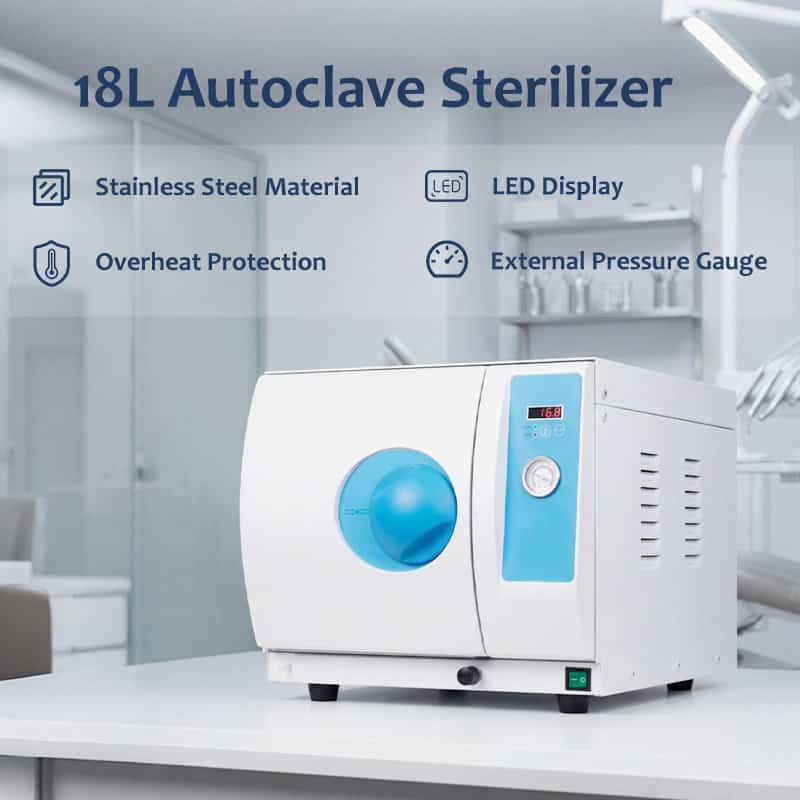
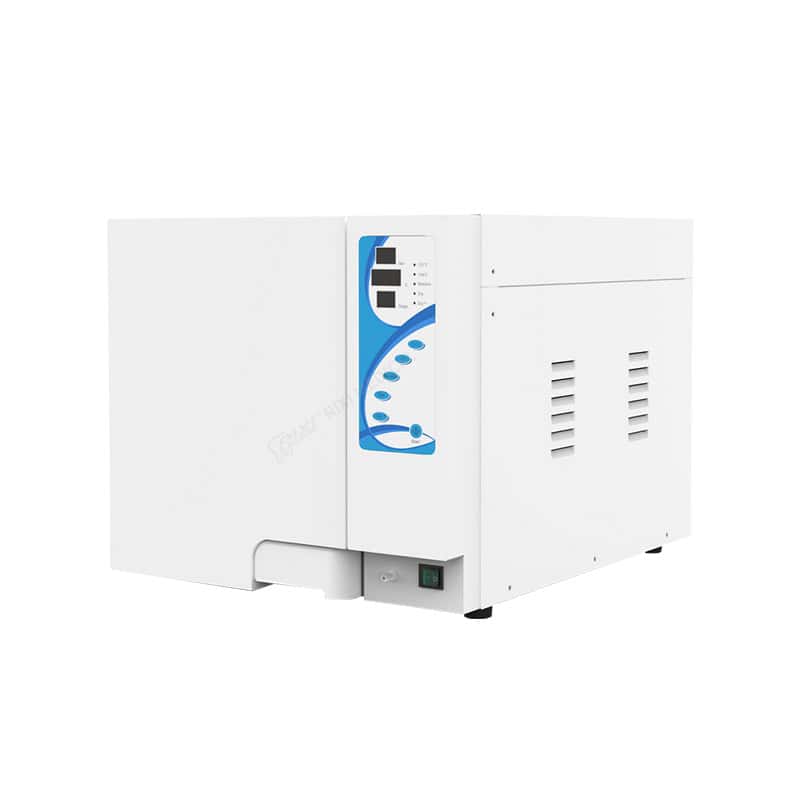
The 18 L tabletop autoclave with LED display is presented with an 18 L chamber, LED status display, stainless-steel chamber and external pressure gauge. The digital tabletop dental sterilizer is a compact digital-control option. These published features help identify the models, but buyers should confirm the ordered version and all project-specific requirements in the supplier’s current documents.
Coordinate handpieces and other model-sensitive instruments
“Autoclavable” should not be treated as a universal processing instruction. Handpieces, cassettes and other items can differ in preparation, lubrication, packaging and permitted cycles. Build a compatibility matrix that links each instrument model to its current instructions for use and to the proposed sterilizer program. If the evidence is incomplete, keep the item out of the approval set until the supplier clarifies it in writing.
The separate guide to autoclaving dental handpieces explains how to compare the instrument and sterilizer documents without inventing a common cycle. This is also a useful check for distributors assembling mixed-brand equipment packages.
Lock the site plan before furniture is fixed
Installation problems often begin when the machine is selected after cabinetry, sockets and ventilation paths are already fixed. Place the actual dimensional drawing on the room plan and show the door swing, loading position, working height, heat clearance, service panels and route for lifting or removing the unit. Keep the worktop and adjacent storage from blocking access.
Record who provides the electrical connection, water treatment or supply, drainage, ventilation, furniture cut-outs and final commissioning. Requirements vary by model and jurisdiction, so the equipment supplier and qualified local professionals should approve their respective parts. For the broader sequence, use the sterilization room planning and site handover guide.

Turn the quotation into an acceptance file
The purchase order should convert promises into verifiable line items. A practical file includes the approved model and configuration, standard and optional accessories, tray or rack details, manual language, electrical variant, labeling, packing list, spare or consumable list, warranty and service contact, and the evidence required at dispatch and receipt. Destination-market requirements should be reviewed separately; a general supplier statement should not be treated as local approval.
| Checkpoint | Evidence to request | Receiving action |
|---|---|---|
| Model identity | Quotation, label sample and manual with matching code | Photograph the rating label and compare it with the order |
| Utilities | Current electrical, water, drainage and clearance data | Confirm the prepared site before connection |
| Accessories | Itemized tray, rack, hose and optional-part list | Count and identify each item before discarding packaging |
| Documentation | Model-linked instructions, packing list and service information | Archive the supplied revision with the asset record |
During receiving, inspect cartons before opening, record visible damage, reconcile quantities and keep model labels with the correct unit. Commissioning should follow the manufacturer’s instructions and the clinic’s approved process. A passed power-on check does not prove that every instrument, load or cycle is suitable.
Questions to close before approving the package
- Which exact models and electrical variants are included?
- What are the usable chamber and tray dimensions, not only nominal capacity?
- Which accessories are standard, optional or required for the planned workflow?
- What site utilities, clearances and environmental conditions must be prepared?
- Which current manuals and compatibility documents accompany the shipment?
- Who owns installation, commissioning, training and service escalation?
RIXI Medical is a dental equipment manufacturer and supplier based in Foshan, China. Clinics and distributors can request model-specific specifications and dimensional drawings for a sterilization equipment package. The final choice should be reviewed against the intended instruments, local requirements and the exact documentation supplied with each model.
Frequently asked questions
Can a clinic select sterilization equipment from chair count alone?
No. Chair count is only a starting point. Buyers should also document tray volume, instrument mix, peak loads, packaging method, turnaround needs and the usable capacity of the proposed trays and chamber.
Is an 18 L autoclave suitable for every small clinic?
Not automatically. The litre rating does not show how the clinic’s actual cassettes and packs fit, how often cycles must run or whether the available utilities and worktop support that model.
Should the room be completed before the autoclave is ordered?
The model and its current dimensional and utility information should be coordinated before cabinetry and services are fixed. Final installation decisions should be checked by the supplier and qualified local professionals.
What should a distributor request for repeat orders?
Use a controlled configuration sheet covering model code, electrical variant, accessories, labeling, manual revision, packaging and service parts. Require written approval before any substitute or revision is introduced.
Need Dental Equipment Pricing or Configuration Details?
Contact RIXI Medical for model comparison, distributor pricing, packaging information, OEM/ODM requirements and after-sales support.
Request Product Information