Two clinics with the same number of dental chairs can need very different sterilizer capacity. One may have generous instrument reserves and predictable appointments; another may face overlapping tray returns and little stock between procedures. Buying by chair count alone hides these differences. A useful capacity plan connects the clinic’s approved instrument-processing arrangements with actual pack sizes, peak demand and the time equipment is genuinely available.
This worksheet helps procurement teams compare the dental autoclave range against a documented workload. It is a purchasing framework, not a sterilization protocol. The clinical team must define acceptable instruments, packaging, loads, cycles and release procedures using the applicable manufacturers’ instructions and local requirements.
Measure the busiest window, not only the daily total
Start with the period when several chairs return instruments close together. Record which instrument sets arrive, their packaged dimensions, when equivalent sets are needed again and how many ready-to-use sets remain in reserve. A daily total can look manageable while concealing a queue at lunchtime or before the final appointment block.
Use information from staff who actually organize instrument processing. Separate recurring demand from occasional large sets and planned expansion. Label estimates as estimates until the clinic can check them against its own records. Distributors preparing a new-clinic package should ask the buyer to approve these assumptions rather than converting a chair count directly into a chamber size.
Also record constraints outside the sterilizer: staff availability, cleaning and preparation time, cooling and release arrangements, and protected storage. Increasing chamber volume will not resolve a bottleneck caused by insufficient instrument reserves or a preparation stage that cannot keep up.
Translate chamber litres into a usable load
Nominal chamber volume describes a physical space, not the number of usable instrument sets a clinic can process. The door opening, rack geometry, tray dimensions, approved spacing and permitted load all matter. A cassette that fits inside the chamber may still be unsuitable for a particular loading arrangement.

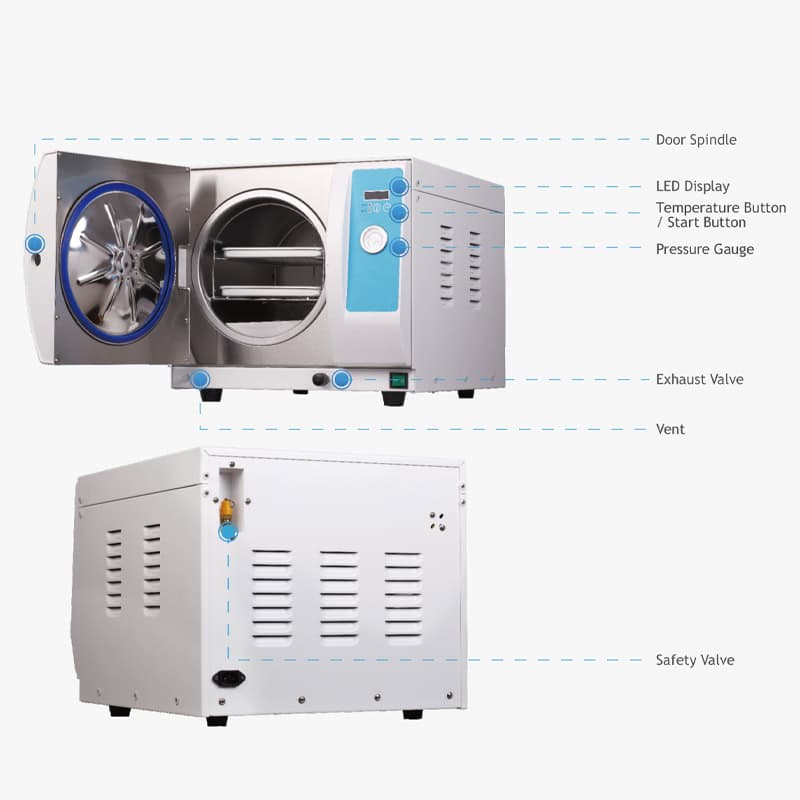
For the tabletop autoclave with LED display, request the current chamber and rack drawings together with the exact model code. Send the supplier the dimensions of the buyer’s actual packaged cassettes. Ask for confirmation against the operating instructions, not simply a photograph showing several trays inside an empty machine.
Do not assume that wrapped instruments, unwrapped instruments and other load types are interchangeable. The clinical team must establish whether the exact machine and available cycles are suitable for the intended use before a procurement comparison can treat that equipment as a viable option.
Build a capacity worksheet with evidence attached
Keep one worksheet for each shortlisted configuration. The purpose is to expose missing information early and make assumptions traceable. A blank field is a question for the supplier or clinic, not permission to substitute a typical value from a different model.
| Planning input | Evidence to collect | What the buyer checks |
|---|---|---|
| Peak instrument demand | Clinic-approved list of sets and their return windows | Whether demand arrives evenly or in overlapping batches |
| Load compatibility | Instrument, packaging and sterilizer instructions | Whether the proposed configuration supports the intended loads |
| Usable tray space | Current rack drawing and actual packaged dimensions | Whether sets fit without an unapproved loading arrangement |
| Full turnaround | Documented cycle information and clinic handling allowances | When equipment and instruments become available again |
| Operating window | Staffing, opening hours and maintenance arrangements | Whether the assumed processing periods are realistic |
| Interruption plan | Service arrangements and approved contingency procedure | How the clinic handles reduced processing availability |
Use complete turnaround when comparing schedules
A displayed cycle time is not automatically the time from receiving used instruments to having released sets available again. The purchasing team should ask what a quoted duration includes, which load it applies to and whether heating, drying or other stages are described separately. Avoid promising an appointments-per-hour figure from a brochure number.
Arrange the proposed batches on a simple timeline using the clinic’s approved workflow. Mark preparation, machine occupancy and the subsequent handling stages separately. This makes it easier to see whether a larger batch clears a queue or merely delays a smaller urgent batch behind it. Do not shorten a validated process to make the spreadsheet balance.
When assessing a front-door autoclave configuration, include loading access and tray handling in the discussion. Compare the same intended workload across shortlisted machines. Different product names or display styles do not establish equivalent throughput.
Choose between additional capacity and resilience
A larger chamber and a second machine address different risks. More usable load space may support larger batches; a separate unit may provide scheduling flexibility or some continuity during service. Neither option guarantees adequate capacity, and two machines do not provide full redundancy unless the remaining equipment can support the clinic’s approved contingency workload.
Ask the team to describe an interruption scenario before choosing. What instrument reserves remain available? Who decides whether processing can continue? How quickly can a qualified service provider respond, and which parts are identified for the exact configuration? Record responsibilities without inventing a guaranteed repair time.
Capacity also needs somewhere to go after processing. Compare the internal dimensions and organization of dental storage cabinets with the clinic’s protected-storage arrangements. Extra chamber volume provides little benefit if released packs cannot be stored appropriately.
Keep equipment availability separate from total instrument inventory in the comparison. Purchasing another machine does not supply additional instrument sets, and buying more sets does not increase approved machine capacity. Showing these as separate budget lines helps the owner evaluate which constraint the proposed investment actually addresses.
Keep a signed baseline for future expansion
Record the approved workload, model configuration, rack arrangement, supporting drawings and unresolved conditions with the purchase decision. Review that baseline when the clinic adds chairs, changes its instrument mix or extends opening hours. Expansion should trigger a fresh check rather than automatic reuse of an earlier capacity recommendation.
RIXI Medical, a dental equipment manufacturer and supplier in Foshan, China, can support model and configuration discussions. Responsibility for the clinic’s processing protocol, suitability assessment and local installation review remains with appropriately qualified professionals.
Frequently asked questions
Can chair count determine the autoclave size?
It is an initial context point, not a sizing rule. Peak instrument demand, usable loads, reserves, staffing and the approved processing schedule determine what capacity must support.
Does a larger chamber always process more sets per day?
No. Rack geometry, compatible loads, turnaround and available operating time can limit throughput. Compare a documented workload instead of nominal litres alone.
Should a clinic buy a second sterilizer?
That depends on its workload and contingency arrangements. Evaluate service interruptions and the capacity of the remaining equipment before describing a second unit as sufficient backup.
What should accompany a capacity enquiry?
Provide packaged set dimensions, peak demand windows, instrument reserves and intended load types. Request current drawings, approved loading information and complete cycle documentation for the exact model.
Scope note: General procurement guidance only. Verify model specifications with the supplier and instrument-processing, installation and local requirements with qualified professionals.
For a configuration review, send RIXI Medical your capacity worksheet and request the relevant drawings and loading documentation.
Need Dental Equipment Pricing or Configuration Details?
Contact RIXI Medical for model comparison, distributor pricing, packaging information, OEM/ODM requirements and after-sales support.
Request Product Information