A dental operator stool is often ordered as a color choice, but upholstery color is one of the least useful fields for confirming whether a stool fits a working team. Seat form, backrest arrangement, lift range, base construction, foot support and caster behavior all change how the stool occupies the operatory. If those details remain implicit, a clinic can receive an attractive product that does not match the approved sample or the intended work zone.
This guide helps clinic owners, procurement teams and distributors compare operator-stool configurations before requesting a final quotation. It treats each stool as an equipment configuration rather than making posture or clinical-outcome claims. Exact dimensions, rated load, materials, adjustment limits, care instructions and service parts must be confirmed for the quoted model.
Define the seating role before comparing finishes
Start by recording who will use the stool, where it will be used and which adjustments the buyer expects. A dentist, assistant and rotating training-room team may not need the same seat, backrest or foot-support arrangement. The purchasing brief should also identify the dental chair, cabinetry and mobile equipment already occupying the room.
Use a neutral description such as “height-adjustable operator stool with backrest” or “stool with full foot ring and rolling base.” Avoid turning an informal label into a specification. Terms such as ergonomic, saddle, leather and stainless may be used differently across catalogs. Ask the supplier to connect every term to the exact product, drawing and material statement.
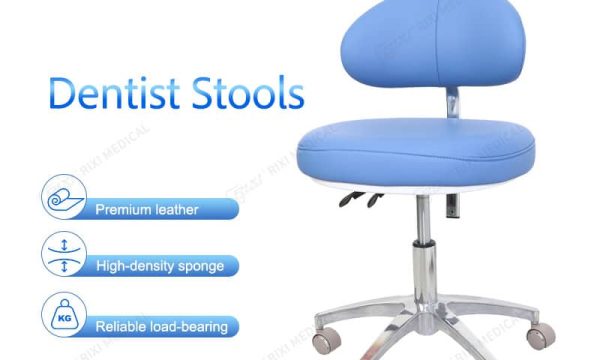
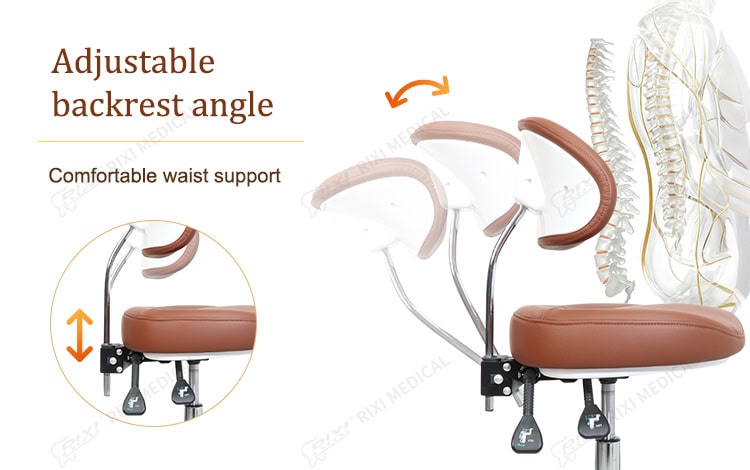
The current RIXI range illustrates several visibly different formats. The blue adjustable dentist stool is listed with an aluminum-style base and casters, while the brown stool with backrest uses a different seat-and-back arrangement. Those listings are useful starting points, but the final order should use model-linked specifications rather than the photographs alone.
Compare seat and backrest architecture as one assembly
Seat shape is not simply a styling decision. A flat round seat, contoured seat and split saddle create different purchasing questions about width, depth, tilt, upholstery seams and replacement-part identity. Request the seat dimensions and an image or drawing that shows where the lift column connects. If the seat can tilt, ask whether that adjustment is included in the quoted version and how its range is documented.
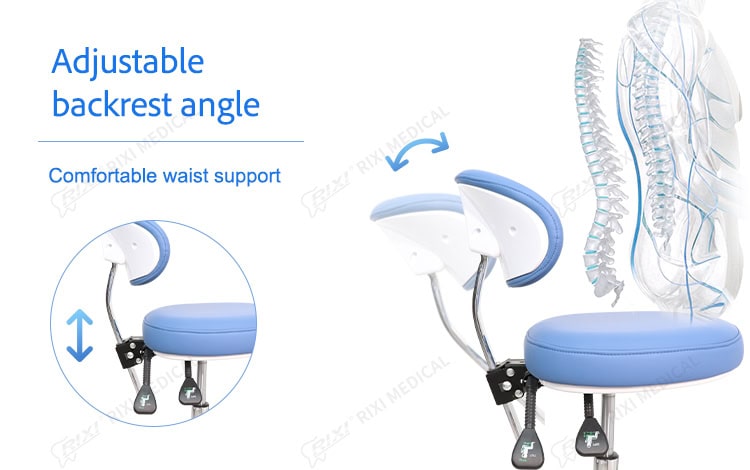
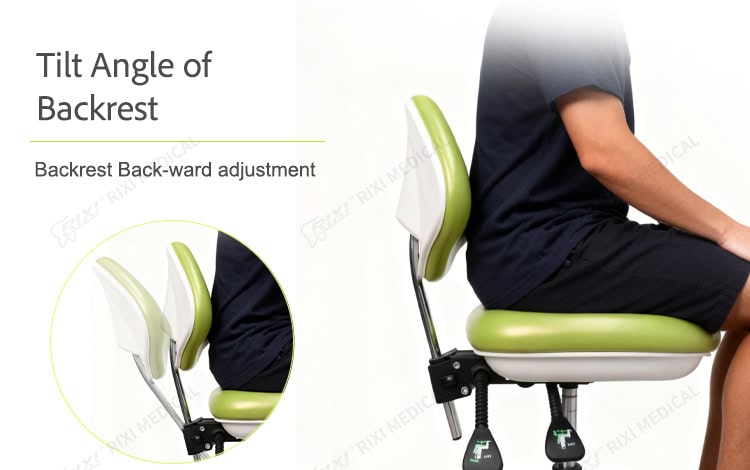
A backrest should be specified by its presence, shape, mounting point and adjustment method. A small support attached beneath the seat is a different assembly from a larger backrest carried on a separate bracket. Ask whether the backrest position or angle is adjustable, which controls apply and whether the bracket and fasteners are included. If the buyer approves a sample, photograph the underside and backrest connection so a repeat order does not rely on front-view appearance.
For a saddle format, review the separate dental saddle stool buyer guide. It addresses that seat family in detail. The purpose here is broader: to make a fair quotation comparison among conventional, backrest and foot-ring operator stools without treating them as interchangeable.
Treat the base, foot ring and casters as one mobile platform
The base determines how the stool meets the floor and carries the lift column. Record the number of legs, overall footprint, stated base material or finish, and the exact caster supplied. “Metal base” is not enough for approving a distributor sample. The supplier should identify whether a polished appearance is a material, a coating or a decorative description and provide the applicable care guidance.
Casters should be reviewed against the real floor surface and maintenance process. Ask for the caster diameter, stem or mounting reference, material statement and replacement-part number when available. A smooth showroom demonstration does not establish how a caster will behave on every floor. Qualified local personnel should confirm suitability for the installed surface and keep floor-care decisions separate from the supplier’s product description.
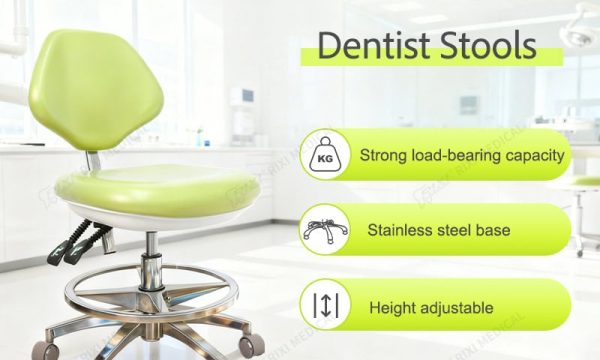
A foot ring adds another controlled interface. The current green stool listing shows a full ring around the lift column and a stainless-style base. Confirm the ring position, adjustment method if any, clearance from the casters and whether the ring is supplied as part of the complete stool or as a separate component. The existing foot-ring receiving checklist provides a focused inspection process.
Turn adjustment claims into quotation fields
“Adjustable” should lead to measurable questions. Request the seat-height range and state whether it is measured loaded or unloaded, from the floor to which reference point, and with which caster and base. If tilt, backrest or foot-ring adjustments are offered, list each separately. Do not transfer a range from a related model because two stools use similar product photographs.
| Quotation field | Buyer question | Evidence to retain |
|---|---|---|
| Seat assembly | Which seat shape, dimensions, upholstery and seams apply? | Model drawing, material statement and approved images |
| Backrest | Is it included, and what position or angle adjustment is supplied? | Configuration sheet and underside/rear view |
| Lift | What is the documented height range and measurement method? | Current specification and sample record |
| Base and casters | Which base finish, footprint, caster and mounting reference apply? | Parts list, drawing and care instructions |
| Foot support | Is a ring included, fixed or adjustable, and how is it identified? | Quotation line, assembly image and packing list |
Ask for the operating and maintenance instructions that apply to the lift, casters, upholstery and any adjustable bracket. Do not invent a universal inspection interval. The supplier’s current documentation and the clinic’s equipment-management process should define checks and service responsibilities.
Use a sample in the actual work zone
A sample review should be reproducible. Confirm the model and configuration first, then place the stool in the intended room with the dental chair and frequently used equipment in their normal positions. Check whether the base enters the intended working zone without striking chair components, cabinets or pedals. Observe whether cables, hoses or floor transitions create conflicts. This is an equipment-layout review, not a clinical assessment.
Have each evaluator use the same checklist: height control, backrest or seat adjustment, caster movement, parking position, access for cleaning and visible product identity. Record observations without converting preference into a medical claim. If a different seat or base is requested after the review, issue a revised configuration rather than treating the change as a color substitution.
Build a repeatable distributor SKU and receiving record
Distributors should give each approved combination its own SKU or configuration code. Link that code to the seat, backrest, lift, foot ring, base, caster, upholstery reference, packaging and applicable documents. If several colors share one mechanical design, keep the color field separate so an artwork or finish change does not hide a change to the platform.
Before dispatch, request a packing list and exterior carton identification. At receipt, compare labels and quantities with the approved order before assembly. Inspect upholstery, painted or polished surfaces, lift column, base, casters and hardware for visible damage or omissions. Assembly and functional checks should follow the current instructions. Record exceptions with photographs and the affected carton or unit identifier.
For broader selection, browse the dentist-chair and stool range. RIXI Medical is a dental equipment manufacturer and supplier based in Foshan, China. Buyers can request model-specific dimensions, packing details and distributor information after identifying the intended seating role and room constraints.
Frequently asked questions
Is a backrest automatically better for every operator?
No single configuration suits every user or work zone. Compare the exact backrest assembly, adjustment method, stool dimensions and local evaluation results rather than making a universal comfort claim.
Can two stools with the same base accept the same seat?
Do not assume so. Ask the supplier to confirm the lift-column, mounting plate, fasteners and approved seat or backrest combination by model and revision.
What should be measured before requesting a quote?
Record the available working envelope, current chair and cabinet positions, floor surface, desired seat-height range and any required backrest or foot ring. Request model drawings for the final comparison.
Which details matter for a distributor repeat order?
Keep the approved model, seat and backrest assembly, lift range, base, caster reference, foot-ring option, upholstery code, packing list and document revisions under one controlled SKU.
Scope note: This article provides general equipment-procurement guidance. Confirm exact specifications with the supplier and have workplace fit, assembly, maintenance and local requirements reviewed by appropriately qualified personnel.
Need Dental Equipment Pricing or Configuration Details?
Contact RIXI Medical for model comparison, distributor pricing, packaging information, OEM/ODM requirements and after-sales support.
Request Product Information