A dental chair may look correct in a quotation and still arrive with documents that describe a different configuration, voltage, control layout or accessory set. For a clinic group or distributor, that mismatch is a purchasing risk before it becomes an installation problem. The practical answer is a controlled document pack tied to the exact chair being ordered—not a folder of generic brochures.
This guide explains how to build and review that pack. It is deliberately separate from a general certificate review: the goal here is to connect model identity, technical drawings, manuals, labels, approved changes and receiving evidence to one physical delivery. Buyers comparing options can start with RIXI Medical’s dental chair range, then use the checklist below when requesting model-specific files.
Treat the chair configuration as the document baseline
Begin with a one-page configuration schedule. It should identify the quoted model, delivery system, operating light, assistant module, foot control, upholstery choice, stool, optional accessories and the destination electrical configuration. Use the supplier’s own part or option codes where they exist. Descriptions such as “standard light” or “complete accessories” are too loose for receiving inspection.
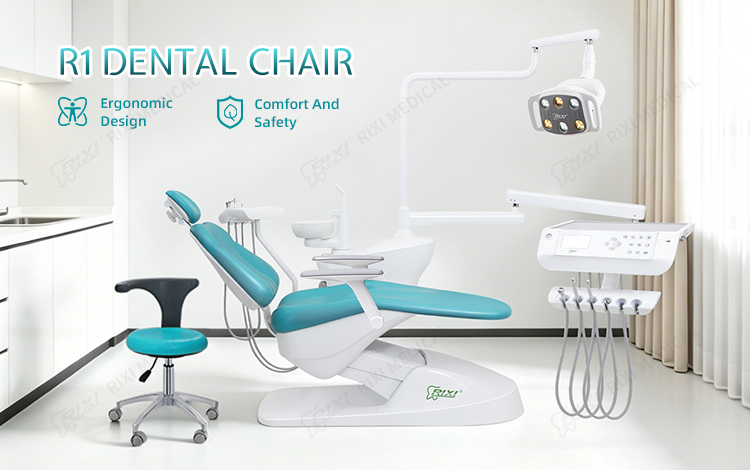
The baseline should carry a revision or approval date and be referenced by the purchase order. If the order includes the R1 integrated dental chair, for example, the approved schedule still needs to state which quoted options are included. A product-family name alone does not freeze the delivered scope.
Request records that answer different questions
A useful document pack is not one certificate. Each record has a different job, and the model reference must be consistent across the set. Ask the supplier to explain any alternative names, series codes or private-label model numbers in writing before approval.
| Record | What it should identify | Buyer use |
|---|---|---|
| Approved quotation or configuration schedule | Model, options, quantities and agreed destination configuration | Commercial and receiving baseline |
| Dimension and utility drawing | Footprint, service points, clearances and drawing revision | Room coordination with locally qualified installers |
| Current manuals | Exact model or series, issue date and applicable configuration | Installation, operation and maintenance handover |
| Label and rating information | Manufacturer identity, model, serial format and electrical data | Match the delivered unit to its paperwork |
| Market-access evidence, when applicable | Legal manufacturer, product scope, model list and validity details | Review with an appropriately qualified local professional |
| Inspection record and packing list | Order reference, unit identity, included cartons and accessories | Release and incoming inspection evidence |
These records should be readable and current. A certificate can be genuine yet irrelevant to the quoted model, or a manual can be technically useful but describe an older control panel. RIXI Medical’s quality-control overview provides context on supplier-side inspection, while the detailed CE-document review guide explains how to check declarations and certificate scope without treating a logo as proof.
Separate market eligibility from product specification
Regulatory and registration requirements vary by jurisdiction, product classification and the parties placing the product on the market. Buyers should not infer destination-market eligibility from a website badge, an unrelated management-system certificate or a document issued for another model. Request the applicable evidence for the exact chair and have it reviewed by a qualified person familiar with the destination market.
At the same time, do not expect a regulatory document to replace engineering information. A declaration does not tell the contractor where utilities enter the chair base, and a quality-management certificate does not confirm the accessory set in the crate. Keep legal-market review, technical coordination and purchase-scope control as three connected but distinct checks.
Link every revision to the physical product
Document control becomes useful when the delivered chair can be traced back to the approved records. Before production release, confirm how the supplier will identify the model and individual unit. Ask for a sample product label or artwork, the serial-number format, the final packing-list format and the inspection record that will accompany the order.
Photos can support this trail when they show the order reference, overall chair, control panel, light, delivery unit, assistant module, foot control and packed accessories. They should supplement—not replace—the signed or approved records. A factory photograph without an order reference may show a similar chair from a different production batch.

Control substitutions and late order changes
Any proposed substitution should be evaluated against the baseline before it is accepted. Record the affected part or option, reason for the change, drawing or specification impact, appearance impact, compatibility implications and documents that must be reissued. Approval in a chat thread is difficult to reconcile later; use a numbered change register or revised configuration sheet.
After an approved change, ask which downstream records were updated. A changed operating light may affect the configuration schedule, parts list, product photographs, manual references and packing list. A modified electrical option may also require revised label information. The dental chair manufacturer audit guide covers broader supplier controls; this checklist stays focused on the records for one order.
Prepare installation and service handover before shipment
Give the installer the latest dimension and utility drawings early enough to review the room. Confirm the drawing revision again before shipment, especially if the order changed. Local professionals should verify electrical, water, drainage, compressed-air, ventilation and structural requirements under the rules that apply at the installation site.
The service handover should also identify consumables, maintenance points, replaceable components, fault information and the route for technical questions. Request model-specific materials rather than accepting a general chair-family manual without clarification. RIXI’s technical support resources can be used as a starting point for document requests, but the supplier should confirm the exact files that apply to the purchased model.
Use the same pack during receiving inspection
Receiving staff should not have to reconstruct the order from emails. Give them the approved configuration, final packing list, serial or label format, photo record and change register. They can then check carton count, visible transport damage, model and electrical labels, upholstery and color, principal assemblies, loose accessories and document presence before installation begins.
Record discrepancies by carton or unit identity and photograph them before packaging is discarded. Do not power, install or test equipment beyond the receiving team’s competence; follow the manufacturer’s instructions and use qualified local personnel. The wider equipment buying guides provide additional planning topics for procurement teams.
A practical approval sequence
- Freeze the quoted configuration and option codes.
- Match drawings, manuals and label information to that model.
- Review destination-market evidence separately with qualified local support.
- Approve any substitutions through a traceable change record.
- Request final inspection, packing and identification evidence before release.
- Issue the same controlled pack to receiving, installation and service teams.
Scope note: This is procurement and document-control guidance, not legal, regulatory or installation advice. Exact specifications and required records vary by model and jurisdiction. Confirm them with the supplier and appropriately qualified professionals before purchase or installation.
Frequently asked questions
Is a certificate enough to approve a dental chair order?
No. Buyers also need model-specific commercial, technical, installation, identification, inspection and packing records. Any market-access evidence should be checked for relevance to the exact model and destination.
When should drawings be frozen?
Freeze the initial drawing before room work is finalized, then reconfirm its revision after any approved order change and before shipment. The locally qualified installer should review site requirements.
What should be checked when model names differ between documents?
Ask the supplier for a written model-mapping explanation that connects the quotation name, label model, manual scope and any private-label designation. Do not assume similar names refer to the same configuration.
How should a distributor manage private-label documentation?
Define who controls model names, labels, manuals, translations and change approval. Keep the supplier’s technical identity and the private-label sales identity traceable within the controlled file set.
Request a model-specific document pack
RIXI Medical is a dental equipment manufacturer and supplier based in Foshan, China. Buyers can request configuration details, technical drawings and a model-specific document list for review before approving a clinic, distributor or OEM/ODM order.
Need Dental Equipment Pricing or Configuration Details?
Contact RIXI Medical for model comparison, distributor pricing, packaging information, OEM/ODM requirements and after-sales support.
Request Product Information