A dental chair branding request is incomplete when it consists of a logo attachment and “put it here.” A production team also needs to know which chair variant, which surface, the artwork revision, its size and orientation, and what evidence closes the approval. Without that information, an attractive screen mockup can become a disputed delivered unit.
This guide addresses cosmetic artwork approval for a distributor or private-label chair order. It does not promise that every model accepts a logo, embroidery, a different panel or an exclusive design. Start with the current dental chair range and ask the supplier which branding applications are supported for the selected configuration.

Separate a cosmetic request from an engineering change
Begin by describing the intended result, not by prescribing a process the supplier may not offer. A logo on a supported surface is different from changing a molded panel, altering a control interface or developing a new chair structure. Ask the supplier to classify the request and identify the review, sample and documentation needed.
Keep functional changes outside the cosmetic approval unless their engineering scope is explicitly included. A signed logo proof does not approve altered electrical components, software, movement controls or utility interfaces. Those changes need their own assessment by the responsible specialists. Likewise, a supplier’s willingness to discuss ODM work does not establish ownership, exclusivity or an agreed development program.
Record the commercial scope separately: which items can be branded, any setup or tooling work, who supplies files and who approves the result. Minimum quantities, costs and timing must come from the current quotation; this guide sets no universal terms.
Identify the surface and the artwork together
Use a marked drawing or photograph of the exact chair variant to locate the proposed artwork. “Back of chair” is too broad if the chair has several panels or upholstery sections. Identify the relevant part, its finish and the viewpoint used for orientation. For the R3 chair configuration, for example, request the current surface reference rather than assuming every catalog view represents an available branding location.
Ask the supplier which file format and production-ready information it needs. Keep the original artwork and the manufacturing proof distinguishable. A preview exported from a messaging application may be useful for discussion but should not silently replace the approved source file.
| Approval field | What to record | Why it matters |
|---|---|---|
| Product reference | Chair model, variant and affected part | Prevents approval being applied to a different panel |
| Artwork identity | Filename, revision, date and responsible approver | Distinguishes the released file from earlier proposals |
| Placement | Dimensions, orientation and reference points on a marked drawing | Avoids relying on a cropped photograph |
| Appearance | Specified colors and agreed physical proof where needed | Separates screen appearance from the accepted finish |
| Application scope | Supplier-confirmed process and applicable surface | Avoids assuming one method works on every material |
Make open questions visible. If the supplier has not confirmed whether a proposed application is feasible, label it as pending rather than placing it in the released order file.
Use a physical proof for material-dependent decisions
A digital overlay shows approximate placement, not how the application looks or behaves on the finished material. Ask what physical proof is appropriate: a representative surface sample, a marked component or the agreed sample chair. The proof should identify the material, finish and application process it represents.
The upholstery specification guide covers material and color selection separately. Do not reduce that decision to a logo proof. Stitching, printing, embroidery, embossing or adhesive applications are possibilities to discuss, not capabilities established for every chair or upholstery option.
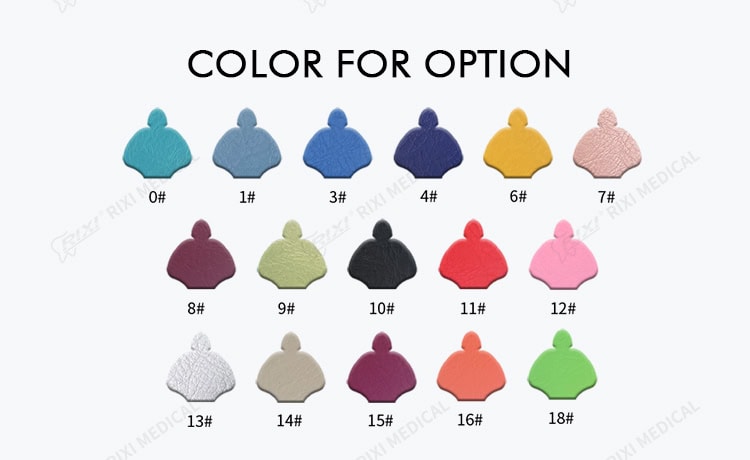
Review legibility, position and finish against agreed criteria. Request surface-care compatibility information for the decorated part; do not infer durability or disinfectant compatibility from a photograph. The dental chair materials checklist provides a separate framework for documenting the underlying materials.
Keep decorative artwork apart from product identification
A buyer’s logo is not a substitute for the product’s technical identity. Identify which markings belong to the cosmetic request and which labels, model identifiers or instructions require a separate technical review. Do not cover existing identification or imply an approval through an unverified symbol.
Have the responsible qualified parties review the actual destination-market labeling and documentation requirements. Requirements vary by jurisdiction and product; an artwork proof is not regulatory authorization. Keep any unresolved label wording outside final approval until its responsible reviewer has cleared it.
If manuals, cartons or accessory labels carry the buyer’s brand, give each its own file reference. Matching logos do not establish that the model name, configuration and language are correct across all documents.
Release one baseline and control later changes
Approval should identify exactly what was accepted and any remaining conditions. Retain the approved file, marked placement drawing, proof photographs and applicable sample reference together. A message saying “looks good” is difficult to interpret later if several versions were shared that day.
Connect the released artwork set to the purchase order and its variant schedule. If an order contains different brands or finishes, show the allocation explicitly rather than leaving production to infer it from separate conversations. Ask how the supplier prevents obsolete files from returning to use. The manufacturer audit guide addresses the wider production-control process.
For repeat orders, confirm that the surface, component and application process remain unchanged. A replacement panel or upholstery revision may require a new proof even when the logo file is identical. Record the approved change and its affected orders instead of overwriting the old file without a trace.
Compare the delivered application with the release record
At the agreed inspection stage, compare the decorated component with the controlled proof. Check the product identity first, then the visible artwork, orientation and placement using the agreed reference points. Photographs should show enough of the component to identify its location, not only a tightly cropped logo.
Separate an appearance discrepancy from a functional or documentation issue. Record what differs, the affected unit or batch reference and the evidence needed to close it. If rework is proposed, obtain the supplier’s reviewed method and a new acceptance record. Do not prescribe a solvent, adhesive or surface treatment without material-specific confirmation.
Keep that inspection result with the order file. It provides a usable reference for a later replacement part and prevents the next order from relying only on whichever photograph is easiest to find.
Four questions before artwork release
Can a logo be applied to any dental chair surface?
Do not assume so. Ask the supplier to confirm the supported surface and application method for the exact model, finish and proposed artwork.
Is a digital mockup enough to approve appearance?
It may define layout, but it does not establish the finished material appearance. Agree which decisions need a physical proof and how that proof is identified.
Does private labeling mean a new exclusive chair design?
No. Cosmetic branding and a separate engineering-development program are different scopes. Any exclusivity, ownership or development commitment needs explicit agreement.
What belongs in a repeat-order branding file?
Keep the released artwork revision, surface reference, placement drawing, approved proof and affected order variants. Reconfirm changes to the part or application process before reuse.
Scope: General supplier-side procurement guidance, not a promise of model-specific customization or regulatory advice. Confirm capabilities, materials, drawings and care instructions with the supplier and use qualified review for applicable labeling obligations.
RIXI Medical is a dental equipment manufacturer and supplier based in Foshan, China. Request an artwork-feasibility review with the selected chair model, proposed surface and controlled logo file.
Need Dental Equipment Pricing or Configuration Details?
Contact RIXI Medical for model comparison, distributor pricing, packaging information, OEM/ODM requirements and after-sales support.
Request Product Information