Dental chair upholstery is easy to reduce to a color choice. For a clinic project or distributor order, that is too narrow. The upholstery package affects how consistently a chair can be specified, cleaned, replaced and matched across repeat orders. A photograph may show an attractive finish, but it cannot confirm the material reference, seam layout, cushion construction or whether the selected color will remain available for later units.
This guide is for clinic owners, procurement teams, contractors and distributors preparing a technical enquiry. It explains the evidence to request before approving dental chair upholstery. Exact materials, dimensions, cleaning instructions and replacement methods are model-specific; confirm them with the supplier and have locally qualified personnel review installation and infection-control requirements.
Buyers comparing complete units can first review the RIXI dental chair range, then use the checks below to turn a color preference into a controlled specification.
Define the upholstery package, not just the color
Start by identifying every upholstered part included in the quotation. Depending on the chair configuration, the package may include the headrest, backrest, seat, leg rest, arm supports and an operator stool. A supplier image does not prove that all visible pieces use the same material reference or that the stool is included.
Ask for a configuration list that connects each upholstered part to the chair model and quotation revision. If a clinic is comparing the R1 integrated dental chair with another platform, the buyer should not assume that covers, cushions or mounting points are interchangeable. Product family, model code and production revision belong on the enquiry.
Request material evidence before approving a finish
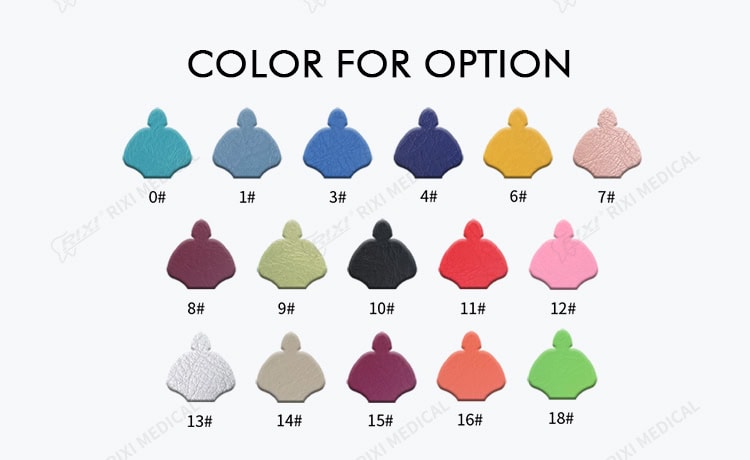
Terms such as leather-look, synthetic leather, PVC and PU are often used broadly in catalogues. They are not a complete specification. Request the supplier’s current material name or code, the approved color reference and any available care instructions. For a large project, a physical swatch or production sample is more dependable than a phone or monitor image, because display settings and photography can alter the apparent shade and texture.
The buyer should also ask whether the upholstery is a standard production option, a custom option or a temporary color. This matters for phased projects. If ten chairs are ordered now and five later, the second batch may not match the first unless the material code and change-control process are recorded. Even with the same reference, buyers should ask how normal batch variation is handled.
Inspect seams, edges and high-contact zones
Visual inspection should move beyond the center of the seat. Look at stitched or bonded seams, corners, transitions around the headrest, the underside of cushions and the points where upholstery meets plastic or metal parts. These areas reveal whether the cover sits evenly and whether edges are exposed to repeated contact.
Seam layout also affects cleaning access. A design with fewer recesses may be simpler to wipe, but the correct assessment depends on the actual chair and the clinic’s approved cleaning process. Ask for close-up photographs of the production version rather than relying on a generic rendering. On a sample chair, record wrinkles, uneven tension, loose edges, color inconsistency and any area that is difficult to access.
Match cleaning products to supplier instructions
Do not select an upholstery finish first and ask about cleaning later. Provide the supplier with the types of cleaning agents and routines the clinic expects to use, without assuming universal compatibility. Request written cleaning and care guidance for the exact upholstery option. Requirements vary by product and jurisdiction, so the clinic’s responsible infection-control personnel should approve the final routine.
A practical compatibility review asks whether the material instructions address contact time, wiping method, prohibited chemicals and actions to take after a spill. The objective is not to obtain a vague claim that the surface is “easy to clean.” It is to ensure that the chair, the chosen material and the clinic’s approved process are documented together. The broader RIXI quality-control overview can help buyers frame questions about incoming material checks and production inspection.
Confirm cushion shape and movement clearance
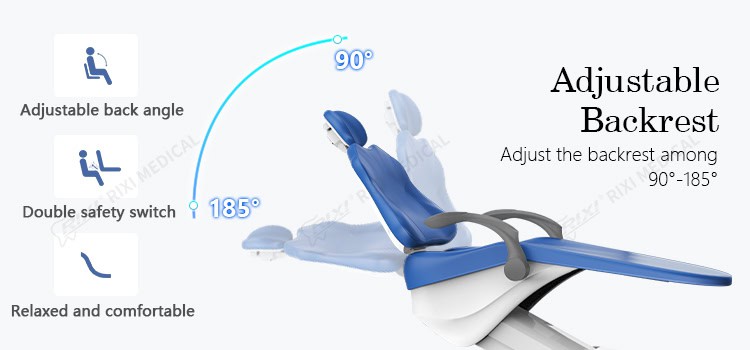
Upholstery cannot be evaluated independently from the cushion underneath it. Ask whether the quoted chair uses a one-piece or multi-part cushion set and whether the headrest, backrest and seat covers are removable as separate service items. Confirm the actual geometry from current drawings or photographs.
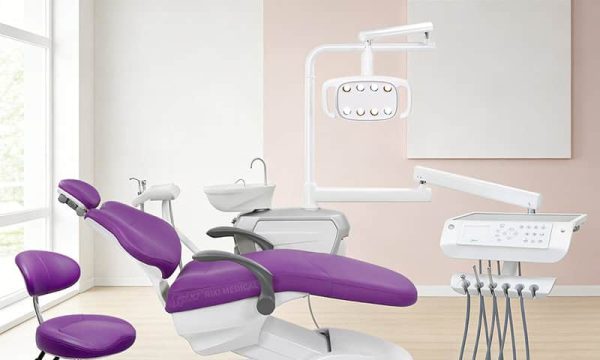
Movement should be reviewed with the upholstery installed. During sample evaluation, move the chair through the supplier-approved range and observe whether the material bunches, pulls, rubs against adjacent components or obstructs a joint. This is a mechanical fit check, not a clinical performance claim. The purple R3 hanging-delivery chair illustrates how the upholstered surfaces relate to the headrest, arm support and chair base as one assembled system.
Plan replacement scope before the chair ships
For service planning, ask what can be ordered later: a complete upholstery set, individual cushion assemblies, covers only or factory-fitted replacements. The answer should state whether special tools, adhesives, fasteners or trained installation are required. Do not assume that a local upholsterer can reproduce the original geometry or attachment method from a photograph.
Distributors should request part references and an identification method. A replacement enquiry is easier when it includes the chair model, serial or production reference, color code, affected cushion and clear photographs. If a product revision changes the mounting interface or cushion profile, the supplier should be able to identify the compatible option before shipment.
Use a controlled sample-approval record
A short approval record prevents sales descriptions from becoming the only source of truth. The buyer can use the following fields:
- Chair identity: model, configuration and quotation revision.
- Upholstery identity: supplier material name or code, color reference and approved swatch date.
- Included parts: headrest, backrest, seat, leg section, arm supports and stool, as applicable.
- Visual checks: shade, texture, seam alignment, edge finish and surface condition.
- Care documents: current cleaning and maintenance instructions for the exact material.
- Service information: replacement scope, part references, fitting method and support contact.
- Approval: sample photos, reviewer, date and any accepted limitations.
For a premium configuration, the R5 advanced dental chair provides another useful reference for discussing color, coordinated stool upholstery and the relationship between upholstered parts and accessories. Buyers should still request the current configuration sheet because website images may show optional items.
Questions to include in a supplier enquiry
Before approving the purchase order, ask the supplier to answer these questions against the quoted model:
- What material code and color reference apply to each upholstered component?
- Is the selected finish standard, custom or subject to minimum batch requirements?
- Which cleaning and care instructions apply to this exact material?
- What shade or texture variation may occur between production batches?
- Can individual cushions or covers be ordered later, and how are compatible parts identified?
- Does replacement require factory fitting, special tools or trained service personnel?
- Which photos, swatches or signed samples will control production approval?
RIXI Medical is a dental equipment manufacturer and supplier based in Foshan, China. Buyers can request current upholstery options, chair photographs and technical documents through the technical support page. For distributor pricing or OEM/ODM color coordination, send the model, quantity, destination and preferred color reference through the contact page.
Frequently asked questions
Can a screen image be used to approve dental chair color?
A screen image is useful for shortlisting, but it is not a controlled color reference. Display settings, lighting and photography can change the apparent shade. For project orders, request the supplier’s material code and consider a physical swatch or approved sample.
Are dental chair upholstery parts interchangeable between models?
Do not assume interchangeability. Cushion geometry, mounting points, covers and production revisions may differ. Provide the exact chair identity and affected component when requesting a replacement.
Should the clinic specify its cleaning products before ordering?
Yes. Share the expected cleaning process with the supplier and request written care instructions for the proposed material. The responsible local team should confirm that the final routine meets clinic and jurisdictional requirements.
What should a distributor retain after upholstery approval?
Retain the chair configuration, material and color codes, approved sample evidence, care instructions, replacement part references and the quotation revision. These records support repeat orders and later service enquiries.
Need Dental Equipment Pricing or Configuration Details?
Contact RIXI Medical for model comparison, distributor pricing, packaging information, OEM/ODM requirements and after-sales support.
Request Product Information