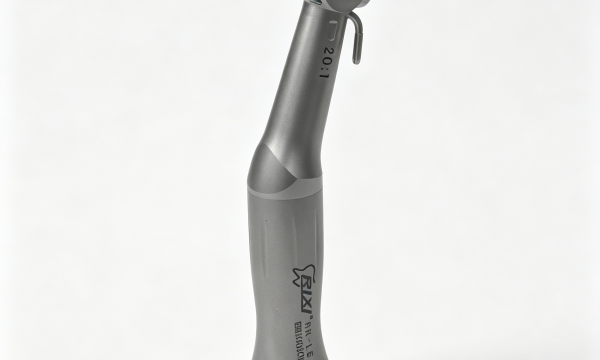
A handpiece maintenance device should be selected around the handpieces a clinic actually owns, not around a generic promise of faster oiling. Connector compatibility, dosing control, air supply, mist containment, cleaning access and consumable availability all affect whether the machine fits daily work.
This comparison is written for clinic owners and procurement teams choosing between manual lubrication and an automatic oiling unit. Always follow the handpiece and maintenance-device instructions; service requirements vary by model.
First decide what problem the machine must solve
Manual oiling may suit a small, controlled workload when trained staff can apply the correct lubricant consistently. An automatic unit can standardize part of the process when several handpieces are maintained each day, but it does not replace cleaning, inspection, sterilization or manufacturer-specific care.
Before requesting prices, list every high-speed, low-speed or other compatible handpiece family, its connector, daily volume and approved lubricant. Ask whether adapters are supplied, optional or unavailable.
Compare the details that change daily use
| Decision area | Questions for the supplier |
|---|---|
| Compatibility | Which handpiece connections and adapters are supported? |
| Lubricant delivery | How is dosing or cycle selection controlled for the model? |
| Air and power | What supply, pressure, connection and electrical requirements apply? |
| Mist management | How are oil mist and residue contained and cleaned? |
| Service access | Which filters, seals or parts need inspection and who can replace them? |
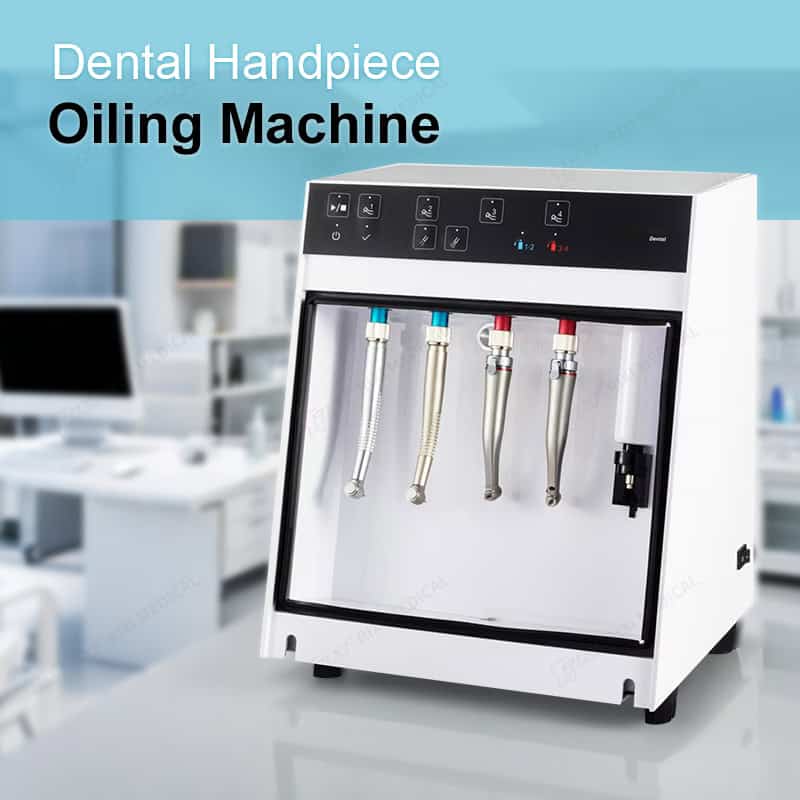
The dental handpiece oiling machine page provides a product starting point. Request the current manual, dimensional information, connection requirements and compatible adapter list before confirming an order.
Do not compare the oiling machine in isolation
The unit must sit within the clinic’s complete instrument-processing flow: receiving, cleaning, drying, lubrication where required, packaging, sterilization and storage. The exact sequence depends on the instrument instructions and local clinic protocol. Buyers reviewing a broader setup can compare the dental handpiece range and relevant autoclave equipment, but each device requires separate model-specific confirmation.
Air quality also matters when compressed air is required. Ask for the unit’s actual supply specification and review it against the clinic’s approved air source rather than assuming any compressor connection is suitable.
Assess cleaning and service access before purchase
Oil residue can accumulate around adapters, chambers and collection areas. Ask staff to review how parts are removed, wiped or replaced, and whether routine access requires tools. The supplier should distinguish operator maintenance from work reserved for qualified service personnel.

A nearby dental storage cabinet may help separate clean supplies and adapters, provided its materials and layout fit the clinic’s cleaning routine.
Run a sample evaluation
- Verify the delivered model, adapters and accessories.
- Test the intended handpiece connections without forcing a fit.
- Confirm power and air requirements at the proposed location.
- Review lubricant loading, cycle selection and residue collection.
- Check operator cleaning steps and access to consumables.
- Record the support contact and fault-report evidence required.
Use the evaluation to identify staff training needs and total operating requirements. Do not invent a universal cycle for all handpieces: the correct care process remains product-specific.
Manual oiling or an automatic unit?
Manual care offers low equipment complexity but depends heavily on staff consistency. An automatic unit can improve repeatability and containment for a suitable workload, while adding adapters, consumables and maintenance of its own. The better choice is the one that matches documented handpiece compatibility, workload and service capability.
Frequently asked questions
Can one oiling machine maintain every dental handpiece?
No. Obtain a written compatibility and adapter list for the exact machine and handpiece models.
Does automatic oiling replace cleaning and sterilization?
No. It is one step within a wider process. Follow each instrument’s current instructions and the clinic’s approved protocol.
What documentation should accompany a quotation?
Request the specification, manual, adapter list, air and power requirements, maintenance schedule and warranty or service terms.
Scope note: This article provides general procurement guidance. Confirm all maintenance steps with the equipment and handpiece suppliers and locally qualified professionals.
RIXI Medical is a dental equipment manufacturer and supplier in Foshan, China. To request specifications, adapter information, distributor pricing or OEM/ODM options, contact the RIXI Medical team.
Need Dental Equipment Pricing or Configuration Details?
Contact RIXI Medical for model comparison, distributor pricing, packaging information, OEM/ODM requirements and after-sales support.
Request Product Information