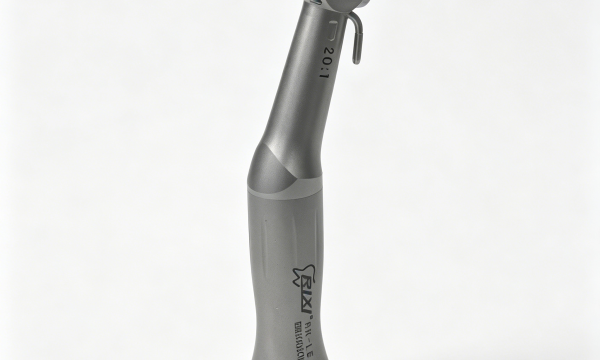
A saddle-shaped dental stool can look compact and adjustable in a product photograph, yet still be a poor purchasing match for the intended operator, treatment room or service plan. The buyer needs more than the word “ergonomic.” Seat geometry, adjustment range, base footprint, caster choice, upholstery, cleaning access and replacement parts all need to be documented before a clinic or distributor approves a model.
This guide explains how to compare a dental operator stool range as equipment. It does not make medical or posture-treatment claims. Individual fit should be evaluated by the intended users, while exact model specifications should be confirmed with the supplier.

Define who will use the stool and where
A dentist, assistant, hygienist and laboratory technician may use the same room differently. Before requesting a quotation, record the intended user group, typical working zone, available floor area, cabinet clearance and whether the stool must move between operatories. A distributor should also decide whether one model will cover several buyer profiles or whether separate configurations are easier to explain and stock.
Do not use the user’s height as the only selection input. The chair or bench height, preferred foot position, instrument reach and the thickness of the seat all affect the usable setup. For a multi-user clinic, the adjustment controls must be easy to identify and operate without tools.
Compare seat geometry—not just the product name
Suppliers use terms such as saddle, split saddle, contoured seat and operator stool inconsistently. Request front, side and underside photographs plus the seat dimensions. Confirm whether a split seat is fixed or adjustable, whether the front edge is narrow or broad, and how the seat angle is controlled. The split saddle dentist stool is one configuration example, but its exact dimensions and adjustment method should be checked against the current specification.
| Configuration | Questions for the supplier | Sample check |
|---|---|---|
| Single-piece saddle seat | What are the width, depth, contour and edge shape? | Confirm that the intended users can mount, adjust and move without interference. |
| Split saddle seat | Is the split fixed? Can width or angle be adjusted? Which controls are included? | Check that both seat sections remain stable through the adjustment range. |
| Saddle seat with back support | How do height, depth and tilt of the support change? | Verify that the support does not block rotation, controls or cabinet clearance. |
| Conventional flat or contoured stool | Which height and backrest options are available? | Compare the complete working envelope rather than seat appearance alone. |
Record the adjustment envelope
A quoted “adjustable height” is incomplete. Ask for the minimum and maximum seat height measured using a stated reference point, the cylinder option, seat-angle range, back-support range and control locations. If several gas-lift cylinders are available, identify which one is included in the quotation and how that choice changes the finished height.
Check whether the levers can be reached while seated and whether similar-looking controls perform different functions. For shared equipment, labels or a short setup card can reduce confusion during handover. Buyers should also ask whether the seat rotates freely, has a defined stop or uses any model-specific locking mechanism.
Check the base, casters and room surfaces
Base diameter affects both stability and the space needed to approach a dental chair. Record the number of caster points, base material, surface finish and the type of caster supplied. A narrow base may be useful in a crowded room, but buyers still need the supplier’s approved configuration and should not modify the base or cylinder informally.
Flooring conditions matter. Hard floors, resilient flooring, thresholds and mat edges can change how a stool moves. Ask whether alternative casters are available and how they are identified. During sample evaluation, roll the stool across the actual or representative floor, turn near cabinetry, and check for cable or tubing conflicts around the dental unit.
Decide whether back support belongs in the specification
A backrest is not automatically better for every operator or task. Treat it as a configurable component. Verify its height range, depth, tilt, width, mounting method and whether it can be removed or replaced. The black saddle stool with backrest shows one support arrangement; a separate adjustable dentist stool illustrates a more conventional seating format.
For procurement, the key question is repeatability. If a distributor orders the same item six months later, will the support, cylinder, controls and base match the approved sample? Keep the model code and configuration sheet with the purchase order.
Review upholstery and cleaning boundaries
Request the upholstery material description, color reference, seam layout and cleaning instructions for the quoted model. Confirm whether the seat cover, foam or complete seat assembly is replaceable and whether replacement colors remain available under a stable item code. Avoid describing any surface as universally resistant to chemicals; compatibility depends on the exact material and the cleaning product used.
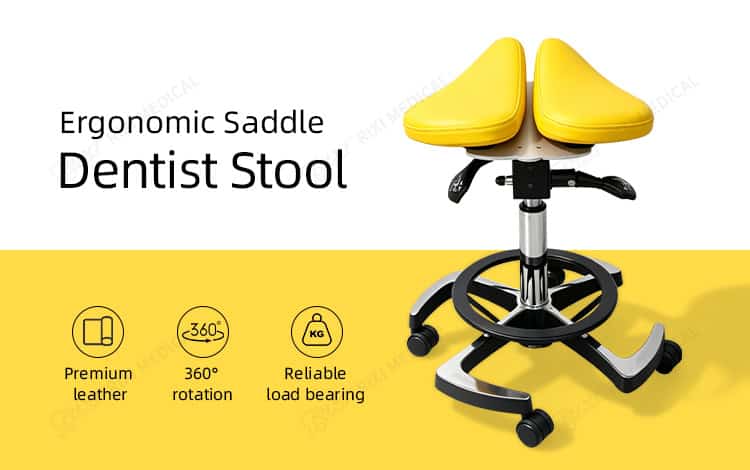
A sample inspection should look at seam placement, underside fastening, edges around controls and the transition between the seat and support hardware. These areas affect cleaning access and replacement work. The colorful split saddle stool demonstrates how upholstery choice and split-seat construction need to be recorded together.
Ask for service parts before placing a repeat order
A useful stool parts list identifies the cylinder, casters, control mechanism, base, seat assembly, back support and fasteners where these are serviceable items. Ask which parts can be replaced locally, what tools or instructions are required, and when the complete stool must be returned or taken out of service.
For distributor programs, maintain one configuration register showing the approved model, color, cylinder, base and caster option. Record any production revision before a repeat order. RIXI Medical, a dental equipment manufacturer and supplier based in Foshan, can provide model-specific configuration details and available replacement-part information for its current range. Buyers can also review the company’s quality-control overview when preparing supplier questions.
Use a structured sample acceptance check
- Match the model, color and configuration with the approved quotation.
- Measure the minimum and maximum working height using one consistent reference point.
- Operate every lever and confirm the documented adjustment functions.
- Inspect seat stability, back-support movement, base, casters and visible fasteners.
- Move the stool through the intended working area and check cabinet and equipment clearance.
- Review cleaning instructions and replacement-part identifiers.
- Photograph the approved sample and retain the configuration record for repeat orders.
If one sample will represent a larger distributor order, define which differences are permitted—such as upholstery color—and which must remain unchanged. Any later change to the cylinder, base, seat structure or control mechanism should trigger a documented review.
Frequently asked questions
Is a dental saddle chair suitable for every operator?
No universal fit should be assumed. The intended users should evaluate the seat geometry, adjustment range, controls and working environment before approval.
What measurements should appear on a quotation?
Request seat width and depth, height range, base diameter, back-support range where applicable, product weight and package dimensions using clearly stated measurement points.
Should a clinic order one stool model for dentists and assistants?
Only if the sample works for both roles and the shared configuration is practical. Different working zones or height needs may justify separate models.
What should a distributor keep for repeat orders?
Retain the model code, configuration sheet, color reference, cylinder and caster options, approved sample photographs, parts list and revision history.
Scope and next step
This article provides general equipment-purchasing guidance, not medical or ergonomic treatment advice. Confirm exact specifications with the supplier and involve appropriately qualified local professionals where workplace assessment is required.
To compare current saddle and operator stool configurations, request the applicable dimension sheet, color options and service-parts list through RIXI Medical’s inquiry page.
Need Dental Equipment Pricing or Configuration Details?
Contact RIXI Medical for model comparison, distributor pricing, packaging information, OEM/ODM requirements and after-sales support.
Request Product Information