
When a clinic’s only autoclave becomes unavailable, buying a larger machine later does not solve the immediate interruption. The owner needs to know which approved resources remain available, who can assess the equipment and how the practice will make service decisions while the fault is unresolved.
This is a business-continuity purchasing guide for clinic owners and equipment managers. It does not authorize alternative sterilization methods or changes to clinical protocols. The clinical lead must decide how patient services are managed under applicable requirements and the manufacturers’ instructions.
Define the interruption before buying a backup
Separate planned maintenance from an unexpected equipment fault. Also consider a building utility interruption, unavailable trained staff or a problem affecting the whole processing room. A second machine in the same location may address one risk while sharing the cause of another. Calling it “full redundancy” without examining those dependencies creates false confidence.
The autoclave capacity worksheet assesses normal workload. A continuity plan asks a different question: what can the clinic safely support when its normal equipment or working arrangement is unavailable? Keep those assumptions separate so an ordinary busy-day calculation is not mistaken for an interruption plan.
Prepare a decision sheet the team can actually use
Identify the person who receives a fault report, the clinical decision owner and the supplier or qualified service contact. Record an alternate contact where appropriate. Use business contact information that the clinic is authorized to hold, and keep the sheet accessible to the relevant staff.
State where the machine identifier, current manual and service records are stored. A support request should include an accurate description of the observed problem, the displayed message if any, and what happened immediately before it. Staff should report observations without opening the housing, bypassing an alarm or attempting an improvised repair.
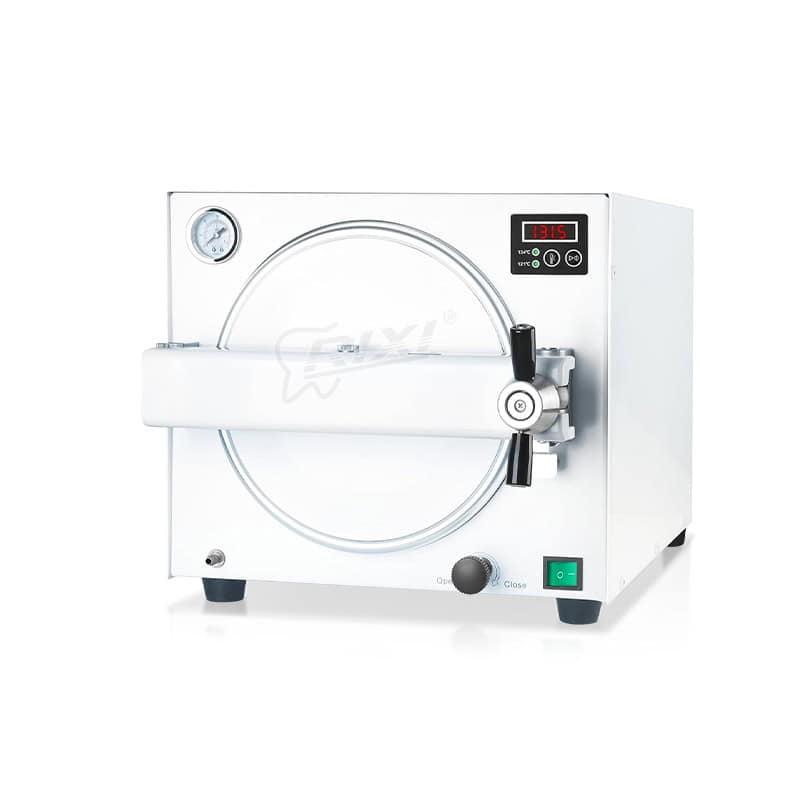
Compare continuity options by the resources they need
| Option to evaluate | Questions for the clinic and supplier | Limit to recognize |
|---|---|---|
| Additional installed equipment | Can the remaining approved equipment support the contingency workload? | Shared utilities or room restrictions may affect both machines. |
| Approved instrument reserves | Which usable sets are available under the clinic’s own storage and release arrangements? | More sets do not restore a failed processing stage. |
| Qualified service support | Who can assess the model, and what information do they need? | A contact number is not a guaranteed response or repair time. |
| Temporary equipment arrangement | What suitability, installation and handover review would be needed? | A loan unit is not automatically equivalent or ready for use. |
| Externally arranged support | Is a locally permissible, clinic-approved arrangement available? | Eligibility, transport, traceability and responsibilities require local review. |
Do not select an option from this table as a universal recommendation. Some arrangements may be unavailable or unsuitable in a particular market. The purpose is to expose dependencies before the owner relies on an option that has never been confirmed.
Make service discussions specific to the installed model
Request the supplier’s support process, working contact arrangements and the evidence needed for technical review. Ask which local tasks require qualified personnel. Discuss how replacement parts are identified and whether a proposed part needs serial or configuration information before it can be dispatched.
The autoclave spare-parts identification guide explains why appearance alone is insufficient. Keep that information with the installed equipment record. Do not build a reserve of unidentified components on the assumption that any technician can fit them to any machine.
Record commercial service terms separately from the clinical continuity procedure. Warranty coverage, response targets, transport costs and replacement equipment availability depend on the actual agreement. This article does not promise any of those terms for a RIXI model.
Test the plan through a discussion, not an unsafe experiment
Walk through a hypothetical interruption with the clinic team while normal systems remain available. Ask where the manual is, who contacts support, who decides service changes and how an unresolved condition is communicated between shifts. Record gaps and assign a person to close each one.
For example, the equipment manager may find that the service contact has changed or that no one can locate the machine’s accepted configuration. These are administrative weaknesses that can be corrected without intentionally stopping equipment, overriding a control or creating an unapproved clinical workload.
Set a documented return-to-service boundary
A repair completed by a technician and a clinic decision to resume normal processing are related but separate events. Ask the manufacturer and qualified local professionals what technical checks, records and review are needed for the particular situation. Do not allow a procurement checklist to become an unofficial release procedure.
Save the service report, affected component references and resulting configuration changes. Update the manual or equipment register when required by the supported process. Inform the appropriate clinic owner of any conditions that remain open rather than marking the incident closed when a replacement part arrives.
Review continuity arrangements when equipment changes, demand expands or service contacts are revised. Compare suitable options within the autoclave equipment range, but base resilience claims on verified arrangements rather than the number of machines in a brochure.
Frequently asked questions
Does a second autoclave guarantee uninterrupted operation?
No. Capacity, utilities, room access, staffing and suitability all matter. Check what remains available under the specific interruption scenario.
Can procurement staff decide how instruments are processed during a fault?
No. The clinic’s qualified clinical decision makers must determine the acceptable arrangements under the relevant instructions and local requirements.
What should be prepared before a fault occurs?
Keep equipment identification, manuals, service contacts, escalation responsibilities and the clinic-approved continuity procedure accessible to the appropriate team.
Scope: General continuity and procurement planning. It does not provide a sterilization protocol, repair instruction or clinical release authorization.
RIXI Medical is a dental equipment manufacturer and supplier in Foshan, China. Request model and service-document information to support a continuity review led by your clinic.
Need Dental Equipment Pricing or Configuration Details?
Contact RIXI Medical for model comparison, distributor pricing, packaging information, OEM/ODM requirements and after-sales support.
Request Product Information
