When a handpiece oiling machine reports an error, leaks residue or behaves differently from its normal operation, a message saying “the machine is not oiling” gives the supplier little to work with. A useful service request identifies the equipment, the affected connection and what was actually observed, while keeping the clinic’s handpiece-processing decisions with its responsible staff.
This guide is about preparing that service record. It is not a repair manual, a fault diagnosis or a direction to repeat a suspect cycle. Use the current instructions for the exact handpiece oiling machine, and follow the clinic’s equipment-hold and escalation procedures.
Record the condition without provoking another failure
Capture an error indication or visible condition when it can be recorded safely. Write down the displayed wording or code exactly, including whether the indication appeared before, during or after the observed operation. Do not translate an unfamiliar code into a guessed component failure.
Record the date, operator and equipment status under the local procedure. Note whether the unit has been removed from routine service and who owns the next decision. Do not restart the equipment just to obtain a better video, bypass a cover or interlock, or open a service enclosure for an informal inspection.
If instruments were present during an interrupted or questionable operation, keep their identity and status separate from the machine ticket. The responsible clinic personnel must decide the required next steps under the applicable instructions and approved protocol. A completed oiling-machine service call does not itself release an instrument for clinical use.
Build a short evidence pack around the installed unit
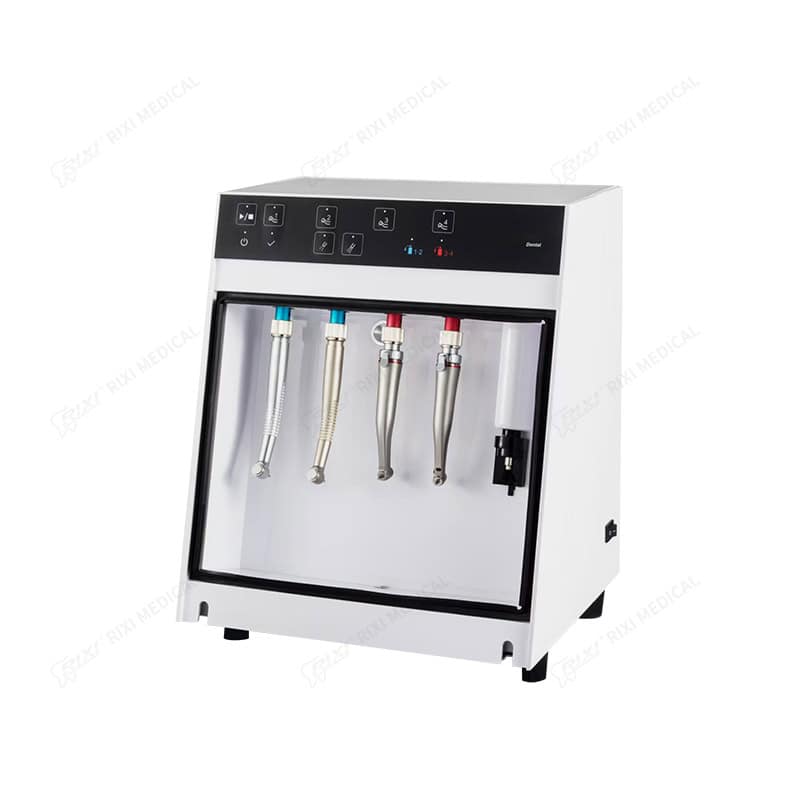
Begin with the machine model, available serial or batch identifier, purchase reference and current manual revision. Include an accessible nameplate photograph and an overall view showing the installed arrangement. Do not assume that the current online catalog matches the hardware delivered several years earlier.
Use the original oiling-machine acceptance record to establish the supplied configuration. A change since acceptance may be relevant even when it appears unrelated to the symptom. Describe what changed and when; leave the technical conclusion to the qualified reviewer.
| Evidence | Useful detail | Avoid |
|---|---|---|
| Observed event | Exact indication, time and stage of the operation | A diagnosis based only on a short video |
| Affected connection | Port location, adapter reference and handpiece identity | “All standard handpieces” without a model list |
| Consumable | Product reference, container format and recent change history | Assuming every oil is interchangeable |
| Installed arrangement | Visible hose and cable routing, utilities documented at handover | Unqualified pressure adjustments or electrical work |
| Service history | Previous ticket, authorized work and replaced-part references | Repeating a previous repair without review |
Keep original photographs and videos with the ticket. Label them clearly enough that another technician can associate the evidence with the same unit and event, rather than with a similar machine elsewhere in the clinic.
Describe the handpiece, adapter and consumable combination
Identify the handpiece connected at the time of the observation, its adapter and the affected machine position. State whether the issue was observed at one position or elsewhere during ordinary operation. Do not perform comparison cycles on other instruments merely to investigate the problem unless the responsible qualified reviewer provides an applicable procedure.
Provide the lubricant’s exact reference and delivery format, plus a label photograph if available. If a replacement container, formulation or applicator has recently entered use, record it as a change—not as the presumed cause. The lubricant compatibility guide covers how to document the approved combination.
A connector that fits physically does not prove that the complete maintenance arrangement is permitted. Missing compatibility evidence should remain an open item in the service record. Neither the salesperson nor the clinic should invent a universal oil quantity, cycle or adapter conversion to close it.
Separate equipment observations from site questions
Describe visible leakage by location and when it was noticed. Distinguish residue inside a documented collection area from material outside it, without assigning an acceptable quantity. Capture control indications, unusual sound or a loose external connection only as observations made during the original event.
For supply questions, send the machine’s stated requirements and the available site handover record. Qualified personnel should assess any electrical or compressed-air measurements using the relevant instructions. A catalog value from a different machine is not a valid diagnostic threshold.
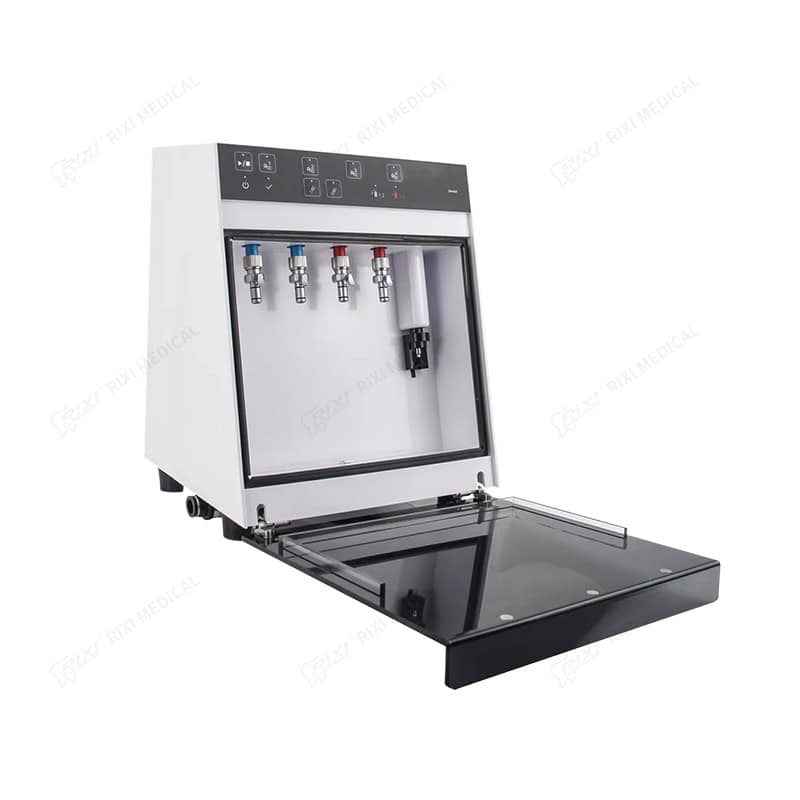
If the bench, utilities or nearby equipment recently changed, include a simple marked layout. The maintenance-station planning guide addresses space and service access; it does not authorize moving a connected machine or altering fixed utilities during a service enquiry.
Agree on the next action and its boundaries
Ask the service contact to identify what evidence is still needed and who is qualified to collect it. Keep instructions linked to the machine model and manual revision. If a remote session is proposed, agree on its scope before it begins; a video call does not make an unsafe or unauthorized task acceptable.
For a proposed replacement part, request its reference, applicable configuration and installation responsibility. Separate the part, labor, shipping and other costs in the written service terms. Do not assume a universal warranty, free replacement or guaranteed dispatch time.
Purchasing a replacement machine is a separate decision from diagnosing the installed one. The oiling-machine buyer comparison can support that review, but a new catalog listing should not silently replace the service team’s identification of the affected asset.
Close the case with evidence, not a reassuring message
Retain the authorized work description, replaced-part references, updated documents and the results of checks specified by the responsible service provider. Record unresolved limitations and who decides whether the unit can return to routine service. Avoid declaring the whole handpiece workflow validated simply because an error indication disappeared.
Carry relevant changes into the equipment file and staff handover. The next service enquiry should begin with the current configuration, not the original packing list alone. The technical support channel is a route for requesting the applicable documents and service scope.
Frequently asked questions
Should staff repeat the cycle to film the problem?
Not merely to reproduce a fault. Preserve evidence already available and obtain instructions from the responsible qualified reviewer before any further test.
Does an oiling-machine problem identify a damaged handpiece?
No. Record the machine, position, adapter, instrument and observation separately. A qualified review is needed before assigning a cause.
Can a different lubricant solve the issue?
Do not substitute a consumable as an informal fix. Confirm the approved lubricant and follow model-specific instructions and the authorized service process.
What belongs in the closure record?
Keep the work scope, parts, applicable checks, document revisions, open conditions and responsible return-to-service decision together with the original ticket.
Scope: General equipment-service communication guidance only, not repair or clinical processing instructions. Use qualified personnel and the current manufacturer documents.
RIXI Medical is a dental equipment manufacturer and supplier based in Foshan, China. Send a model-specific service enquiry with the machine identifier, observed condition and available supporting records.
Need Dental Equipment Pricing or Configuration Details?
Contact RIXI Medical for model comparison, distributor pricing, packaging information, OEM/ODM requirements and after-sales support.
Request Product Information