A shipment marked “K-files, assorted” is not ready for release simply because the carton count matches the invoice. Lengths, assortments, pack quantities and product codes must agree with the order that the clinic or distributor actually approved. Receiving staff need a repeatable way to identify a mismatch before the packs enter usable stock.
This checklist covers incoming-goods control, not clinical performance testing. Keep the purchasing specification separate from professional decisions about instrument selection and use. For the earlier product-selection stage, see the K-file procurement comparison guide.
Prepare the receiving reference before delivery
Give the receiving team a short, controlled order record: supplier item code, agreed material description, nominal length, size or assortment, units per pack and number of packs. Attach the approved quotation and any agreed label or packaging version. A sales photograph is a useful illustration, but it is not a substitute for these fields.
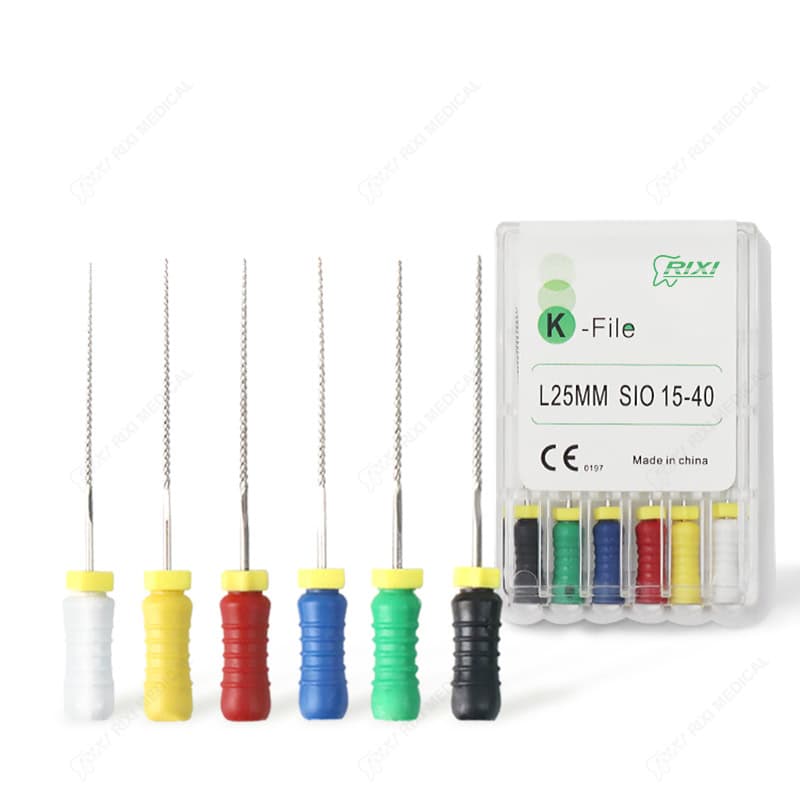
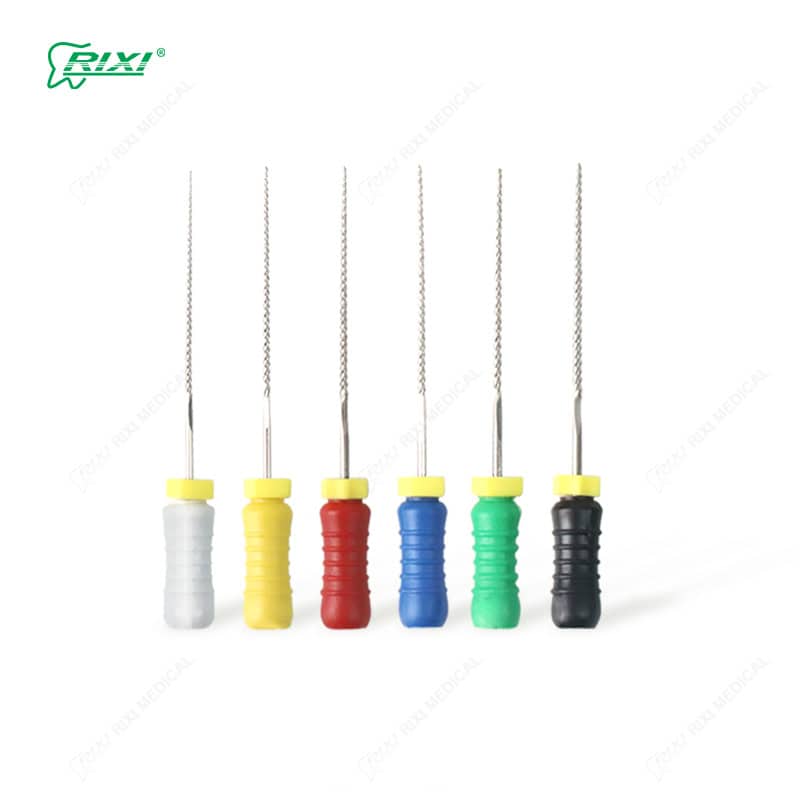
When ordering the 25 mm K-file product shown here, confirm the exact variant in writing. Do not extend that length or the pictured assortment to every item supplied under a similar product name. Make the order reference available to staff who will unload and book in the delivery.
Separate arrival checks from product release
Start with the shipment as received. Record the delivery date, carrier reference, number of cartons and any visible crushing, moisture or opening. Photograph damage before discarding outer packing. A clean outer carton does not prove that every inner pack is correct; a damaged carton also does not establish which products are affected.
Count sellable packs and their stated contents as separate units. “Ten boxes” can mean ten inner packs or ten master cartons, and an assorted pack is not the same inventory item as a single-size pack. Record the actual quantity in the unit used on the purchase order, with any conversion stated explicitly.
| Receiving check | Evidence to record | If it does not match |
|---|---|---|
| Item identity | Supplier code, family and order line | Hold the affected line for clarification |
| Variant | Length, size or assortment and material description | Do not substitute based on visual similarity |
| Quantity | Packs received and units stated per pack | Reconcile shortages or excess separately |
| Packaging | Label version, closure and visible condition | Record damage or inconsistent labeling |
| Traceability | Available lot identification and receipt reference | Request missing or ambiguous information |
Inspect without creating a new problem
Follow the agreed inspection plan and product instructions when deciding which packs can be opened. Do not open every pack merely to make counting easier. If a product is labeled sterile, opening its barrier changes its packaging status; record any inspection samples separately and refer questions to the responsible qualified person.
For permitted visual checks, look for consistent identification, visible deformation, loose components or unexpected surface damage. Describe what is observable rather than diagnosing the cause. Receiving staff should not bend files, perform improvised cutting tests or use clinical instruments to prove performance. Such actions do not replace a manufacturer-defined evaluation method.
Hold discrepancies by item and lot
A clear hold location prevents disputed stock from being issued accidentally. Identify the affected quantity, order line, lot information where supplied and reason for hold. Keep unrelated acceptable stock distinguishable; do not combine several deliveries into one untraceable container while investigating.
Send the supplier a concise evidence bundle: purchase order, packing list, label photographs, affected quantities and close-ups of the specific issue. State whether the concern is a shortage, wrong length, wrong assortment, packaging damage or unclear identification. Avoid a vague message such as “quality problem,” which leaves the supplier unable to locate the relevant order configuration.
Agree on a documented disposition before returning, replacing or releasing the held goods. Retain the decision and any corrected documents with the receipt record. A verbal explanation should be followed by an identifiable written reference, especially when more than one staff member handles the shipment.
Close the receipt before routine replenishment
Release is an administrative decision based on the approved specification and the organization’s responsibilities; it is not a claim that receiving staff have validated clinical suitability. Record who completed the checks, what remains unresolved and where supporting documents are kept. Escalate clinical or reprocessing questions to qualified personnel.
Transfer accepted stock using the clinic’s K-file inventory and replenishment routine. Preserve relevant identification when moving packs into storage. For other product families in the K-file category, build separate receiving references rather than assuming a shared specification.
Before closing a discrepancy, check that any replacement is linked to the original issue and not booked as an unexplained extra delivery. This keeps purchasing, stock and supplier records aligned. Where a document or maintenance question remains, use the technical support contact route with the exact item information.
Use a line-level discrepancy record
Suppose an order contains two lengths in both assorted and single-size packs. Create a separate receipt row for each combination, even if the supplier ships everything in one carton. Record expected packs, accepted packs and held packs in separate columns. This shows whether a shortage is real or whether stock has been counted against the wrong line.
Give photographs meaningful references that connect them to the record. A close-up of a label without the order line or affected quantity can be difficult to interpret later. Keep original photographs as received, and note when an outer carton or inner pack was opened for inspection. If the supplier proposes a substitute, return that proposal to the purchasing and clinical approval process; receiving staff should not approve a different instrument simply to close the delivery.
Receiving questions
Can matching carton totals justify releasing the shipment?
No. Carton totals alone do not confirm the item variants or sellable quantities. Reconcile the approved order lines with the packs received.
Should every file be physically tested at receipt?
Do not introduce an improvised test. Follow the agreed inspection method, product instructions and the responsibilities of qualified evaluators.
What if the lot information cannot be located?
Record the labeling as received and ask the supplier to clarify the available identification. Do not create or infer a manufacturer lot number.
How should an incorrect assortment be handled?
Keep it identifiable and separate from approved stock. Obtain a written disposition instead of quietly relabeling or substituting it.
Scope: General receiving and purchasing guidance, not clinical advice or a model-specific inspection standard. Confirm exact specifications, packaging status and handling instructions with the manufacturer.
RIXI Medical is a dental equipment manufacturer and supplier in Foshan, China. Request the item specification and packing details needed to prepare your receiving checklist.
Need Dental Equipment Pricing or Configuration Details?
Contact RIXI Medical for model comparison, distributor pricing, packaging information, OEM/ODM requirements and after-sales support.
Request Product Information