Buying endodontic K-files is not simply a choice of price and pack size. Clinics and distributors need to compare material, length, size sequence, handle identification, packaging and consistency between repeat orders. The safest purchase decision starts with the exact product specification and intended workflow.
This guide covers procurement questions rather than clinical technique. File selection and use should follow the dentist’s training, the manufacturer’s instructions and applicable local protocols.
Confirm the file specification before comparing quotations
Ask each supplier to identify the exact product family, material, nominal length, size range, taper, handle color system, pack quantity and whether the files are supplied sterile or non-sterile. Similar product photographs can hide meaningful differences. A quotation should reference a controlled model or item code rather than a generic phrase such as “assorted K-files.”
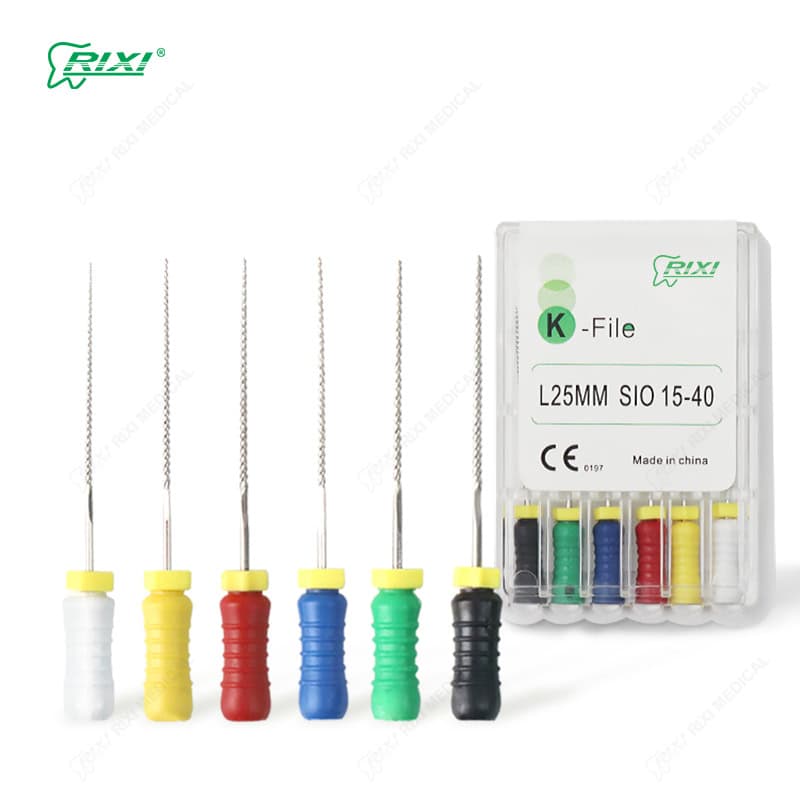
The 25 mm dental K-files product page is a starting point. Buyers should request the current model-specific documentation before ordering.
Comparison criteria that affect purchasing
| Area | What to verify |
|---|---|
| Material | Supplier description, intended use and handling instructions for the exact file |
| Length and sizes | Nominal length, available ISO sizes and assorted or single-size packs |
| Identification | Handle colors, size markings and consistency across batches |
| Packaging | Units per pack, lot information, labeling and storage conditions |
| Order continuity | Item codes, minimum order terms and process for specification changes |
Do not infer flexibility, cutting behavior or reuse limits from material name alone. Ask for the manufacturer’s current instructions and avoid unsupported performance claims. If the clinic is comparing a broader system, review the root canal file category and confirm which instruments belong to the same workflow.
Check packaging and traceability
For each sample, record the product code, size, length, pack quantity, lot information and labeling. Packaging should protect the instruments during storage and shipment and allow the buyer to identify the correct item without opening every pack. Distributors should agree on carton labels and master-carton quantities before a bulk order.
When comparing repeat supply, ask how a design, material, packaging or label revision will be communicated. A buyer should be able to match a later shipment with the approved sample and purchase order.
Evaluate a sample as a purchasing team
- Confirm that the delivered item matches the quotation and specification.
- Check size and length identification across the sample packs.
- Review handles, markings, visible finish and packaging consistency.
- Confirm supplied documents and storage instructions.
- Record the approved item code and packaging version.
Clinical evaluation should be performed only by qualified professionals under the clinic’s procedures. Procurement staff can still verify labeling, pack contents, documentation and order accuracy without making clinical claims.
Related sourcing questions
For pediatric or other specialized workflows, products such as MRF Kids should be assessed as a separate product family rather than treated as an interchangeable K-file. The same applies to MRF-G. Ask the supplier for separate specifications and intended-use information.
Frequently asked questions
Should buyers order assorted or single-size packs?
It depends on the clinic’s consumption pattern. Review actual usage and replenishment frequency before deciding.
Is 25 mm suitable for every case?
No single length should be assumed suitable for every clinical situation. Qualified clinicians should select instruments according to training and product instructions.
What should appear on a purchase order?
Include the exact product code, length, sizes, pack configuration, quantity, label requirements and approved sample reference.
How can distributors reduce repeat-order errors?
Use stable SKU codes, approved artwork, batch records and written change-control procedures.
Scope note: This is general purchasing guidance, not clinical advice. Confirm specifications with the supplier and clinical use with qualified dental professionals.
RIXI Medical is a dental equipment manufacturer and supplier in Foshan, China. Buyers may browse available products or request specifications, samples and distributor information.
Need Dental Equipment Pricing or Configuration Details?
Contact RIXI Medical for model comparison, distributor pricing, packaging information, OEM/ODM requirements and after-sales support.
Request Product Information