A clinic can carry many endodontic files and still experience shortages, expired stock or confusion at chairside. Good K-file inventory planning connects the dentist’s approved instrument sequence with purchasing, storage, traceability and replenishment. It should make the correct item easy to identify without encouraging uncontrolled overstock.
This article addresses clinic operations and procurement. It does not prescribe endodontic technique or instrument reuse; those decisions belong to qualified clinicians following current product instructions and local protocols.
Start with the clinic’s approved product list
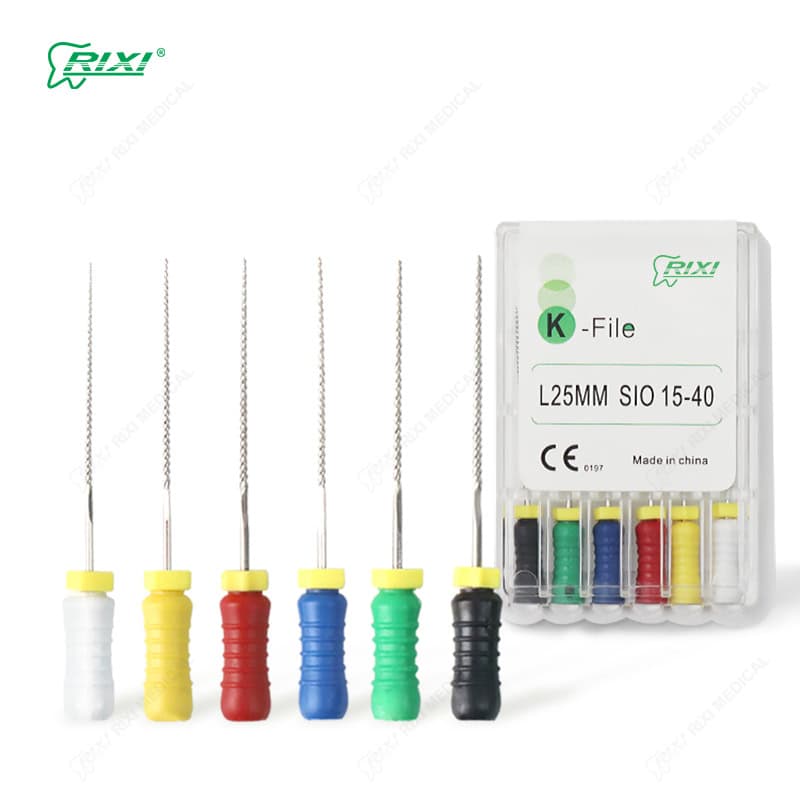
Create a controlled list showing the exact K-file product family, material, length, size, pack type and item code. Separate assorted packs from single-size replenishment packs. If clinicians use different sequences, record those differences rather than combining everything under one generic stock description.
The 25 mm dental K-files page can support an initial product discussion, but the clinic should confirm the current specification and instructions for the ordered item.
Map consumption instead of guessing demand
Review several ordering cycles and identify fast-moving sizes, slow-moving items and emergency stock. Note procedure volume, delivery lead time and the clinic’s tolerance for stockouts. An assorted pack may be useful for range coverage, while single-size packs may be more efficient for sizes used frequently. The balance should come from actual consumption.
| Inventory field | Purpose |
|---|---|
| Item code | Prevents confusion between similar products |
| Material and length | Keeps clinically approved variants separate |
| Size or assortment | Supports accurate replenishment |
| Lot and receipt date | Supports traceability and stock rotation |
| Minimum level | Triggers reordering before a shortage |
Design the storage and replenishment routine
Store products according to the manufacturer’s instructions in a clean, organized location. Use clearly labeled bins or drawers that match the purchasing codes. Avoid mixing open packs or different lengths in a way that removes traceability. Staff should know who can add a new product to the approved list and who checks incoming deliveries.
- Verify the item code, length, size and quantity at receipt.
- Record lot information where required by the clinic’s system.
- Rotate stock according to the clinic’s policy and product labeling.
- Separate items awaiting review from approved clinical stock.
- Report damaged packaging or labeling discrepancies promptly.
Connect chairside feedback with purchasing
Procurement staff should not judge clinical performance, but they can capture structured feedback: which exact item was used, whether the package was correct, and whether the issue involved labeling, supply, damage or another concern. Qualified clinicians should handle clinical evaluation.
For broader product planning, review the root canal file range. Specialized products such as MRF Kids and MRF-G should have separate records and should not be substituted without appropriate review.
Prepare for supplier or product changes
When a supplier changes packaging, labeling, material description or item codes, quarantine the change from routine stock until the clinic has reviewed it. Keep the approved sample, specification and purchase record accessible. This reduces the risk of a visually similar product being treated as identical.
Frequently asked questions
How should a clinic set minimum stock levels?
Use actual consumption, supplier lead time and a reasonable safety margin rather than an arbitrary number.
Should all sizes have the same reorder point?
Usually not. Fast-moving and slow-moving sizes should be assessed separately.
Can different K-file lengths share one inventory code?
Separate codes are clearer because length is a material purchasing difference.
Who should approve a new file product?
The clinic should define an approval process involving qualified clinical users and responsible procurement staff.
Scope note: Confirm clinical selection and use with qualified dental professionals and follow the current manufacturer instructions for every product.
RIXI Medical is a dental equipment manufacturer and supplier in Foshan, China. Clinics can browse the product catalog or request item specifications and purchasing information.
Need Dental Equipment Pricing or Configuration Details?
Contact RIXI Medical for model comparison, distributor pricing, packaging information, OEM/ODM requirements and after-sales support.
Request Product Information