An approved autoclave sample is useful only when later production can be compared with a clear baseline. If a controller, accessory, housing detail or supplied document changes without a controlled review, the buyer may receive an order that looks familiar but no longer matches the agreed configuration.
This guide addresses technical change control for repeat and OEM/ODM dental autoclave orders. It is separate from the private-label artwork approval process: an unchanged logo does not mean the equipment specification is unchanged. Engineering, documentation and commercial responsibilities need their own decision record.
Build a baseline that identifies the actual configuration
Record the accepted model, electrical version, controller reference where supplied, accessory list and applicable manuals. Reference the approved quotation and sample review. Where information is proprietary, agree what configuration identification the manufacturer can provide instead of demanding unrestricted internal design files.
For an LED-display tabletop autoclave, a product name alone is not a revision system. Ask how the supplier distinguishes the supplied version from earlier or later production. Use that identifier consistently in the purchase specification and support record.
Distinguish confirmed facts from proposed changes. Keep accepted documents in a controlled set, with a date and revision. A general brochure downloaded months earlier should not override a current, mutually accepted model specification.
Define what must be reported before substitution
Ask the supplier to explain its proposed change-notification process. Agree which changes require buyer review before production or dispatch, who receives the notification and how an unanswered notification is handled. Silence should not be interpreted as technical acceptance unless the actual agreement explicitly establishes that process.
Relevant changes may affect connection requirements, dimensions, controls, accessories, documentation or replacement-part identification. The manufacturer should determine the technical significance of a proposed change. The buyer’s qualified reviewers should evaluate the implications for its accepted intended use and destination requirements.
A cosmetic change can also have practical consequences. A differently positioned handle may affect access; a revised label may reference a new manual; a different tray may affect the accepted accessory configuration. Avoid labeling a change “minor” solely because the purchase price stays the same.
Use an impact matrix instead of a general approval email
| Proposed change | Evidence to request | Buyer review boundary |
|---|---|---|
| Dimensions or external layout | Revised drawing identifying the changed areas | Installation interfaces and previously approved cabinetry |
| Electrical or connection variant | Updated model-specific rating and connection information | Qualified local technical and market review |
| Controller or software revision | Supplier explanation of affected functions and documents | Approved operation, records and support arrangements |
| Accessories or replaceable components | Part references, compatibility statement and revised list | Sample scope, service identification and existing stock |
| Manual or identification information | Revised controlled documents and applicability | Translation, customer handover and model traceability |
This matrix organizes questions. It does not authorize a substitution or establish that a changed device remains suitable. Where evidence is incomplete, retain an open status and identify the person responsible for obtaining the missing review.
Decide whether the accepted sample still represents the order
Ask what evidence can demonstrate the revised configuration: an updated document set, photographs, a representative sample or appropriate manufacturer testing records. The required review should follow the nature of the change and the responsibilities agreed by the parties. Do not prescribe a single generic test for every component or software revision.
Record what the reviewer accepted and what remains outside that acceptance. Approval of external dimensions does not approve control behavior. Agreement on an accessory list does not validate a processing cycle. Separate these decisions when different technical owners are responsible.
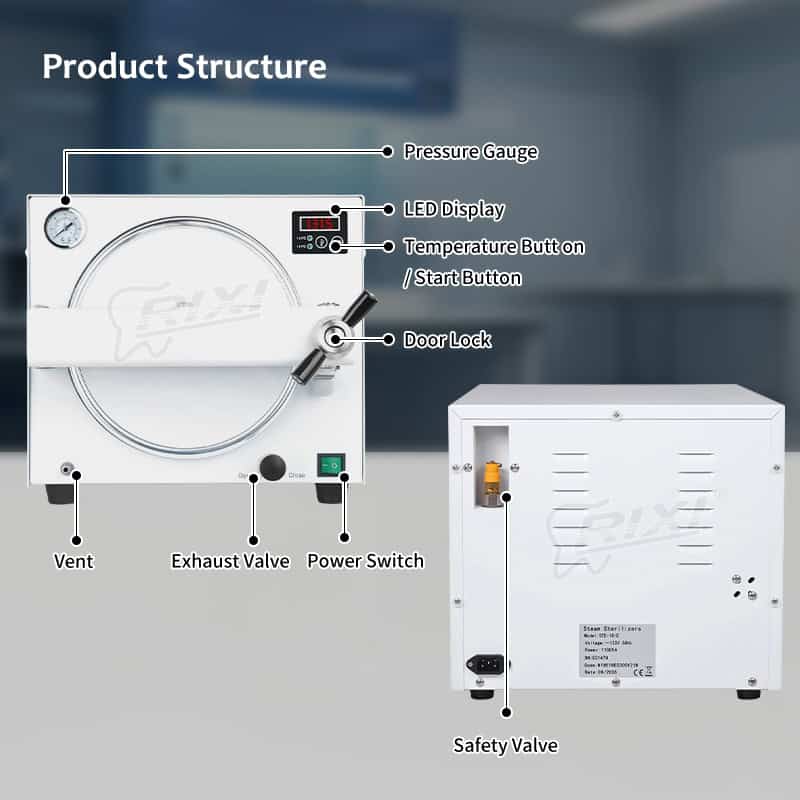
When comparing a front-door sterilizer configuration with an earlier sample, retain the exact reference used for each. Do not use an image of one product format as evidence for another model’s technical behavior.
Connect production approval to after-sales identification
A distributor may hold machines and spare parts from several production versions. Agree how the supplier will identify which parts and documents apply to each delivered configuration. The autoclave distributor documentation guide provides the wider package framework; the change record should make later version differences explicit.
Record how existing stock is treated if a part reference changes. Ask whether a new reference is interchangeable, conditionally usable or intended only for a later version, and obtain the supplier’s written confirmation. Do not infer interchangeability from size, packaging or a similar name.
Keep the approved change reference with the purchase order, dispatch list and receiving records. Where a shipment contains different versions, ask how they will be distinguished. A warehouse should not have to open equipment or guess from the carton color to identify its configuration.
Close the change only after documents agree
Before dispatch approval, reconcile the revised specification, accessory list, identification and applicable instructions. Identify obsolete documents in the project record and withdraw them from the production handover. Retain the previous baseline for traceability without leaving it marked as the current order specification.
RIXI Medical is a dental equipment manufacturer and supplier in Foshan, China. Use a defined change register when discussing repeat orders so engineering questions reach the appropriate reviewers before commercial confirmation.
Buyer questions
Does an approved sample prevent all future changes?
No. Agree a notification and approval process, then connect production to the accepted configuration and any documented changes.
Can the buyer approve a technical substitution by appearance?
No. Obtain the manufacturer’s explanation and relevant evidence, followed by the appropriate technical and destination-market review.
Should older spare parts be discarded after a revision?
Do not decide from a new reference alone. Ask the supplier to establish compatibility and applicability for the existing machines and stock.
Scope: General configuration governance. No equivalence, approval, certification or compatibility is implied for an unreviewed change.
Request a configuration change review with the current model, accepted baseline, proposed difference and affected order references.
Need Dental Equipment Pricing or Configuration Details?
Contact RIXI Medical for model comparison, distributor pricing, packaging information, OEM/ODM requirements and after-sales support.
Request Product Information