For a dental equipment distributor, an autoclave order is rarely just a machine in a carton. The sellable package may also need model-specific documents, local labeling, consumables, service parts, training material and a clear process for technical claims. If these items are discussed only after production, the first shipment can arrive with avoidable gaps.
This guide outlines the questions distributors and procurement teams should settle with a supplier before approving a dental autoclave package. It does not replace the exact specification, regulatory review or installation instructions for a particular model and destination market.
Define the commercial package before requesting a quotation
Begin with the customer segment and expected use case. A small clinic, a multi-chair practice and a dealer building a broader sterilization-room offer may need different chamber formats, accessories and support materials. State the destination country, expected order quantity, preferred branding approach and whether the request is for a sample, a repeatable distributor SKU or an OEM/ODM project.
A useful request identifies the proposed model and configuration, not merely “an 18L autoclave.” Ask the supplier to confirm which features belong to the quoted version and which are optional. Similar exterior housings do not guarantee identical electrical requirements, programs, accessories or documentation.
Build a model and configuration matrix
A simple matrix prevents details from becoming scattered across messages. For every proposed SKU, record:
- exact model code and commercial name;
- external dimensions and usable chamber or tray dimensions;
- rated electrical supply and connection requirements;
- available cycles and control/interface language;
- standard accessories, consumables and optional items;
- packaging dimensions, gross weight and units per shipment;
- branding, label and manual requirements;
- warranty and service route offered for the specific market.
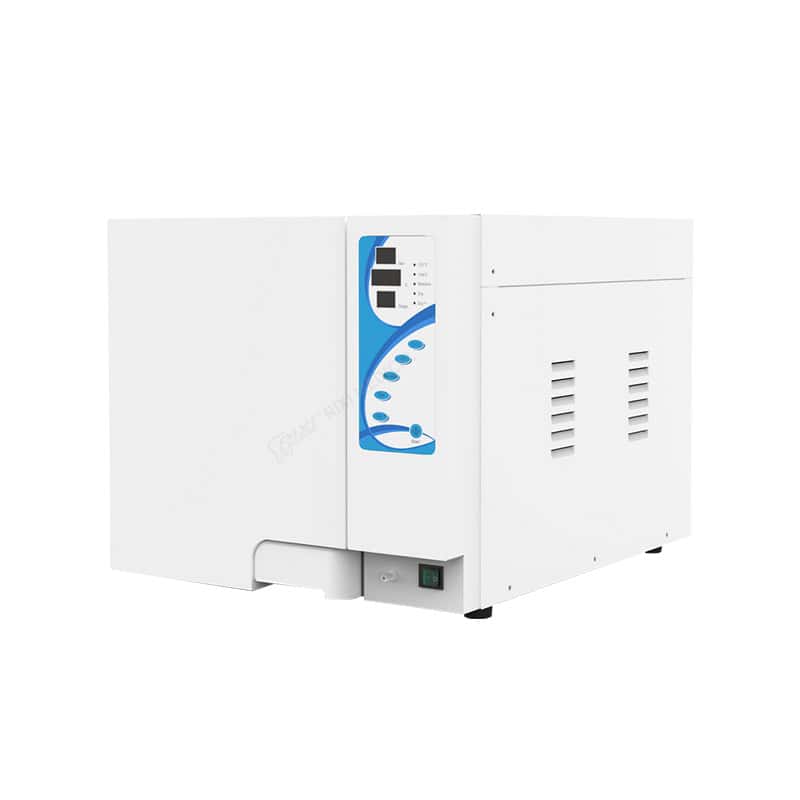
Use a current product page such as the 18L front-door dental autoclave to open the discussion, then request the controlled specification and drawing for the configuration being quoted.

Documents to review before sample approval
Technical and installation documents
Request a dimensional drawing, utility requirements, installation instructions, operating manual and maintenance schedule. Review whether terminology and diagrams are understandable for the target customer. If translation is required, agree on who translates, who checks technical meaning and how revisions will be controlled.
Market and compliance documents
Requirements vary by product configuration and destination. Ask what documents are available for the exact model, then have a qualified local party determine what is required to import, market, install and operate it. Do not rely on a certificate image from a different model or assume that requirements in one market automatically apply in another.
Brand and packaging files
For private-label or OEM/ODM work, define logo files, nameplate content, carton marks, manual branding, color references and approval responsibilities. Establish a signed artwork checkpoint before bulk production. Small label changes can affect manuals, cartons and service records, so they should be tracked as configuration changes rather than informal design edits.
Plan service parts around realistic failure and maintenance tasks
A distributor needs more than a long parts list. Ask the supplier which parts are routine consumables, which are recommended for local stock, which require trained service personnel, and what information is needed to identify the correct replacement. Exploded diagrams, part numbers and serial/configuration references make support more reliable.
Agree on the process for reporting a problem: photographs or video, operating conditions, error messages, serial number and the steps already taken. Also clarify which tasks are suitable for the end user and which should be handled by qualified service staff. Local safety rules and the manufacturer’s current instructions should govern the decision.
Where the distributor is assembling a broader instrument-processing package, related equipment such as a dental handpiece oiling machine may be relevant. Keep its maintenance workflow and documentation separate from the autoclave’s; bundling products should not blur their individual operating requirements.
Compare package options, not headline capacity alone
Two sterilizers with similar stated volume may differ in tray size, loading ergonomics, programs, drying behavior, documentation and service access. Compare the complete delivered package. The digital tabletop dental sterilizer offers another format to discuss, while the autoclave sterilizer category provides a broader view of available products.
Ask for a sample approval checklist that covers appearance, supplied accessories, user-interface language, labels, manual version, packaging and basic receipt inspection. Record the approved configuration so the purchase order for a bulk shipment can reference it clearly.
Prepare the shipment and customer handover
Before dispatch, verify carton marks, packing list details, model quantities, accessory quantities and agreed documents. Confirm who will receive the shipment and how shortages or transit damage should be documented. For installations, provide the customer or contractor with the correct utility and clearance information before the unit arrives.
Customer handover should explain where to find the manual, how to contact the distributor for support, what routine maintenance information is available and how to identify the unit when requesting parts. Avoid making clinical or performance claims that are not supported by the exact product documentation.
Questions to put into a distributor agreement
- Which territory, models and configurations are included?
- Who approves localized labels, manuals and marketing claims?
- How are specification or component revisions communicated?
- What is the process for sample approval and bulk-order inspection?
- Which spare parts and consumables should be stocked locally?
- Who handles first-line technical support and escalation?
- What evidence is required for shortage, damage or warranty review?
These questions do not replace a commercial contract, but they reveal operational gaps early. RIXI Medical is a dental equipment manufacturer and supplier in Foshan, China; distributors can use this framework when discussing model documents, packaging and OEM/ODM requirements with the team.
Frequently asked questions
Should a distributor order spare parts with the first shipment?
Often it is sensible to discuss an initial service kit, but its contents should be based on the exact model, supplier recommendations and the distributor’s service capability.
Can one manual cover several autoclave models?
Only when the supplier confirms that the instructions and specifications are accurate for every included configuration. Model differences should be clearly identified.
What should be approved on a sample unit?
Check the agreed configuration, accessories, labels, interface language, documents and packaging, then record the approved version before bulk production.
Who determines import and local compliance requirements?
The distributor should use qualified local expertise for the destination market and verify model-specific documents with the supplier.
Scope note: Specifications, documents and service arrangements vary by model and market. Confirm the final package with the supplier and obtain local professional advice where required.
To request model specifications, distributor pricing, package drawings or OEM/ODM options, contact RIXI Medical with the destination market and intended product range.
Need Dental Equipment Pricing or Configuration Details?
Contact RIXI Medical for model comparison, distributor pricing, packaging information, OEM/ODM requirements and after-sales support.
Request Product Information