An export packing approval should answer a practical question: will the package, its identifiers and its documents match the handling route that the buyer actually arranged? Approving a photograph of a closed carton leaves too many details unresolved, including loose accessories, package count and the information the receiving team will need.
This guide covers pre-dispatch packaging review for dental autoclave purchases. It is distinct from inspection after an autoclave delivery. Here the buyer is checking the proposed packing arrangement before shipment; arrival condition and transport claims require their own records.
Start with the agreed route and handling responsibilities
Give the supplier the destination and the agreed transport arrangement, including any warehouse or consolidation stage known to the buyer. Ask the freight professional what packed dimensions, weight information and handling details are needed. Avoid promising that one crate design is suitable for every carrier, service or destination.
Identify who specifies, approves and pays for any special packaging. Those responsibilities depend on the actual supply and transport agreements. A purchasing checklist does not change delivery terms or determine who carries the transport risk.
For the selected front-door dental autoclave, request a model-specific packing proposal. Chamber volume does not establish shipping weight, packed size or the protection needed for that configuration.
Reconcile the machine, accessories and package count
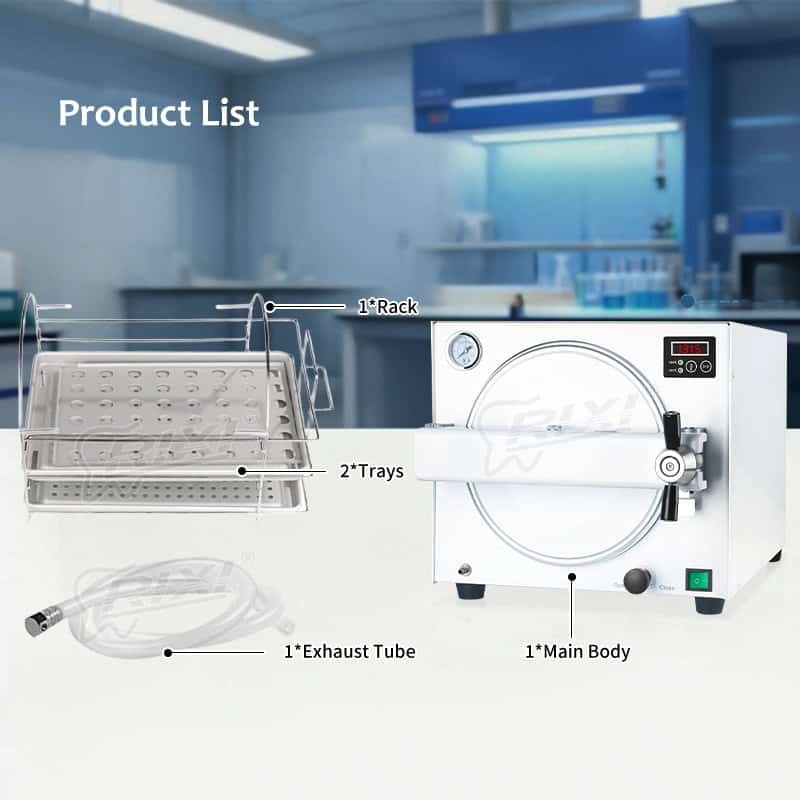
Use the accepted accessory schedule and quantity for the actual order. Ask where each item will be packed: with the machine, in a separate carton or in another identified package. Loose trays, racks, cables and fittings need a documented packing arrangement rather than an assumption that everything can be placed inside the chamber.
The manufacturer should determine which items may be placed where and how the equipment must be secured for transport. Do not instruct workers to pack accessories inside a chamber, attach a restraint to a door or use a component as a lifting point without the manufacturer’s supported handling information.
Request evidence before the package is closed
Agree what packing photographs the supplier can provide. Useful evidence may include the machine identifier, protected surfaces, secured accessories, internal arrangement and final package marks. Connect each image to the order and package reference. A general packing photo from a previous shipment cannot establish what is inside this order.
Ask the manufacturer to explain protection for exposed controls, connectors and the door assembly. The buyer should evaluate the documented proposal with the appropriate freight and technical reviewers. Procurement staff should not redesign restraints or internal supports from photographs alone.
Record whether transport preparation requires any model-specific steps and who performs them. Keep these instructions distinct from the receiver’s unpacking procedure. Do not assume a machine can be shipped in its normal operating state or that a photograph proves the required preparation was completed.
Use a packing-approval register
| Checkpoint | Record to retain | Question before dispatch |
|---|---|---|
| Equipment identity | Order, model and accessible unit identifier | Does the packing evidence refer to the accepted configuration? |
| Package structure | Supplier packing description and relevant handling information | Has suitability for the agreed route been reviewed? |
| Contents | Final item and accessory list | Can every item be assigned to a package location? |
| Measurements | Confirmed packed dimensions and gross weight | Does the freight booking use the actual packed information? |
| Marks and documents | Approved marks, package count and document references | Will the receiver reconcile the shipment without guessing? |
Give unresolved items a responsible owner. A photograph approval should state whether it covers appearance, quantity, identification or the reviewed packing arrangement. Avoid one broad “approved” message that different parties interpret as accepting every transport and technical condition.
Check marks against documents as one set
Review the spelling of consignee information, order references, model designations and package numbering against the agreed documents. Use only accurate handling marks supported by the actual package and handling instructions. A familiar symbol copied from another carton may give the receiving team the wrong direction.
Ask the buyer’s freight or import professional to confirm any destination-specific packaging and documentation requirements. These vary by route and material. The presence of a wooden crate, a shipping label or a generic certificate does not establish that all applicable requirements have been satisfied.
For repeat orders, check whether accessories, packing size or route have changed. The autoclave distributor package guide helps connect the packing record with customer documentation and support. Keep export preparation separate from claims about equipment approvals.
Pass the approved record to the receiver
Send the final package count, packing list and relevant handling information to the designated receiving contact before arrival. Identify which documents travel with the shipment and which are supplied separately. Make sure the receiver can locate any separately packed accessories without relying on a sales conversation.
Keep the accepted packing evidence with the dispatch reference. If a discrepancy later occurs, this record supports a factual comparison between dispatch and receipt. It does not prove the cause of damage, assign liability or guarantee that equipment is ready for installation.
Where several autoclave models share a shipment, identify each configuration and its accessories clearly. Similar-looking cartons should not conceal mixed versions or different document packages.
Questions before shipment
Is a photo of the sealed carton enough?
No. It cannot establish the internal arrangement, accessory locations or unit identity. Agree relevant evidence before the package is closed.
Can the buyer specify any convenient lifting point?
No. Use the manufacturer’s supported handling information and appropriate qualified handling personnel.
Does packing approval replace delivery inspection?
No. Pre-dispatch approval and arrival inspection document different stages. Retain both and follow the actual reporting agreements.
Scope: General packing coordination. Handling, transport suitability and destination requirements need confirmation from the manufacturer and appropriate professionals.
RIXI Medical supplies dental equipment from Foshan, China. Request an order-specific packing proposal with the model, quantity, destination and agreed transport arrangement.
Need Dental Equipment Pricing or Configuration Details?
Contact RIXI Medical for model comparison, distributor pricing, packaging information, OEM/ODM requirements and after-sales support.
Request Product Information