A delivery signature, an equipment inspection and authorization to put an autoclave into service are different records. Confusing them can leave a buyer unable to explain whether a missing tray was omitted during packing, separated in transit or overlooked during receipt. A structured receiving check preserves evidence before the packaging and accessories are dispersed.
This guide helps clinic purchasers, warehouse teams and distributors inspect the identity, quantity and visible condition of a newly delivered autoclave shipment. It does not provide unpacking, lifting, installation or operational testing instructions. Follow the current manufacturer’s handling information and use qualified personnel for technical work.
Prepare the receiving record before the shipment arrives
Obtain the final packing list, accepted model configuration and shipment references from the supplier. Identify the receiving contact and the person responsible for reviewing discrepancies. If equipment arrives through a warehouse or distributor, agree how the receiving record will reach the final buyer.
Use the agreed purchase specification for the selected dental autoclave. A catalogue image may show optional accessories, a different production version or several product formats. It should not replace the packing list when determining what the order includes.
Check the agreed carrier, insurer and supplier reporting procedures before delivery. Record any applicable reporting instructions and deadlines from those parties; there is no universal time limit that applies to every shipment. Ensure staff know whom to contact when the delivery condition requires review.
Document the package before it is disturbed
Record the delivery date, shipment reference, package count and visible carton identifiers. Photograph the package as received, including an overall view and any affected area. Useful observations include a torn carton, crushed edge, visible moisture or a mark on a supplied handling indicator, if one is present.

Describe what can be seen without assigning a cause. “Carton corner crushed” is an observation; “internal valve damaged by the carrier” is an unconfirmed diagnosis. Preserve the original photographs and give each a reference that matches the receiving record.
Use the manufacturer’s instructions and appropriate handling personnel when opening or moving the equipment. Do not lift by a door, control or other component simply because it is convenient to grip. Packaging may contain supports or accessories that need specific handling.
Compare identity and quantities with the packing list
Once safe access is available, record the machine model and supplied identifier. Compare the ordered configuration with the accessible identification information. A different model reference, unreadable identification or an unexpected version should remain an open issue until the supplier clarifies it.
For a front-door autoclave package, reconcile the rack, trays and other listed accessories individually. Note whether an item is in the main carton, a separate package or an identified accessory compartment. Do not assume an apparent shortage until the full shipment and packing arrangement have been checked safely.
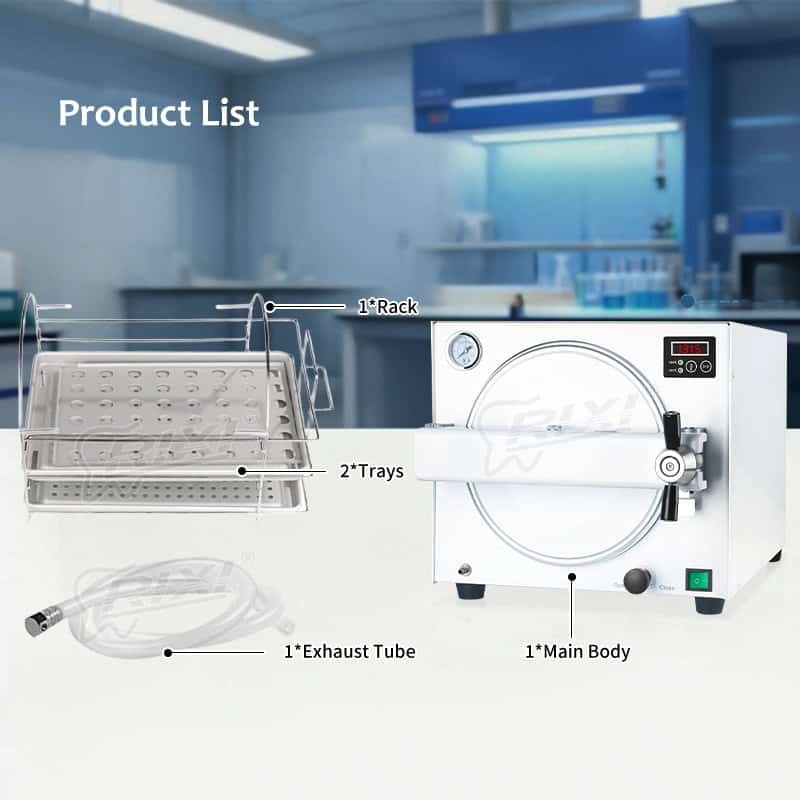
For the tabletop autoclave format, use that model’s own accessory schedule. Similar chamber sizes do not establish identical trays, cables, fittings or document packages. Record each missing or unexpected item without substituting an accessory from another machine.
Keep one discrepancy register
| Observation | Evidence to retain | Next review |
|---|---|---|
| Visible package damage | Overall and close photographs with shipment reference | Supplier and transport parties under the agreed process |
| Model or version mismatch | Order reference and accessible machine identification | Supplier configuration confirmation |
| Apparent missing accessory | Packing list, received quantities and package locations checked | Supplier packing reconciliation |
| Visible equipment damage | Undisturbed condition photographs and receiving notes | Qualified technical assessment before installation |
| Missing documents | List of documents received and versions required | Supplier document handover |
Give every issue an owner, status and evidence reference. Distinguish “reported,” “under review,” “replacement agreed” and “closed.” An email acknowledgement does not necessarily mean a technical issue has been resolved or a commercial responsibility accepted.
Retain packaging and affected items as instructed by the relevant parties while review is pending. Do not discard evidence, attempt an internal repair or dismantle the machine to demonstrate a suspected cause. Make further inspection arrangements through the supplier and qualified personnel.
Send a concise supplier report
Use one message containing the order, shipment and model references, the observed discrepancy, its quantity and the supporting image references. State whether the machine has remained unconnected and whether any handling has occurred. Report facts accurately rather than recreating a more favourable sequence.
If a replacement accessory or part is proposed, confirm its exact identification before accepting dispatch. The separate autoclave spare-part identification guide explains the records needed to avoid ordering by appearance alone. A replacement proposal should also state what review is needed before the equipment can proceed to installation.
Keep transport reporting, commercial remedies and technical release as separate decisions. The receiving team records evidence; the relevant parties determine their responsibilities under the actual agreements. This guide does not determine liability or create a warranty entitlement.
Close receipt without skipping commissioning
Before closing the receiving record, reconcile all packages, accepted items, documents and agreed corrective actions. Save the final record with the equipment identifier so it can support later service enquiries. Make any unresolved condition visible to the team arranging installation.
RIXI Medical, a dental equipment manufacturer and supplier in Foshan, China, can review shipment and configuration information supplied by the buyer. Delivery inspection does not replace the manufacturer’s commissioning requirements, qualified installation review or the clinic’s own authorization process.
Buyer questions
Does an intact carton prove the machine is ready to use?
No. Identity, supplied items and visible condition still need checking, followed by the appropriate installation and commissioning process.
Should receiving staff open the housing to look for damage?
No. Internal inspection and technical assessment belong with qualified personnel using the manufacturer’s instructions. Preserve evidence and report the observed condition.
What makes a useful shortage report?
Identify the order, shipment, machine and missing item, show the packing list and received quantities, and explain which packages were checked.
Scope: General receiving guidance only. Handling, reporting requirements and technical release depend on the actual equipment, shipment and agreements.
Send RIXI Medical a documented receiving enquiry with the shipment reference, model identification and clear condition or quantity evidence.
Need Dental Equipment Pricing or Configuration Details?
Contact RIXI Medical for model comparison, distributor pricing, packaging information, OEM/ODM requirements and after-sales support.
Request Product Information