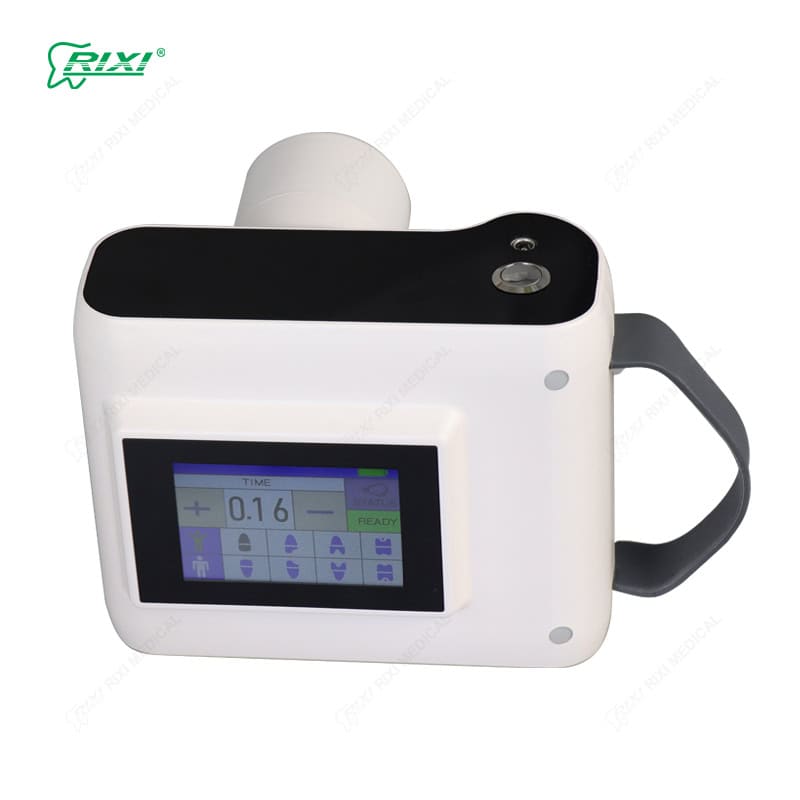
A portable dental X-ray quotation can describe the main unit clearly while leaving its power system vague. If the proposed configuration uses a rechargeable battery, buyers also need to know how charging, future replacement and service returns will be supported. Those dependencies can affect equipment availability long after the original order is accepted.
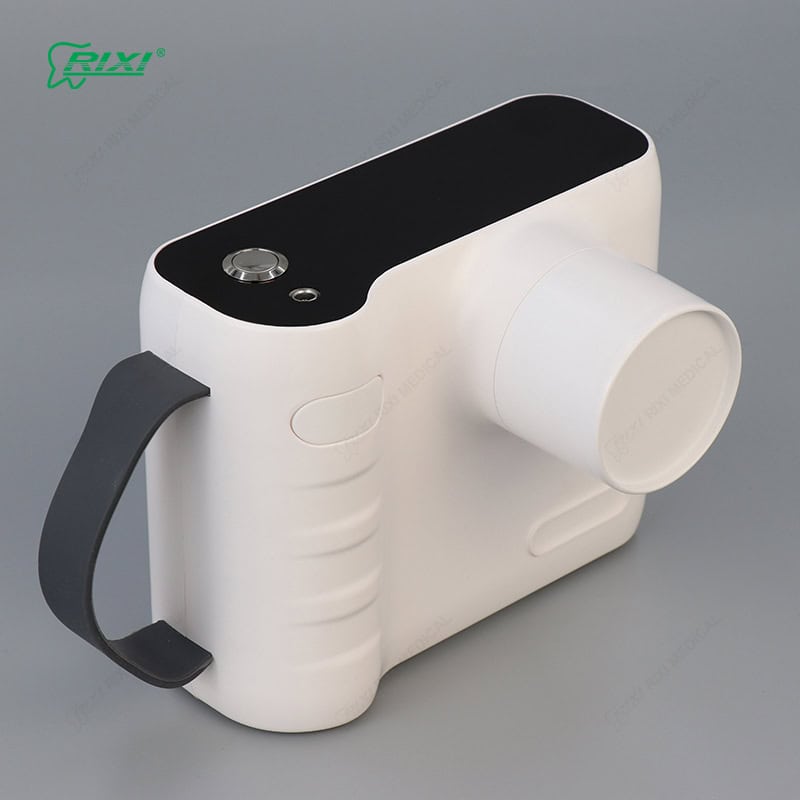
This review is for clinic procurement teams and distributors evaluating a handheld dental X-ray configuration. It does not assume that every portable model has the same battery, charger or service arrangement. Start with written identification of the exact configuration; a similar housing is not evidence of interchangeable components.
Define the power system as part of the order
Ask the supplier to identify the main unit, approved charging equipment, supplied power cable and battery arrangement. Record whether the battery is integrated or removable, who may replace it, and which instructions cover that work. “Rechargeable” alone does not tell purchasing whether future service requires a local technician or return of the complete unit.
Separate standard contents from options. A spare charger, charging base or replacement battery should be its own quoted item with a model reference and confirmed compatibility. If the seller cannot yet identify an item, keep it as an unresolved question rather than substituting a generic accessory on the purchase order.
Read runtime claims with their conditions attached
A claim such as a number of images per charge is not a complete purchasing specification without the conditions behind it. Ask which model and battery revision were assessed, what operating conditions applied, and whether the result describes a new battery. Request the supplier’s supporting information rather than turning a sales estimate into a clinic scheduling guarantee.
Discuss the intended work pattern separately: shared rooms, waiting periods, storage location and the person responsible for readiness. The procurement goal is to identify whether the proposed arrangement supports that pattern. It is not to prescribe exposure settings or conduct informal radiation tests. Any acceptance work involving X-ray generation belongs with appropriately qualified personnel following applicable procedures.
Ask for evidence, not a universal spare-parts promise
| Dependency | Question for the supplier | Record to retain |
|---|---|---|
| Battery identity | Which battery or assembly revision belongs to this configuration? | Model cross-reference and available specification. |
| Charging equipment | Which charger, input supply and cable are approved? | Part reference, rating information and instructions. |
| Replacement access | Who is authorized to replace the battery, and where? | Written service route and any required post-service checks. |
| Future supply | How will a replacement be matched if the original part changes? | Supplier confirmation and revision-control process. |
| Service shipment | Who assesses condition and arranges an acceptable transport route? | Return authorization and logistics responsibilities. |
Do not accept an undefined promise of “lifetime parts” as a substitute for these answers. Ask how a discontinued part would be handled and who would confirm a proposed substitute. Obtain a current quotation when a replacement is needed; do not infer future price, availability or turnaround from the original equipment order.
Keep charger compatibility separate from connector shape
A plug that fits does not establish that a charger is approved for the unit. Ask the supplier to confirm the exact part reference, relevant electrical ratings and destination power connection. A universal travel adapter or a visually similar charger should not become a procurement workaround for missing compatibility information.
Keep charger identification in the equipment record so shared-room teams do not casually exchange accessories between units. Where distributors supply several models, label inventory using the confirmed model mapping. Readers still selecting an equipment format can use the portable versus wall-mounted comparison; that broader decision should not be confused with approval of a power accessory.
Plan the service route before a unit is unavailable
Determine whether first-line support comes from the distributor or manufacturer, which evidence is needed, and who decides whether a component or complete unit must be assessed. An authorized technician may need information beyond photographs. This article is not permission to open the housing, rebuild a battery or attempt an electrical repair.
For configurations containing lithium batteries, logistics needs particular attention. PHMSA provides official lithium-battery transport resources, including guidance concerning damaged or defective batteries. Use the applicable authority and qualified logistics provider to confirm the current requirements for the actual battery, condition, route and transport mode. Do not assume that the original outbound packing makes a later service return acceptable.
Agree who arranges collection, who retains the return record and what the clinic will do while the unit is unavailable. Avoid promising a loan unit or a fixed repair time unless those terms are explicitly agreed. On delivery, the portable X-ray receiving checklist can help preserve the identity and accessory record needed later.
Turn supplier answers into an availability decision
Compare offers on the same support scope. One quote may identify a replaceable assembly while another expects return of the complete unit. The purchasing difference is not simply the price of a battery: it includes the agreed assessment route, shipping responsibility, work permitted locally and the process for approving the unit’s return to service.
For a distributor, create a model-to-part register rather than a drawer of unlabelled chargers. Link each approved accessory reference to the supported unit revision and retain the supplier’s confirmation. When a part changes, obtain a new mapping before allocating inventory. A replacement that is suitable for a later hardware revision should not automatically be supplied for earlier units.
Record the unresolved dependencies in the approval decision. If replacement access or transport arrangements remain unclear, purchasing should state that limitation explicitly instead of presenting the package as fully supported. The clinic can then decide, with the appropriate technical advisers, whether the uncertainty is acceptable or another configuration should be considered. Keep any warranty terms and service exclusions with that decision; a general sales conversation is not a substitute for the agreed written scope.
Questions purchasing teams often miss
Should every order include a spare battery?
No. First confirm whether a separately supplied battery is supported, who may replace it and how it must be managed. Buying an unapproved spare can add cost without providing a usable backup.
Does a larger advertised capacity prove longer usable runtime?
Not by itself. Compare supplier evidence for the actual configurations and stated conditions. Capacity figures alone do not establish equivalent equipment performance or a guaranteed work schedule.
Can the distributor source a charger locally?
Only after the responsible supplier confirms the specific replacement’s suitability. Local availability and a matching connector are not evidence of approval.
What belongs in a battery service enquiry?
Provide the controlled model and accessory references, observed issue, relevant service history and the support information requested by the supplier. Do not dismantle equipment to obtain evidence.
Scope: General sourcing and service-planning guidance, not clinical, repair, electrical or transport-compliance instructions. Battery construction, specifications and permitted service vary by model. Consult the supplier and qualified local professionals for the proposed configuration.
RIXI Medical is a dental equipment manufacturer and supplier in Foshan, China. Through its technical support channel, request model-specific power-system identification and replacement-route information before approving the order.
Need Dental Equipment Pricing or Configuration Details?
Contact RIXI Medical for model comparison, distributor pricing, packaging information, OEM/ODM requirements and after-sales support.
Request Product Information