Dental Chair Comparison: Start With Workflow, Not a Feature Count
The best dental chair configuration is the one that fits the procedures, room, clinical team and service plan. A structured comparison helps buyers avoid paying for unused options or overlooking details that affect every appointment.
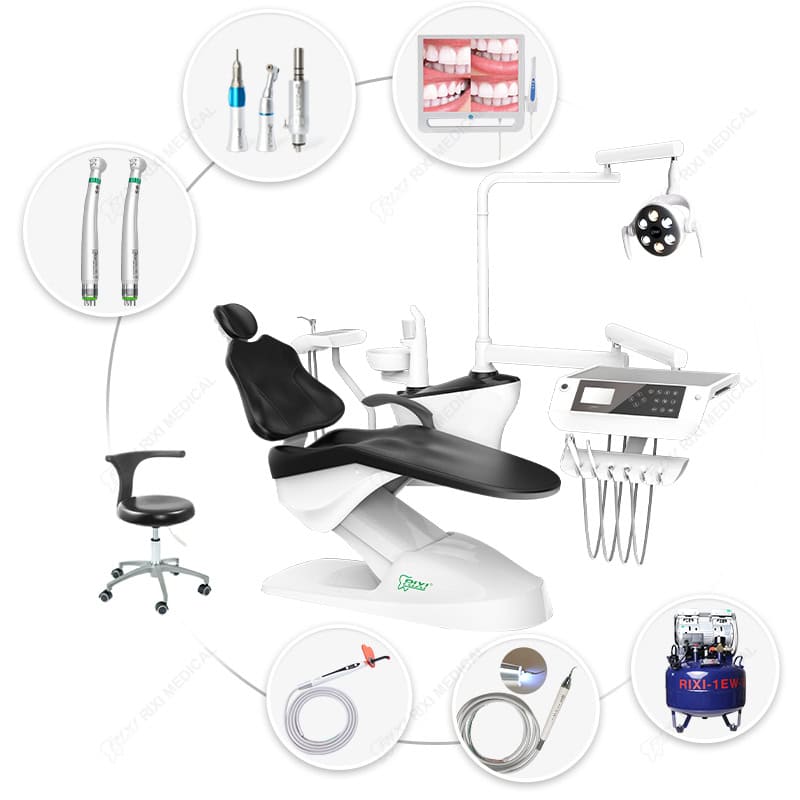
A useful dental chair comparison begins with a clinical brief. List the main procedures, expected patient volume, operator preferences, room dimensions, assistant position, imaging devices and local utility conditions. RIXI Medical supplies dental chairs from Foshan, China for clinics, distributors and project buyers who need model and package guidance.
Define the use case before comparing models
General dentistry
Prioritize dependable positioning, intuitive controls, practical delivery, easy cleaning and fast access to frequently used instruments.
Surgical and implant work
Review low-position access, operating-light performance, assistant workflow, accessory space and compatibility with specialist equipment.
Pediatric or compact rooms
Check overall footprint, patient entry, backrest movement and whether the delivery system can be parked without blocking circulation.
Multi-room clinics
Standardized controls and shared spare parts can simplify training, maintenance and purchasing across operatories.
Seven comparison categories that matter
| Category | What to compare | Why it affects ownership |
|---|---|---|
| Patient positioning | Range of motion, backrest profile, headrest adjustment and entry height | Supports access and patient comfort across procedures |
| Delivery system | Over-the-patient, cart or side delivery; hose reach and instrument capacity | Shapes dentist and assistant movement |
| Operating light | Intensity control, movement, shadow management and handle design | Affects visibility and repositioning during treatment |
| Assistant functions | Suction holders, controls, cuspidor access and working position | Influences four-handed workflow |
| Cleaning design | Seams, removable parts, tubing organization and accessible surfaces | Supports efficient turnover and routine care |
| Utilities | Voltage, air, water, drain and suction requirements | Determines installation scope and room compatibility |
| Serviceability | Component access, documentation, spare parts and technical support | Reduces avoidable downtime over the product life |
Compare the chair as part of the operatory
A chair does not work alone. Operator stools, cabinetry, imaging, compressor capacity and suction all influence the final result. Check the full movement envelope with staff seated, cabinets open and the delivery arm in use. A model that looks compact in a catalog can still create circulation problems if the room is not mapped accurately.
Utilities should also be reviewed early. Read the companion guide to dental chair power requirements and confirm the exact installation drawing before floor work is completed.

Use a weighted scorecard
Instead of counting features, assign a weight to each buying criterion. A clinic focused on endodontics may value positioning, lighting and accessory integration differently from a high-volume hygiene room. A distributor may add packaging, documentation, voltage options and spare-part availability to the score.
Evaluate total cost of ownership
Purchase price is only one part of ownership. Include site preparation, delivery, installation, staff training, preventive maintenance, replacement upholstery, consumable components and the operational cost of downtime. A lower initial quote may be more expensive if configurations are incomplete or spare parts are difficult to identify.
Questions to ask a dental chair supplier
- Which voltage and frequency configurations are available for the destination market?
- What is included in the standard package and what is optional?
- Can you provide an installation drawing and packing dimensions before shipment?
- Which components are normally kept as service spares?
- What installation, commissioning and troubleshooting support is available?
- How are chairs inspected before packing?
- Can upholstery, colors, branding or manuals be customized for distributor orders?
Review two RIXI configurations
The R1 integrated dental chair provides a coordinated chair-room configuration, while the R5 advanced dental chair offers another option for buyers comparing features and accessories. Use product specifications and a written requirements list to determine fit.
Complete the room with an ergonomic dental saddle stool, then browse the full dental chair category.
Frequently asked questions
Which dental chair is best for every clinic?
There is no universal best model. The right choice depends on procedures, space, team workflow, utilities, service plan and budget.
Should buyers compare only specification sheets?
No. Specifications are essential, but buyers should also review room fit, movement, cleaning, installation, spare parts, training and support.
How should a distributor compare OEM options?
Use one controlled configuration sheet covering technical features, voltage, upholstery, branding, packaging, documentation, inspection and after-sales parts.
Compare dental chair configurations with RIXI Medical
Share your room plan, procedure mix, quantity and destination market to request product recommendations and a detailed quotation.
Contact RIXI MedicalNeed Dental Equipment Pricing or Configuration Details?
Contact RIXI Medical for model comparison, distributor pricing, packaging information, OEM/ODM requirements and after-sales support.
Request Product Information