A dental chair installation succeeds or fails long before the equipment reaches the operatory. The most useful starting point is not a generic list of pipe sizes or electrical values. It is the exact installation drawing for the chair configuration being purchased, reviewed alongside the clinic floor plan by the equipment supplier and the local trades responsible for electrical, water, drainage, compressed air and suction.
This guide explains the coordination work clinic owners, distributors, procurement teams and contractors should complete before delivery. It provides general planning guidance rather than model-specific engineering values. Exact utility locations, connection sizes, operating ranges, anchoring requirements and local compliance obligations must be confirmed for the selected unit.
Start with the supplier’s installation documents
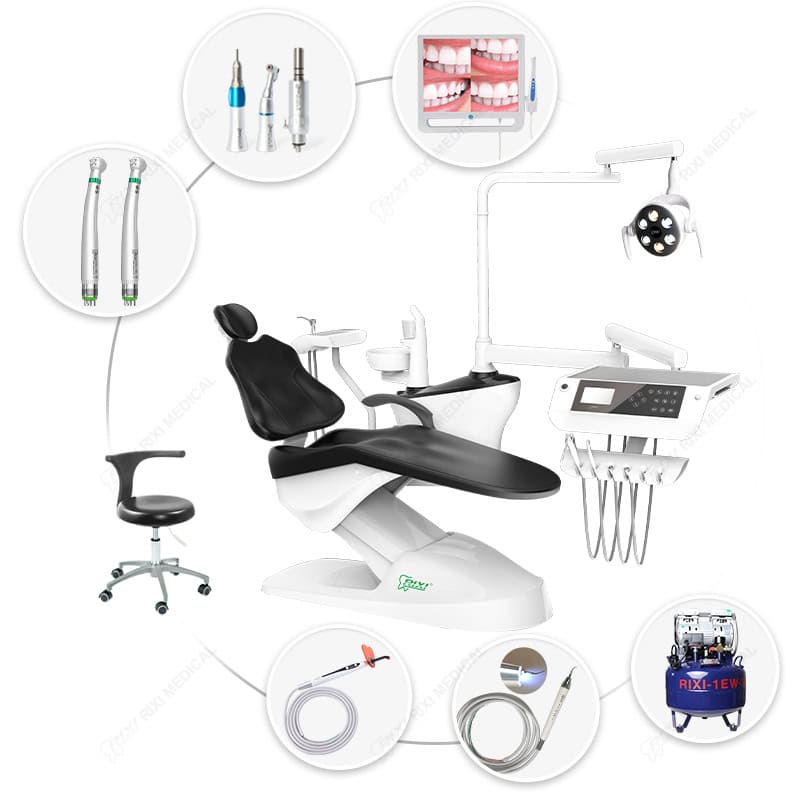
Before cutting the floor or ordering utility work, request a model-specific documentation package. At minimum, buyers should ask for the chair footprint, fixing-point pattern, junction-box location, utility entry zone, recommended service clearances and a list of included and optional components. If the chair is ordered with a monitor, camera, curing light, scaler, suction option or other accessory, that configuration should appear on the approved order and drawings.
A common project problem is using a drawing from a similar model. Small changes in the base, delivery arm, cuspidor or floor-box position can move the utility zone enough to create an awkward connection or interfere with service access. Mark the model number and drawing revision on the contractor set, then obtain written confirmation before site work begins.
Coordinate the four essential utility systems
Electrical supply and data
The chair’s rated voltage, frequency, maximum input and protective requirements should come from its nameplate and technical sheet. A qualified electrician should determine the circuit, isolation, grounding and protective devices required under local rules. Do not assume that every chair sold into the same region uses an identical configuration.
Plan low-voltage and data routes separately from wet services where practicable. If the operatory will use an intraoral camera, monitor, imaging sensor, scanner or networked computer, confirm where power outlets and data connections are needed before cabinetry is installed. Our separate guide to dental chair power requirements covers this coordination in more detail.
Water supply and drainage
Ask the supplier for the acceptable inlet-water range, connection type and any filtration or treatment recommendations for the chosen unit. The local plumbing contractor should verify water quality, isolation-valve access, backflow protection and drainage design according to local requirements.
Drainage errors often appear only after the room is finished. Insufficient fall, poor venting, inaccessible traps or misplaced floor penetrations can make commissioning difficult and future maintenance expensive. Keep shutoff valves and serviceable components accessible rather than burying them behind fixed cabinetry. See the related dental chair plumbing requirements guide when preparing the plumbing scope.
Compressed air
Dental units generally need clean, dry air within the operating range specified by the manufacturer. The compressor, dryer, filtration and distribution pipework must be sized for the complete clinic—not just one chair. Allow for simultaneous use, line losses and future rooms. Confirm the expected chair count and connected equipment with the system designer.
Before connection, contractors should clear the line using an appropriate procedure and verify that construction debris, oil and moisture will not enter the chair. RIXI’s dental air compressor sizing guide explains the questions to ask when planning a shared air system.
Suction
Clarify whether the selected chair will connect to a central wet or dry suction system, use an integrated option, or require another arrangement. The answer affects pipe routing, plant-room planning and commissioning. Confirm connection location, service access and compatibility with the clinic’s suction equipment before the slab, floor or cabinetry is closed.
Plan the room around people and service access
A chair can fit on a floor plan and still be difficult to use. Review the full movement envelope: chair travel, backrest recline, delivery-arm movement, operating-light reach, assistant access and patient entry. Include mobile carts, stools, cabinets and imaging equipment in the layout—not only the chair footprint.
Service access deserves equal attention. Technicians may need to reach filters, valves, electronics, motors or the junction area without removing permanent cabinetry. Ask the supplier which covers open during routine maintenance and what clearance is needed. For product-scale planning, compare the available dental chair range and confirm dimensions for the exact configuration under consideration.

Installation coordination checklist
| Stage | What to confirm | Who should approve it |
|---|---|---|
| Equipment selection | Exact model, handed configuration, accessories and utility options | Clinic buyer and supplier |
| Drawing review | Footprint, fixing points, utility entry, movement and service clearances | Supplier, contractor and clinic representative |
| Rough-in | Power, grounding, water, drain, air, suction and data locations | Relevant qualified trades |
| Pre-delivery inspection | Finished floor, clear access route, completed utilities and stored components | Site coordinator |
| Commissioning | Connections, movement, controls, leaks, pressures, accessories and handover records | Installer and clinic representative |
What can go wrong during sourcing and installation?
- The order changes after rough-in. A different delivery-system orientation or accessory package may no longer match the prepared utilities.
- Contractors work from a marketing image. Product photographs are not dimensional installation drawings.
- Utilities are placed correctly but cannot be serviced. Valves, filters and junctions need practical access after the chair is installed.
- The compressor or suction plant is planned chair by chair. Central systems must be evaluated for total clinic demand and simultaneous operation.
- Commissioning responsibility is unclear. Agree in advance who connects, tests, documents and signs off each system.
- Crates arrive but the delivery path was never checked. Verify doorways, lifts, stairs, turning space and temporary storage before dispatch.
Documents procurement teams should retain
Keep the approved quotation, configuration list, installation drawing, utility requirements, packing list, manuals, commissioning record and service contacts in one project file. Distributors handling multiple clinics should use revision-controlled documents so older drawings are not accidentally reused.
RIXI Medical is a dental equipment manufacturer and supplier in Foshan, China. Buyers considering the R1 dental chair or other configurations can request current specifications and installation information before confirming the site work. Exact specifications should always be checked against the supplier’s current documents and reviewed by qualified local professionals.
Frequently asked questions
When should the chair model be finalized?
Finalize the model and options before contractors complete the utility rough-in. If the order changes, request a revised drawing and review every connection point again.
Can one generic floor box work for every dental chair?
It should not be assumed. Utility entry positions, base designs and service requirements vary. Use the drawing supplied for the exact chair and configuration.
Who should install the dental chair?
Use appropriately qualified technicians and trades according to the supplier’s instructions and local requirements. Define responsibility for utilities, equipment assembly, testing and handover before delivery.
What should be tested before clinical use?
The installer should follow the model-specific commissioning procedure, including applicable utility connections, controls, chair movement, delivery components and accessories. Record issues and corrective work before handover.
What information should an OEM or distributor request?
Ask for current drawings, configuration options, packaging information, manuals, spare-parts guidance, service access details and the process for technical support. Confirm which documents apply to the ordered model.
Request drawings before construction begins
For model specifications, installation drawings, distributor pricing or OEM/ODM cooperation, contact RIXI Medical with the intended chair model, room plan, destination market and accessory requirements. This gives the supplier and project team a clearer basis for checking compatibility before the site is committed.
Need Dental Equipment Pricing or Configuration Details?
Contact RIXI Medical for model comparison, distributor pricing, packaging information, OEM/ODM requirements and after-sales support.
Request Product Information