A compressor service entry that says “filter changed” leaves important questions unanswered: which filter, on which unit, under which instruction, and with what evidence that the work is complete? Dental air compressor maintenance becomes easier to manage when the clinic, distributor and service provider can retrieve the same model-linked record.
This guide focuses on maintenance documentation and handover, not on sizing a compressor or teaching repairs. Buyers still choosing equipment should use the compressor specification and sizing guide. The process below starts with an identified asset and the instructions that apply to its actual configuration.
Identify the complete compressed-air package
Create an asset record for the compressor and identify separately supplied treatment or control components where applicable. Record the model, serial or production reference, electrical variant, installation location and commissioning date supported by the handover file. Retain a readable photograph of the nameplate without substituting it for the manual.
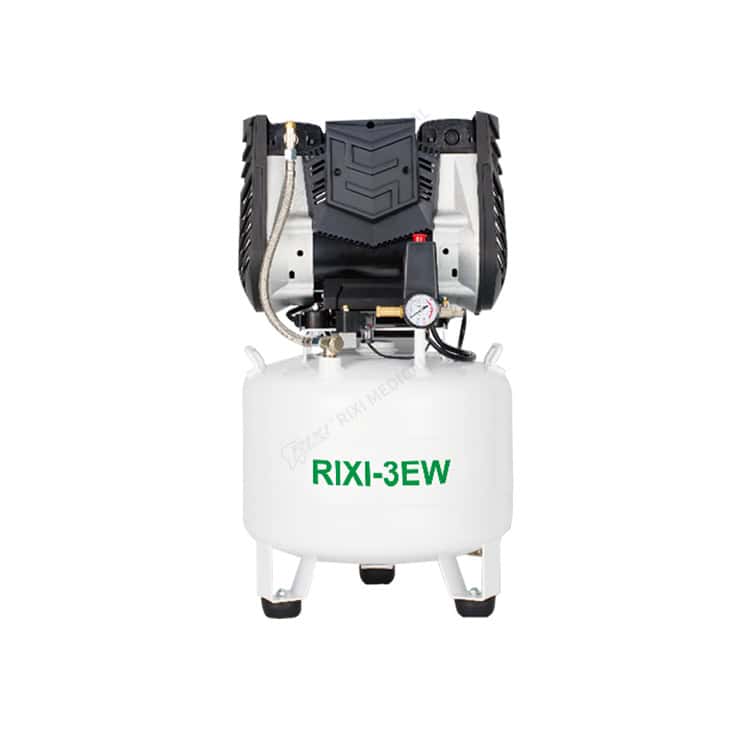
The installed package may include a receiver, filters, dryer, drains, regulators or an acoustic enclosure. Do not assume that an accessory shown beside a compressor was supplied with every unit. Compare the actual installation with the approved order and note later additions. The oil-free compressor product page can start an identification discussion, but service decisions require the supplied model’s documentation.
Make every planned task traceable to an instruction
For each maintenance task, record the source document, revision, applicable component and responsible role. Copy the manufacturer’s interval or trigger accurately, including any conditions attached to it. If a document is missing or its applicability is unclear, mark the task as awaiting confirmation rather than inventing an interval.
Keep operator observations separate from work reserved for a qualified technician. Opening pressure-containing components, electrical work and adjustments require the appropriate personnel, authorization and model procedure. This article does not authorize those tasks or replace the equipment’s safety instructions.
| Task-register field | Information to retain | Question it resolves |
|---|---|---|
| Asset and component | Unit identifier and the part of the package concerned | Which installed item does the instruction cover? |
| Instruction source | Manual title, revision and relevant section | Where did the task and interval come from? |
| Trigger and responsibility | Manufacturer-defined condition or interval and assigned role | When is review due and who may perform it? |
| Completion evidence | Date, work reference, findings and required checks | What supports closing the task? |
Do not add lubricant, adjust pressure settings or use a generic drain or filter routine because another compressor has similar external features. Oil-free does not mean that the entire air-treatment package has no maintenance needs. Confirm the applicable procedure for each fitted component instead of transferring instructions between designs.
Keep manuals current without losing the installed history
Store the supplied operating and service documents with the asset record. Note who supplied each file, its revision and the models it covers. A replacement pump assembly, dryer or control may change which instruction applies, even when the receiver and external label remain unchanged.
When an updated document arrives, ask whether it changes the requirements for the installed unit. Archive the superseded version and record the decision; do not silently overwrite the record used for earlier service. If a translated work sheet is used locally, link it to the approved source and resolve differences through the responsible supplier or technician.
Manufacturer document libraries, such as the DÜRR DENTAL download center for that manufacturer’s products, illustrate the importance of retrieving product-specific instructions. Another brand’s files are not operating instructions for a RIXI compressor and should not supply its maintenance intervals.
Record observations without turning them into a diagnosis
A useful fault report describes what was observed, when it occurred and which equipment was operating. Record displayed indicators or alarms, changes noticed since the last service, and the effect on the clinic’s air supply. Distinguish a reported symptom from a technician’s confirmed finding.
Photographs and short recordings can supplement the report if obtained safely under the clinic’s procedure. Do not run a suspect unit solely to obtain a video, bypass a protective function or repeatedly restart it to demonstrate a fault. The responsible service professional should decide what additional evidence is appropriate.
A sound reading, pressure observation or air-quality result also needs context: instrument, measurement point, operating condition, date and person responsible. A marketing description or subjective impression cannot be treated as a documented test result. Avoid promising that a recorded value proves clinical suitability.

Connect replacement parts to the work order
Before a part is ordered, ask the supplier to identify it against the unit and component revision. Retain the supplier part reference, description, quantity and compatibility confirmation. A matching shape is not sufficient evidence for substituting a filter, drain, regulator or control component.
After work, record which part was fitted, who performed the work, the instruction followed and any checks or open actions. Keep purchase and service references connected so the next technician can distinguish an original component from a later replacement. Do not label an unresolved substitution as an approved upgrade.
Agree the handover and return-to-service boundary
Define who may accept completed work and which evidence is required. The service provider should state what was done, what remains unresolved and whether any restrictions apply. The clinic should receive the applicable instructions and know whom to contact if the reported condition returns.
If the work affects a shared air supply, identify the connected rooms and the parties responsible for checking the wider system. The utility-room handover guide covers that coordination. Avoid treating a compressor work-order closure as automatic acceptance of every downstream device.
Use the technical support pathway to prepare the model, identifier, document revision and service evidence before escalation. Response times, warranty coverage and replacement-part availability must be confirmed for the actual agreement, not inferred from a general article.
Frequently asked questions
Does an oil-free compressor need a maintenance record?
Yes. The record identifies the installed configuration, applicable instructions and completed work. It also keeps separate treatment components and unresolved tasks visible without assuming one universal service schedule.
Can a clinic use another manufacturer’s maintenance interval?
Not as the instruction for its own unit. Obtain the current requirements for the exact compressor and fitted components; ask the supplier or qualified service provider to resolve missing information.
What information is useful when requesting a replacement filter?
Provide the compressor identifier, filter location and any existing part reference, along with clear photographs where appropriate. Request written compatibility identification before ordering or fitting a substitute.
Who decides whether equipment can return to use?
The responsible qualified parties should make that decision using the applicable procedure, work findings and required checks. This procurement guide does not authorize operation or certify air quality.
Scope: This is general record-management guidance, not a repair procedure, model specification or pressure-system compliance determination. Consult the supplier and locally qualified professionals for the installed equipment.
RIXI Medical is a dental equipment manufacturer and supplier in Foshan, China. Request model-specific manuals and parts identification with the unit details and the information missing from your service file.
Need Dental Equipment Pricing or Configuration Details?
Contact RIXI Medical for model comparison, distributor pricing, packaging information, OEM/ODM requirements and after-sales support.
Request Product Information