A dental curing light quotation may show a wavelength range and one output number, yet neither value is useful unless the buyer knows what was measured, where it was measured and which exact model produced the result. A clinic may need a dependable receiving baseline. A distributor may need evidence that repeated shipments follow the approved configuration. An OEM/ODM buyer may need the specification, label, manual and packing list to describe the same product revision.
This guide explains how to evaluate dental curing light wavelength and output documentation from a purchasing and quality-control perspective. It does not recommend exposure times or clinical protocols. Those decisions must follow the current device instructions, the restorative-material manufacturer’s instructions and review by locally qualified dental professionals.
Why a wavelength range is only the beginning
Wavelength identifies where a light emits within the spectrum, but a printed range does not show how much optical power is present at each wavelength. It also does not establish compatibility with every light-activated material. Buyers should request the emission range for the exact quoted model and ask whether the supplier can provide a spectral-output graph or the test record behind the declared range.
A peer-reviewed overview of light-curing unit purchasing and output terms recommends reporting more than a single irradiance figure: spectral radiant power, tip diameter, distance effects and beam profile can all affect how a unit is described. For procurement teams, the practical lesson is simple: compare complete measurement records, not isolated headline numbers.
Start with the current dental curing light range, then request the specification sheet for the exact model and revision under review. Do not copy a wavelength or output value from a similar-looking handpiece.
Ask the supplier to define every output claim
Terms such as “intensity,” “power” and “irradiance” are sometimes used interchangeably in quotations even though they do not describe the same measurement. A useful supplier record identifies the quantity, unit, instrument, aperture or sensor area, light-tip condition, operating mode, test distance and the date or revision of the record.
| Quotation claim | Evidence to request | Why it matters for acceptance |
|---|---|---|
| Wavelength range | Model-specific emission range and, where available, a spectral-output graph | Confirms that the number belongs to the approved model rather than a family or generic light source |
| Output or irradiance | Correct unit, measurement device, test distance, tip diameter and operating mode | Allows the buyer to compare like with like and create a repeatable receiving baseline |
| Multiple modes | Output record for each named mode and the timer options associated with it | Prevents one high-mode figure from being treated as the value for every setting |
| Light guide or optical tip | Active diameter, interface, orientation and included part number | Links the optical measurement to the actual tip supplied in the carton |
| Performance over distance | Test conditions at stated distances, if the supplier makes a distance-related claim | Shows how the declared output changes away from the detector or tip surface |
Research measuring different curing lights has shown that output at the tip cannot reliably predict output at a greater distance for every design. The distance-and-light-intensity study found different rates of decline among tested light and guide combinations. Buyers should therefore avoid converting one close-range measurement into an unsupported claim about another distance.
Separate model documentation from material instructions
The equipment supplier can document the curing light’s emission and operating characteristics. The restorative-material manufacturer documents the conditions for its material. These are two different records and neither should be silently substituted for the other.
During evaluation, ask the responsible dental team to compare the proposed unit’s current device instructions with the materials the clinic intends to use. Procurement can confirm that the documents exist, match the model code and are included in the handover package. It should not invent an exposure time, universal wavelength threshold or clinical result.
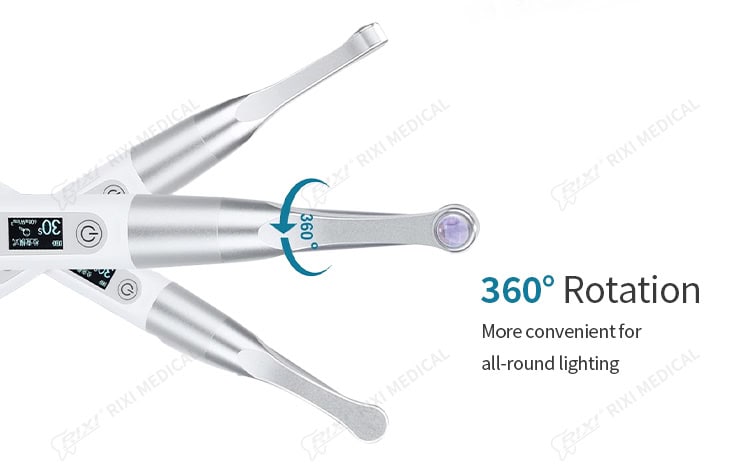
The cordless LED curing light and built-in LED curing light illustrate different power and integration arrangements. Exact wavelength, output, mode and accessory information must still be confirmed for the quoted unit. Buyers choosing between the two formats can also use the existing cordless-versus-built-in comparison; this article addresses the separate task of verifying optical documentation and receiving evidence.
Build a sample record that can be repeated
A sample approval is most useful when it becomes a reference for later shipments. Photograph the model label, handpiece, optical tip, charger or connection, controls, display and all included accessories. Record the model and revision identifiers exactly as shown. Keep the approved specification sheet, manual, packing list and supplier test record together.
For a distributor or private-label program, align the same identifiers across the quotation, artwork, manual and carton. If the light guide, LED module, control board, battery, charger or operating modes change, the supplier should disclose the change before production. The buyer can then decide whether documents need revision and whether a new representative sample is required.

Use a controlled receiving check
- Identify the shipment. Match the model, revision and quantity to the purchase order and approved sample record.
- Check the supplied set. Count the handpiece, optical tip or guide, shield, charger or connection parts, holder and manual against the packing list.
- Inspect condition. Look for transit damage, contamination, chips, loose interfaces or cable damage without performing unauthorized disassembly.
- Confirm settings. Verify that named modes, timer controls and display indications match the approved documentation.
- Apply the agreed test method. Use the same suitable measuring equipment, setup, distance, tip condition and mode defined in the acceptance plan. A different setup is not a like-for-like comparison.
- Record exceptions. Photograph and quarantine discrepancies under the buyer’s normal quality process, then ask the supplier for written disposition.
RIXI Medical is a dental equipment manufacturer and supplier based in Foshan, China. Its quality-control overview provides broader manufacturing context, while curing-light acceptance limits and methods should be agreed for the exact order. Technical questions should remain attached to the product record through the technical-support channel.
Plan an output-monitoring record after handover
The purchase decision is not the end of equipment control. The clinic should keep the device instructions, approved accessories and initial measurement record available for later checks. A baseline is more useful than an unsupported universal pass number because it reflects the clinic’s actual model, tip and measurement method.
Define who inspects the optical tip, how contamination or damage is handled, which measuring device and setup are used, how readings are recorded and when a change triggers technical review. Do not assume a chairside radiometer and a supplier laboratory system produce interchangeable absolute readings. Use each tool according to its instructions and compare results only within a documented method.
For broader sourcing preparation, the equipment buying guides can help procurement teams organize specification, site and handover questions across other dental equipment categories.
Frequently asked questions
What wavelength should a dental curing light have?
There is no single purchasing number that can be separated from the material and device instructions. Request the exact model’s emission documentation, then have qualified dental professionals confirm compatibility with the light-activated materials and protocols used locally.
Is the highest irradiance value automatically the best choice?
No. A headline value does not show the spectrum, tip diameter, beam distribution, test distance, operating mode or measurement method. Review the complete record and the intended workflow instead of ranking units by one number.
Can a buyer verify output with any radiometer?
Use a suitable device according to its instructions and document the setup. Different instruments and geometries may not produce interchangeable absolute readings, so receiving comparisons should follow one agreed and repeatable method.
What should a distributor retain for repeat orders?
Keep the approved model and revision, product and label photographs, specification sheet, spectral or output evidence, accessory matrix, manual, packing list, sample results and written change-control history.
Scope note: This guide covers procurement documentation and equipment acceptance, not clinical exposure settings or treatment advice. Exact specifications vary by model and revision. Confirm them with the supplier and have locally qualified professionals review clinical use, electrical installation and destination-market requirements.
To review a model for clinic, distributor or OEM/ODM purchasing, request the current specification sheet, output test conditions and itemized accessory list before approving the sample.
Need Dental Equipment Pricing or Configuration Details?
Contact RIXI Medical for model comparison, distributor pricing, packaging information, OEM/ODM requirements and after-sales support.
Request Product Information