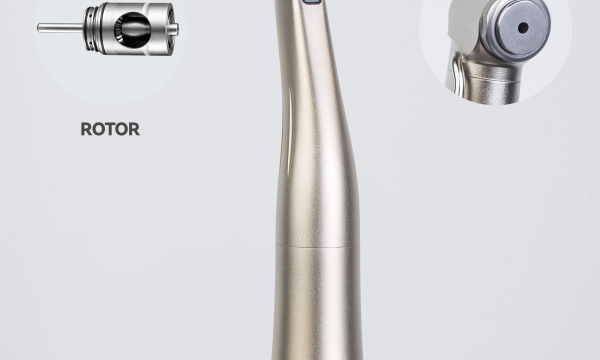
An implant handpiece distributor can lose control of a product line even when the catalog contains only two similar-looking models. “20:1 implant handpiece” is not a complete sales identity if one version includes illumination and another does not. A repeat order, replacement request or customer quotation needs enough information to return to the same approved configuration without relying on a photograph.
This guide explains how distributors can build an implant handpiece SKU matrix, keep LED and non-LED variants separate, and connect each sellable item to its compatibility evidence, packing list and support route. It covers commercial identification and handover—not clinical selection, operating settings or treatment technique.
Quick answer
Give each implant contra-angle variant its own SKU. Record the exact model, reduction marking, illumination configuration, motor-interface evidence, irrigation arrangement, chuck type, included accessories, packaging revision and current instructions. Do not let a shared 20:1 label collapse LED and non-LED products into one informal stock line.
Why a distributor SKU must identify more than the ratio
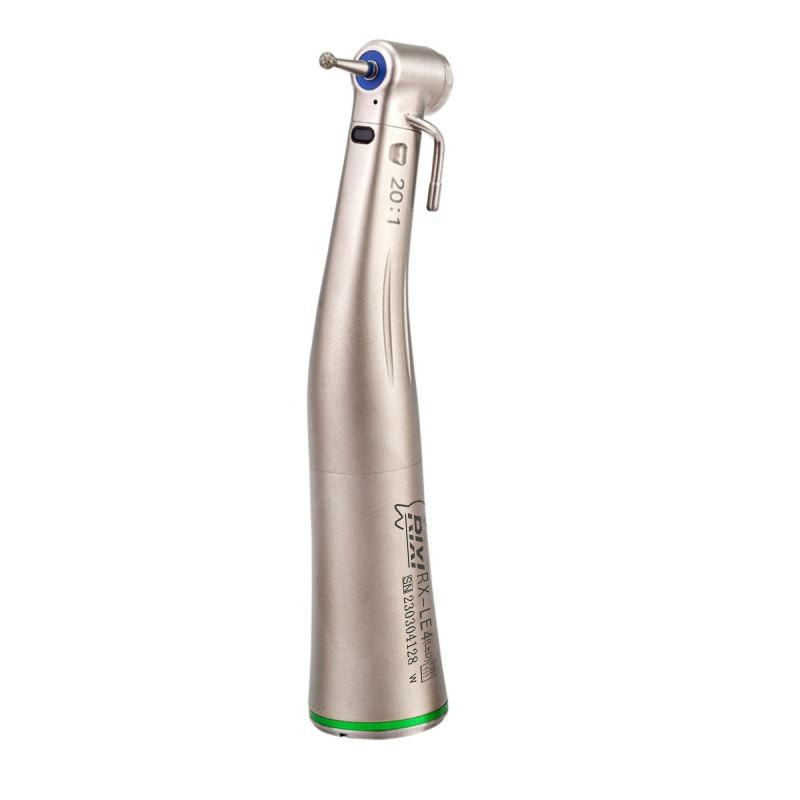
RIXI Medical lists a 20:1 LED implant contra-angle handpiece and a separate 20:1 non-LED implant contra-angle handpiece. Both product records describe a reduction contra-angle with external irrigation and a push-button chuck, but their illumination configurations are different. Their product pages also tell buyers to confirm the exact motor connection and current operating limits before ordering.
A distributor should therefore treat the ratio as one field, not as the product name. The same principle applies when products share a housing shape, color band or sales description. Visual similarity does not prove that the drive interface, light supply, accessory set or applicable instructions are interchangeable.
Build one controlled row for every sellable configuration
A useful line card connects the commercial SKU to the manufacturer’s exact model identity. It should also define what the customer receives and which evidence supports the quotation. Keep uncertain fields open for confirmation rather than filling them from an older catalog or a similar product.
| SKU field | What to record | Procurement purpose |
|---|---|---|
| Commercial SKU | Distributor code and supplier model | Links the quotation, stock and support case |
| Variant | LED or non-LED; exact reduction marking | Prevents a lighting option from being silently substituted |
| System interface | Written compatibility evidence for the proposed motor and connection | Replaces assumptions based on appearance |
| Irrigation | Visible arrangement plus confirmed tubing and fittings | Defines what must be listed in the packing record |
| Chuck and instrument interface | Model-specific description and current limits | Supports correct technical review |
| Supply scope | Handpiece, box, accessories and explicit exclusions | Prevents a motor or pump from being implied |
| Documents | Instruction titles, language and revision | Connects the physical item to current guidance |
| Change status | Approved sample, artwork and document revision | Controls repeat orders and private-label updates |
The wider dental implant equipment distributor package checklist covers mixed equipment packages. This page has a narrower role: controlling closely related handpiece variants inside the distributor’s own catalog and inventory.
Separate the product identity from the customer’s motor
A handpiece SKU should not promise compatibility with every system. Ask the customer for the motor make, model and connection details, then obtain written confirmation for the proposed handpiece. Record the evidence with the quotation and order. If the compatibility answer is conditional, include the required coupling, illumination supply or accessory reference instead of shortening the response to “fits.”
The distributor’s sales team does not need to diagnose the equipment. It does need a repeatable route for technical questions. A request that lacks the motor identity should remain pending technical review. If a buyer is actually comparing instrument families rather than two variants, use the separate surgical versus high-speed handpiece specification guide; that is a different purchasing decision.
Define the packing list before publishing a bundle
Product photography can show a handpiece and branded box without establishing everything included in the commercial package. List every supplied accessory individually. If irrigation tubing, fittings, tools, a stand or printed documents are included, give them their own quantity and reference. If the motor, control unit, irrigation pump or instruments are excluded, state that clearly.
For distributor bundles, distinguish three levels: the handpiece SKU, the optional accessory SKU and the complete promotional bundle. The bundle should resolve back to its component list. This lets receiving staff identify a missing item and lets sales staff quote a replacement without recreating the package from memory.

Keep LED and non-LED stock physically distinguishable
Do not rely on warehouse staff recognizing a small visual difference. Use the commercial SKU, supplier model, variant name and label image on the stock record. Where practical, store the approved product and package photographs with the item master. The receiving check should compare the label and configuration with the purchase order before the item is released to available stock.
Inventory status also matters. Separate saleable stock from samples, returned items, units awaiting inspection and items reserved for a customer. The dental handpiece rotation and reserve guide explains why physical presence alone does not make a unit available for dispatch.
Control documents and artwork by SKU
Each variant needs the instructions that apply to that exact model. Record the document title, language and revision. The implant instrument documentation and traceability guide provides a broader document-pack method. For the SKU matrix, the essential point is that an LED model must not inherit the non-LED item’s instructions or label merely because the reduction ratio is the same.
Private-label artwork should preserve technical identity. Connect the box, label, manual and price-list files to the approved SKU. If a logo or layout changes, record the revision without overwriting the technical model reference. Destination-market requirements vary, so claims, translations and labeling should be reviewed by qualified local and regulatory professionals before release.
Use change control for repeat orders
A repeat purchase should reference the approved supplier model, distributor SKU, sample or image set, packing list and document revision. Ask the supplier to flag changes to the interface, illumination arrangement, irrigation accessories, labeling, packaging or instructions before production. A replacement model can be commercially acceptable, but it should not be treated as the same item until the buyer completes the required review.
- Compare the new quotation with the last approved SKU record.
- Identify every changed field and the evidence supplied for it.
- Confirm whether existing stock, accessories and documents remain applicable.
- Approve substitutions in writing before updating the catalog or order.
- Retain the old and new references so service cases remain traceable.
Receiving and handover checklist
- Match the distributor SKU and supplier model to the purchase order.
- Verify LED or non-LED configuration from the item and label.
- Check quantities, package condition and separately listed accessories.
- Record serial or batch identifiers when the product provides them.
- Confirm the current instructions and compatibility evidence are accessible.
- Hold discrepancies for review rather than relabeling the item informally.
- Update stock status only after the receiving record is complete.
RIXI Medical is a dental equipment manufacturer and supplier based in Foshan, China. Buyers can review the broader dental handpiece range, but final SKU data should always come from the exact quotation and model documentation.
Frequently asked questions
Can LED and non-LED 20:1 handpieces share one distributor SKU?
They should normally be separate because illumination is a material configuration difference. Use distinct SKUs unless the commercial code includes an unambiguous variant field throughout ordering, stock and support records.
Does a 20:1 marking prove the handpiece fits a customer’s implant motor?
No. The ratio is only part of the specification. Confirm the exact motor interface, illumination arrangement, permitted limits and required accessories for the proposed combination.
Should the branded box be listed as part of the supply scope?
Record the approved packaging and contents in the packing specification. A photograph of a box does not establish which accessories, documents or separate equipment are included.
What should happen when the supplier changes a model or accessory?
Place the change under written review, compare compatibility and supply-scope evidence, update the SKU record only after approval, and retain the superseded reference for traceability.
Reviewer and scope note
This article provides general distributor identification, documentation and handover guidance. Confirm model-specific specifications and compatibility with the supplier, and have clinical, technical and destination-market requirements reviewed by qualified professionals.
Next step: For a distributor quotation, send RIXI Medical the intended variant, customer motor details, required packaging and order quantity through the product enquiry page. Request a model-linked specification and packing list before adding the item to your catalog.
Need Dental Equipment Pricing or Configuration Details?
Contact RIXI Medical for model comparison, distributor pricing, packaging information, OEM/ODM requirements and after-sales support.
Request Product Information