A quotation that says “premium upholstery” or “metal frame” leaves important purchasing questions unanswered. Two dental chairs can look similar while using different surface coverings, tubing specifications, fastening arrangements and replacement parts. Buyers need to establish what is supplied, which cleaning instructions apply, and how those choices will be controlled on repeat orders.
This guide treats dental chair materials as a procurement decision for clinics, distributors and purchasing teams. Start with the available dental chair configurations, then request evidence for the exact model and options quoted. A photograph can show appearance; it cannot establish alloy grade, chemical compatibility or expected service life.

Turn material descriptions into an agreed specification
Ask for a component-level schedule covering the supporting structure, external covers, upholstery, internal air and water lines, and serviceable fittings. The schedule should identify the model, revision and ordered configuration. Where proprietary information is unavailable, ask what performance evidence and replacement information the supplier can provide instead.
Keep marketing labels separate from acceptance criteria. “Medical grade,” “heavy duty” and “corrosion resistant” are incomplete descriptions unless the supplier explains what they mean for that component. Record any test report by its scope, sample identity and conditions; a report about one covering or component does not automatically apply to the assembled chair.
Evaluate upholstery with the clinic’s cleaning products
Do not assume that polyurethane is always better than PVC, or that a material name establishes compatibility with every disinfectant. The finished covering, protective coating, seams, adhesive and underlying cushion all matter. Ask the supplier for written cleaning instructions and the approved products or chemical conditions for the selected upholstery.
The clinic’s responsible professional should compare those instructions with its established cleaning and infection-control procedures. If there is a conflict, resolve it before ordering. A supplier-approved sample evaluation may help assess visible discoloration, tackiness or surface changes, but an informal wipe test does not establish long-term durability or infection-control performance.
Inspect edges, headrest joints, seams and areas around controls. Ask whether individual cushion sections can be replaced and how replacement coverings are identified. A color name alone may not be sufficient for a later order; retain the approved sample reference and ask how batch variation is handled.
Read the frame and base as an assembly
Steel, cast iron and aluminum describe material families, not a finished chair’s quality ranking. Geometry, joints, manufacturing control, protection of exposed surfaces and the complete assembly influence performance. Avoid rejecting or approving a chair solely because it uses a particular metal or fabrication method.
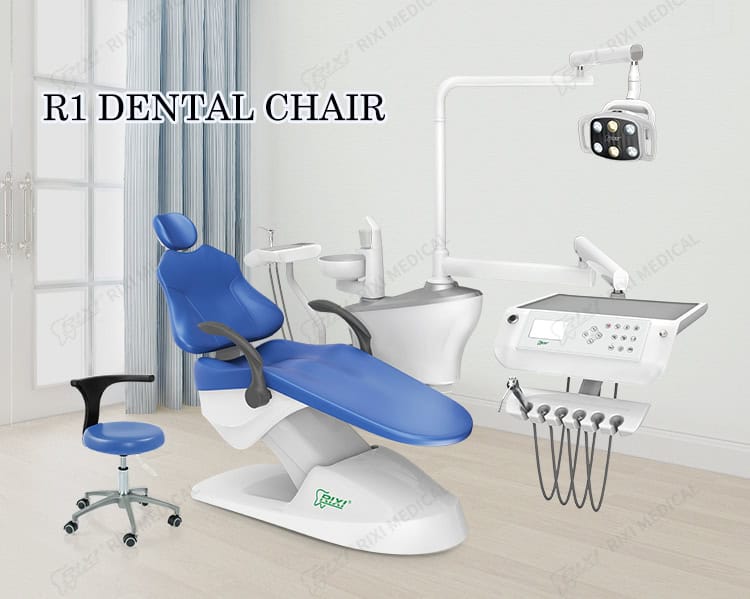
For the R1 integrated chair configuration, or any alternative being quoted, request the declared operating limits, mounting requirements and relevant verification documents. Confirm that the evidence applies to the supplied version and accessories. This article does not assign a load rating to any pictured chair.
Check coating coverage around edges, mounting locations and removable panels on the sample. Ask how transport damage or coating defects are assessed. Keep deeper alloy, casting and machining discussions within an OEM component review; a clinic buyer’s immediate concern is whether the complete ordered chair has clear specifications and service support.
Ask about tubing, fittings and access before a leak occurs
A tubing material should be assessed against its intended fluid, operating conditions and the equipment manufacturer’s instructions. There is no universal rule that one polymer is correct for every air, water or suction line. Request the specified replacement tubing and fittings, including dimensions, connection type and any model-specific limitations.
Ask which components a qualified service technician can access without removing fixed furniture or dismantling unrelated assemblies. Review panel access, labeling and the availability of diagrams. The supplier should explain who is authorized to replace a part and what checks are required afterward; buyers should not improvise substitutions from appearance alone.
The dental accessories and components range can help frame a parts discussion, but category membership does not prove compatibility. Obtain written confirmation of the part number and applicable chair revision before including spares in an order.
Use one evidence checklist across competing quotations
| Component | Evidence to request | Acceptance question |
|---|---|---|
| Upholstery | Covering reference, cleaning instructions and replacement options | Does it match the approved sample and clinic procedure? |
| Structure and base | Construction description, operating limits and applicable verification | Does the evidence identify the ordered configuration? |
| External covers | Finish sample, removal method and replacement identifiers | Can routine service occur without damaging panels? |
| Tubing and fittings | Parts list, connection specifications and service instructions | Can the service team identify the correct replacement? |
| Repeat supply | Revision record and substitution approval process | Will material changes be disclosed before shipment? |
Use “confirmed,” “pending evidence” and “not included” in the comparison sheet. A missing answer should remain visible rather than being replaced with an assumption. This makes price comparisons more meaningful and gives the supplier a clear list of unresolved questions before a purchase order is issued.
Carry sample approval into production and after-sales support
Record the approved finish, upholstery reference and component schedule alongside the order. For distributors buying several configurations, maintain a separate record for each one. Ask whether a later change to a covering, connector or internal component requires notification, renewed sample approval or an updated service document.
When reviewing an R5 chair and accessory package, distinguish standard components from selected options. Request a packing list that identifies separately supplied cushions, accessories or service parts. On receipt, compare the delivered configuration with the approved documents and record discrepancies before acceptance.
RIXI Medical is a dental equipment manufacturer and supplier based in Foshan, China. Its appropriate role in this discussion is to explain the offered configuration and supply-side documentation. Exact material specifications, cleaning compatibility and local installation requirements should be confirmed with the supplier and relevant qualified professionals.
Buyer questions
Can I choose upholstery from its material name alone?
No. Request the finished covering’s specification, cleaning instructions and sample reference. Compare those with the clinic’s approved procedure instead of relying on a general PU-versus-PVC ranking.
Does an aluminum base prove that a chair is stronger?
No. Evaluate the complete structure and its applicable verification evidence. The metal name alone does not establish stability, allowable loading or durability.
What should a distributor keep for repeat orders?
Keep the approved configuration, material references, sample records, service-parts identifiers and revision history. Agree how substitutions will be communicated before accepting repeat production.
To prepare a model-specific comparison, request the material specification and replacement-parts information for your intended chair configuration.
Need Dental Equipment Pricing or Configuration Details?
Contact RIXI Medical for model comparison, distributor pricing, packaging information, OEM/ODM requirements and after-sales support.
Request Product Information