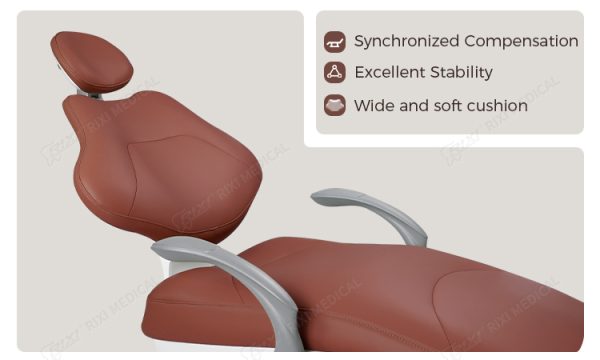
A dental chair can still be mechanically serviceable while its upholstery has become cracked, loose, stained, or difficult to keep presentable. The purchasing decision is not simply “repair or replace.” Buyers need to identify which cushions and covers belong to the chair, decide whether local recovery or model-matched replacement parts are more practical, and plan the work without creating an unexpected operatory shutdown.
This guide treats dental chair reupholstering as a parts-and-handover project. It is written for clinic owners, distributors, procurement teams, and service coordinators who need a clear scope before requesting quotations. For examples of current chair construction and upholstery layouts, compare the R3 floor-mounted dental chair with the R1 dental chair; exact materials, cushion shapes, and removal methods remain model-specific.
Choose the correct level of work before requesting a quote
“Reupholstering” can describe several different jobs. A local provider may recover existing cushions with new material. A chair supplier may offer complete replacement cushions or factory-prepared upholstery components. A minor repair may address one damaged area without changing the full set. These options are not interchangeable, so the request should state the expected result rather than relying on a single label.
- Localized repair: suitable only when the damage is confined and the underlying cushion and attachment points remain serviceable. Ask the repairer to explain the expected finish and limitations.
- Recovering existing cushions: keeps the original cushion bases but requires accurate removal, pattern work, material selection, and refitting.
- Replacing selected cushions: can reduce on-chair labor, but the buyer must confirm model compatibility, mounting details, color matching, and which hardware transfers from the old parts.
- Replacing the complete upholstery set: may provide the most consistent appearance when several surfaces are worn, but the quotation should define every included component.
Before deciding, document whether the issue is cosmetic, structural, or related to attachment hardware. Loose fasteners, damaged shells, deteriorated foam, or broken mounting points should not be hidden by a new cover. If the chair also has broader service issues, use a separate dental chair maintenance review so the upholstery project does not obscure unrelated faults.
Build a model-linked identification file
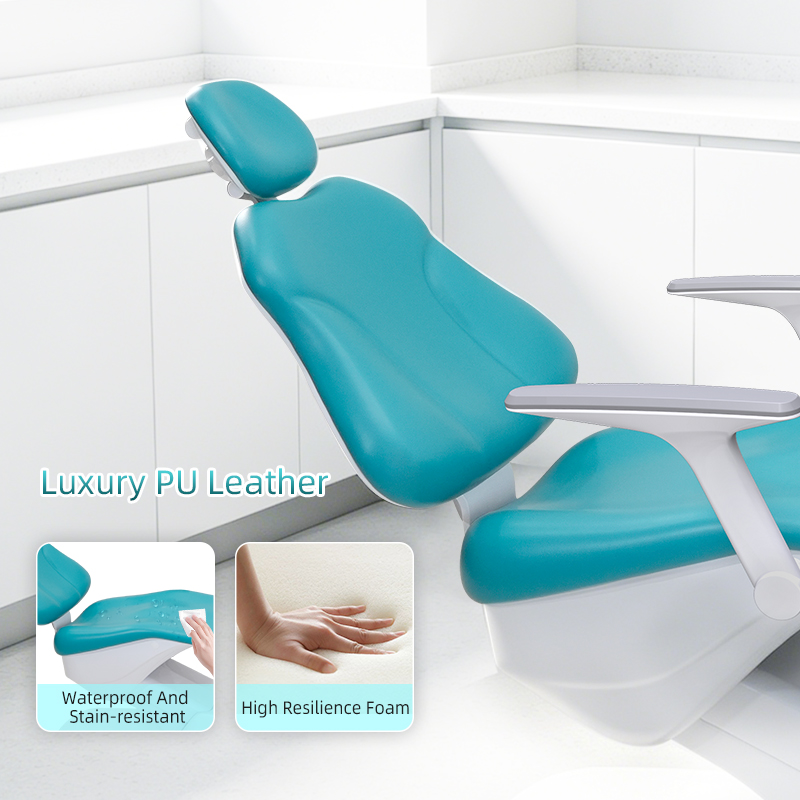
The most avoidable errors begin with an incomplete chair identity. A product name alone may not capture production revisions, optional headrests, armrest styles, or upholstery attachment changes. Create one identification file for each chair or matched group of chairs before asking a supplier or local contractor to price the work.
Include the model name, serial or production reference if available, purchase or delivery record, and clear photos of the entire chair. Add close-ups of the underside of the seat, rear of the backrest, headrest connection, armrest interface, seam layout, mounting holes, labels, and any clips or threaded inserts. Photograph the damaged areas in normal lighting and include a ruler only where dimensions are genuinely useful. Do not assume that a photo from the front proves compatibility.
If replacement components will be supplied, request an illustrated parts list or marked drawing that identifies each cushion and associated hardware. Buyers comparing other chair families can review the dental chair product category, but visual similarity between models is not a substitute for a supplier confirmation.
Approve color and material as separate decisions
Color names are unreliable across screens, cameras, batches, and suppliers. “Blue,” “beige,” or “coffee” can describe many finishes. Request a current physical swatch when color matching is important, then record the approved color code, swatch reference, and approval date. Compare the sample under the clinic’s actual lighting and against nearby stools or operator seating if those items are expected to match.
Material approval needs its own questions. Ask the supplier or upholsterer to identify the proposed surface material, backing, texture, finish, and model-specific cleaning guidance. Confirm whether the quoted material is a current standard option or a special selection. Local infection-control protocols and destination requirements vary, so the clinic should have its qualified personnel review cleaning-agent compatibility and routine care instructions before approval.
Define removal, installation, and downtime ownership
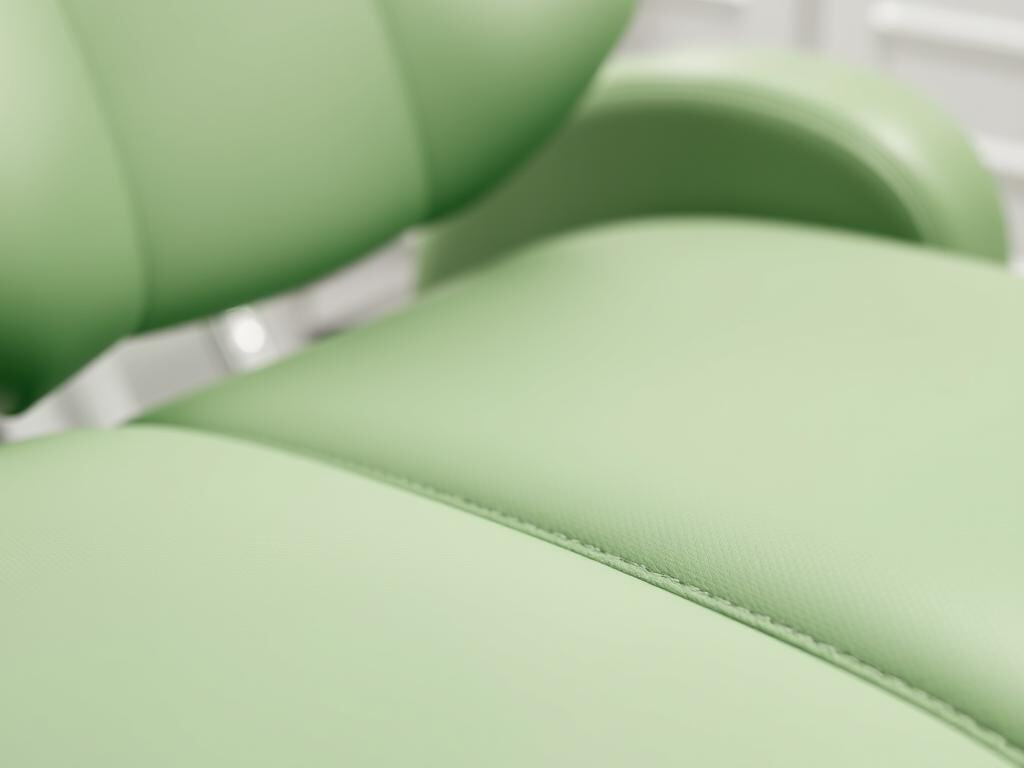
A quotation can look complete while leaving the most disruptive work unassigned. State who will remove the old cushions, disconnect any affected accessories, transfer hardware, install the new or recovered pieces, test movement, and dispose of or return the removed materials. If work will be performed off-site, also define packing, labeling, collection, and temporary storage.
Ask the service provider to identify the chair access they need and the estimated on-chair work sequence. The clinic can then reserve a realistic service window and keep the operatory unavailable until the handover checks are complete. Do not treat a supplier’s component quotation as an installation promise unless the installation scope is explicitly written.
| Evidence to request | Why it matters | Responsible party |
|---|---|---|
| Marked cushion or parts list | Prevents omitted headrest, seat, backrest, or trim pieces | Supplier and buyer |
| Color code and approved sample | Creates a repeatable approval record | Buyer |
| Removal and fitting method | Clarifies tools, access, hardware transfer, and labor | Installer or service provider |
| Cleaning and care instructions | Supports local review before the chair returns to routine use | Supplier and clinic reviewer |
| Service window and contingency | Prevents an optimistic schedule from becoming unplanned downtime | Clinic and service provider |
If local technical support is needed for a RIXI product, send the identification file through the technical support channel before parts are ordered. RIXI Medical, a dental equipment manufacturer and supplier based in Foshan, China, can use model-linked photos and records to clarify the supply-side component scope; local removal and installation should be confirmed with qualified service personnel.
Use receiving checks before the chair is taken out of service
Do not dismantle the chair as soon as a shipment arrives. First compare the package with the approved parts list. Check item labels, quantity, color reference, visible cushion shape, mounting pattern, included hardware, and surface condition. Photograph the unopened package and each component if the order will be installed later. Keep protective wrapping in place until the components have been matched to the chair.
For a locally recovered set, inspect seam alignment, surface tension, edge finishing, openings, and the condition of attachment points before installation. Any mismatch should be documented while the original chair remains usable when possible. This sequence gives the buyer time to resolve a supply discrepancy without extending the operatory shutdown.
Close the job with a practical handover record
After installation, check that the seat, backrest, and headrest are secure and correctly aligned. Move the chair through the functions affected by the work and confirm that upholstery edges, seams, cables, covers, switches, and accessories do not interfere with motion. Verify that transferred fasteners are present and that no tools or packaging remain in the chair base or service area.
Record the installation date, chair identification, supplied component references, material and color code, installer, before-and-after photos, and any care instructions. Distributors should retain the same data for repeat orders rather than relying on color names or memory. The broader dental chair upholstery specification guide can help with material questions for new-chair procurement; this reupholstering record should remain tied to the serviced chair.
Scope note: cushion dimensions, fastening systems, surface materials, cleaning instructions, and replacement methods vary by model. Confirm exact specifications with the supplier and use locally qualified technical and infection-control personnel before removal, installation, or return to service.
Frequently asked questions
Can a clinic order upholstery by chair model name only?
Usually, the model name should be supported by production or serial information and detailed photos. Revisions and options can change cushion shapes, headrests, armrests, mounting points, and included hardware. Ask the supplier to confirm the exact parts against the identification file.
Should all chair cushions be replaced at the same time?
Not automatically. A complete set can provide a consistent appearance, while selective replacement may be reasonable when wear is limited and matching components are available. Compare condition, color-match expectations, labor access, and downtime before choosing the scope.
What should be approved before a dental chair is dismantled?
Approve the parts list, material and color reference, installation responsibility, service window, and contingency plan. Receive and inspect replacement components first when the workflow allows. This reduces the risk of discovering a mismatch after the chair has been taken out of service.
For a model-linked upholstery parts list, current material options, technical drawings or a distributor quotation, send the chair identification file through the RIXI Medical contact page.
Need Dental Equipment Pricing or Configuration Details?
Contact RIXI Medical for model comparison, distributor pricing, packaging information, OEM/ODM requirements and after-sales support.
Request Product Information