A contra-angle handpiece quotation can look complete while leaving the most important interfaces undefined. A ratio, a photograph and a product-family name do not tell a buyer which motor is approved, which instrument fits the head, what accessories are supplied or which instructions govern maintenance and reprocessing. Those gaps matter to clinic owners, distributors and procurement teams because a visually similar replacement can still be a different commercial configuration.
This guide provides a supplier-side framework for comparing a contra angle handpiece before purchase. It does not recommend a clinical indication or operating setting. Exact compatibility, permitted limits and intended use must come from the current documentation for the quoted model and be reviewed by appropriately qualified personnel.
Start with the sellable configuration, not the family name
“Contra-angle handpiece” describes a broad product format. It is not a complete purchase-order description. Start the comparison with the manufacturer, exact model, reduction or speed-increasing ratio, head version, illumination arrangement, irrigation arrangement where applicable, chuck or instrument interface and motor connection. Put each field on the quotation instead of relying on a catalog photograph.
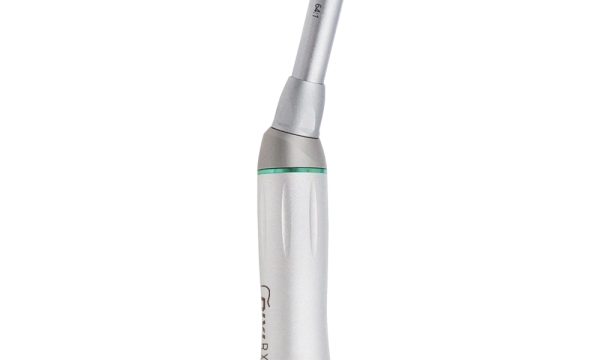
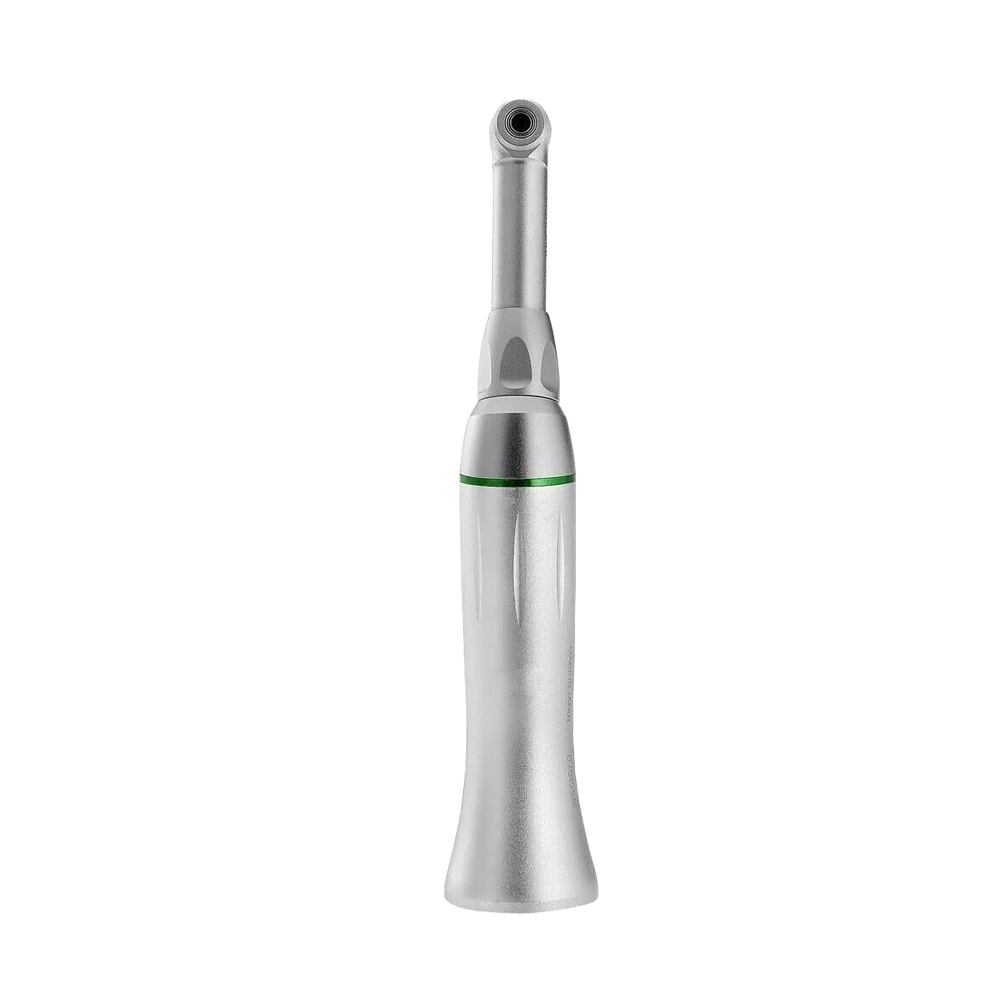
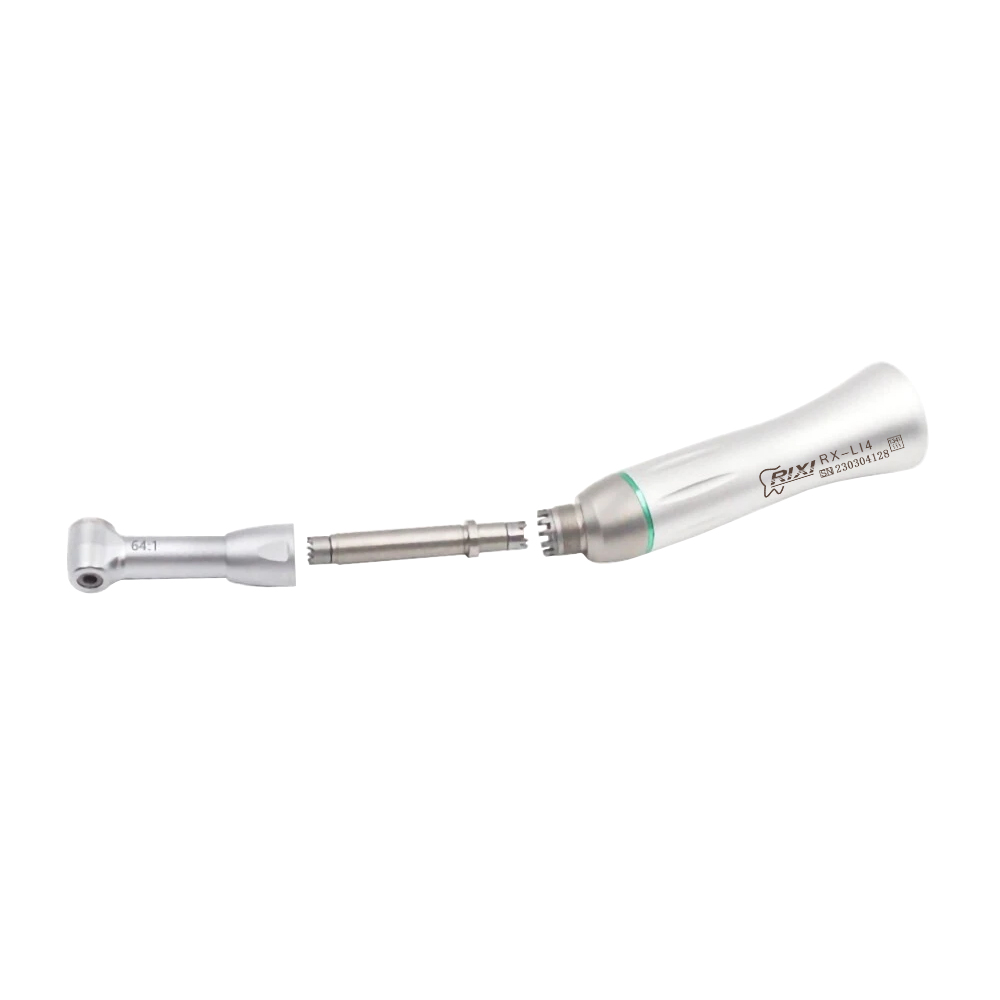
The current RIXI 64:1 contra-angle listing shows an angled head, slim neck and contoured handle. Its ratio is marked on the neck, and the product views show the head, drive shaft and handle separately. Those details help identify the photographed item, but buyers still need the current model datasheet, motor pairing and permitted operating limits for the quoted configuration.
Treat the ratio as one system field, not a universal suitability claim
A reduction ratio describes a mechanical relationship within the handpiece. It does not, by itself, establish the permitted motor, input speed, output limits, instrument type or intended application. A buyer should therefore record the ratio together with the motor and control system proposed by the supplier.
This distinction is especially important when several ratios appear in the same catalog. RIXI Medical separately lists a 20:1 LED contra-angle and a 20:1 non-LED configuration. A shared ratio does not make the two listings interchangeable, and a different ratio should never be treated as a simple substitute without model-specific evidence.
Build a quote comparison matrix
Ask every supplier to complete the same fields. This makes the commercial scope visible and prevents an attractive headline price from hiding missing components or unresolved interfaces.
| Comparison field | Question for the supplier | Evidence to retain |
|---|---|---|
| Exact identity | What manufacturer, model and revision will be supplied? | Quotation, label sample and current datasheet |
| Transmission ratio | How is the ratio marked, and what motor pairing is approved? | Model-specific compatibility statement |
| Head and instrument | Which instrument specification and chuck arrangement apply? | Current instructions and head specification |
| Illumination and irrigation | Are these present, absent or optional in this exact variant? | Configuration sheet and packing list |
| Package scope | Which accessories, tools and protective packaging are included? | Itemized packing list |
| Service documents | Which maintenance, reprocessing and parts documents accompany the unit? | Controlled document list with revision dates |
Separate the motor interface from the head interface
A contra-angle has at least two compatibility boundaries. One connects the handpiece to the motor or drive system. The other connects the head or chuck to the permitted instrument. Confirm both. A successful physical connection at one end does not prove that the other end, the ratio or the operating limits are correct.
For an existing clinic fleet, send the supplier the motor brand, model and clear photographs of accessible labels and connections. Do not dismantle equipment simply to create an enquiry. For a new package, ask the supplier to identify the motor, control unit, handpiece and accessories as one documented system. The existing dental electric motor compatibility checklist covers the motor-side review in more detail.
For the head side, request the permitted instrument or shank specification and the exact chuck arrangement. The handpiece chuck and bur fit guide explains how to keep that evidence traceable without assuming that two similar-looking heads accept the same items.
Define the supplied package before comparing price
Two quotes are not comparable until their inclusions match. Record whether the offer contains only the handpiece or also includes a motor, instruments, irrigation components, cleaning or maintenance accessories, spare parts, storage items and model-specific documents. If an item is pictured but not named on the quotation and packing list, treat it as unresolved.
Distributors should also define retail packaging, label language, model marks and the document version supplied with repeat orders. Clinics should identify who will check the shipment, who can approve a substitution and where the final equipment record will be stored. For broader navigation, review RIXI Medical’s low-speed handpiece range without assuming that products in the same category share interfaces or instructions.
Use a controlled sample and receiving review
A sample review should answer the questions established before purchase. First match the delivered model, marks and package against the approved quotation. Then reconcile every accessory with the packing list. Check that the supplied documents name the delivered model and that compatibility statements refer to the proposed motor and instrument configuration.
Any functional review should follow the supplier’s current instructions and the buyer’s approved process. Procurement personnel should not invent test settings or make clinical judgments. Record observations, unresolved points and the person authorized to accept the sample. If a model mark, interface or included item differs from the approved record, quarantine the discrepancy for written review instead of solving it through an informal substitution.
Keep repeat orders traceable
After approval, retain a compact product file: supplier, exact model, approved images, ratio, motor pairing, head and instrument specification, package list, document revisions and sample-approval date. Assign a separate internal SKU when illumination, irrigation, ratio, head or included accessories differ. This gives a distributor a stable reorder reference and gives a clinic a clearer replacement enquiry later.
RIXI Medical is a dental equipment manufacturer and supplier based in Foshan, China. Its product photography and listings can support initial comparison, while the final purchase decision should rely on the written quotation and current model documents.
Frequently asked questions
Does the ratio identify what a contra-angle can be used for?
No. The ratio is one specification. The current instructions for the exact handpiece, motor and instrument configuration must establish intended use and operating limits. Do not convert a ratio marking into a clinical claim.
Is every contra-angle compatible with an E-type motor?
No universal compatibility should be assumed. Ask the supplier to confirm the exact motor interface and permitted pairing in writing. Similar connection shapes or a successful physical fit are not sufficient evidence.
Can two handpieces with the same ratio share one distributor SKU?
Only when every commercially important field is the same and controlled: exact model, illumination, irrigation, head and chuck, motor interface, included items, packaging and documents. Otherwise, separate SKUs reduce substitution and reorder errors.
Which documents should be requested before the purchase order?
Request the current datasheet, model-specific instructions, compatibility statement, itemized packing list and any applicable maintenance, reprocessing and parts information. Requirements vary by destination market, so buyers should also confirm the documents required by their local qualified professionals.
Next step: To compare a specific configuration, send the motor model, required ratio, instrument requirements and order quantity through RIXI Medical’s product enquiry page and request a model-linked specification sheet.
Need Dental Equipment Pricing or Configuration Details?
Contact RIXI Medical for model comparison, distributor pricing, packaging information, OEM/ODM requirements and after-sales support.
Request Product Information