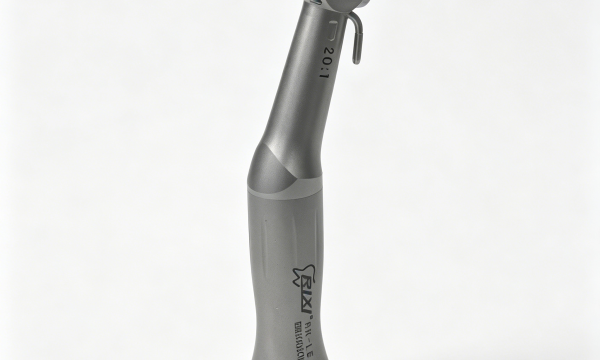
A replacement low-speed handpiece can match the requested reduction ratio and still be wrong for the motor on the clinic’s equipment list. The connection may differ, the lighting arrangement may be unsupported, or the permitted operating conditions may not match. For a distributor, the same mistake can multiply across an order containing several similar-looking versions.
A useful compatibility enquiry identifies the handpiece, motor and control system as one proposed combination. This guide helps purchasing teams assemble that record before ordering from the low-speed dental handpiece range. It does not select clinical settings, recommend treatment applications or provide instructions for modifying equipment.
Identify the existing motor before choosing a replacement
Start with the motor manufacturer’s name, exact model and available version information. Record the control unit as well if it is a separate component. Photograph the accessible identification and connection without dismantling the equipment. A description such as “implant motor” or “standard low-speed motor” leaves too many details unresolved.
Include the current handpiece model and explain whether the enquiry is for a direct replacement, an additional version or an entirely new combination. A supplier can review a specific pair more reliably than a request for a handpiece that “fits most motors.” Where documentation is missing, make that limitation visible rather than filling it with assumptions.
For a multi-clinic or distributor purchase, separate motor families into individual rows. Do not approve one sample against a single motor and assume the result applies to every unit in the order. The record should show exactly which combination was reviewed and which combinations still require confirmation.
Keep reduction ratio separate from connection compatibility
A ratio marking identifies a transmission characteristic. It does not establish the mechanical connection, instrument interface, illumination arrangement or permitted operating limits. Two products carrying a 20:1 marking should not automatically be treated as interchangeable.
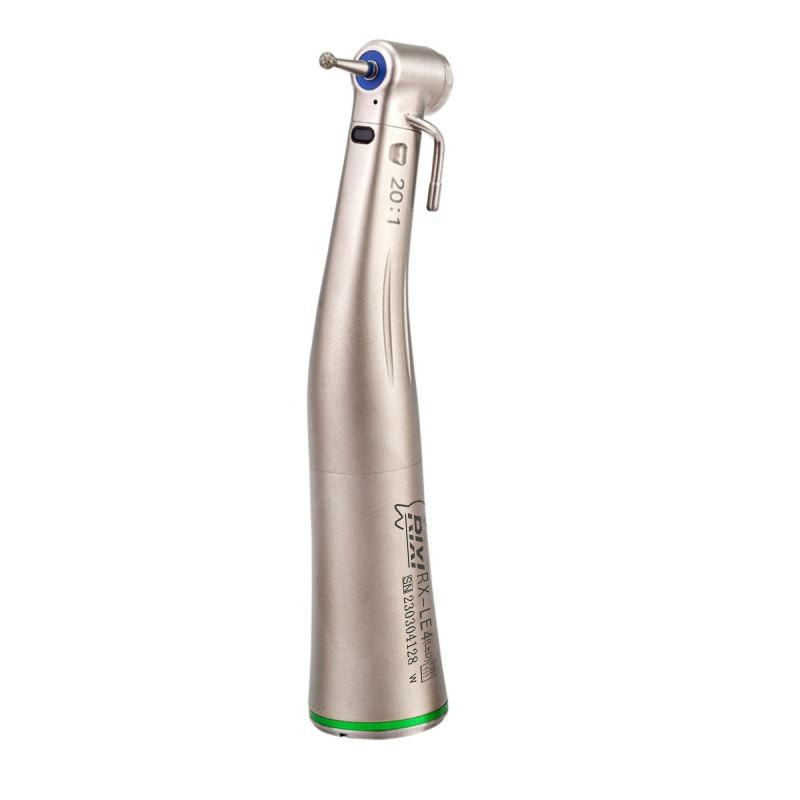
The 20:1 LED implant contra-angle is listed separately from other reduction configurations. Ask the supplier for its exact model sheet and confirmation of the proposed motor pairing. Do not derive a clinical operating setting from the ratio or from a photograph of the instrument.
If the motor or control system requires a particular configuration selection, have the responsible qualified reviewer check the relevant manuals. Procurement should retain the accepted combination and supporting instructions; it should not prescribe how a clinician programs or operates the equipment.
Ask for evidence at each interface
A photograph can help identify a connection, but visual resemblance is an initial clue rather than a compatibility decision. Request a drawing, current specification or explicit manufacturer confirmation that identifies both sides of the proposed pairing. Record any required coupling or adapter by its exact reference.
| Interface | Information to request | What must remain explicit |
|---|---|---|
| Mechanical drive | Motor and handpiece references, connection details and applicable coupling | The exact combination being reviewed |
| Operating limits | Current model documentation for both components | Qualified review of the permitted operating arrangement |
| Illumination | Light source, connection and supply requirements | Whether the proposed motor system supports that version |
| Irrigation | Connection details and the supplied fittings where applicable | Which components are included and which are separate |
| Instrument retention | Compatible instrument dimensions and current chuck instructions | No assumed fit based only on an angled-head appearance |
Keep the supplier’s response with the specification revision it refers to. If an adapter is proposed, review the assembled combination rather than treating the adapter name as proof that every other interface is resolved. Unanswered fields should remain open before order approval.
Compare illuminated and non-illuminated versions deliberately
Specify illumination as a separate order field. The 20:1 non-LED handpiece has its own listing and product images; choosing it is a different configuration decision from choosing the LED version. A reduction ratio alone will not tell the warehouse which version to pack.
For an illuminated handpiece, ask how the light is supplied and what the quoted package includes. Do not assume that an existing motor can power the light or that an additional accessory is included. For either version, confirm the irrigation connections and applicable tubing or fittings independently.
The handpiece, motor, control unit and any irrigation equipment should appear as separate line items when they are separate products. This prevents a handpiece quotation from being mistaken for a complete motor system. Identify optional components and exclusions clearly enough for receiving staff to check the shipment.
Do not substitute a different reduction model by appearance

The separately listed 64:1 dental contra-angle handpiece should have its own approved pairing record. If a buyer requests that model, the supplier should not substitute a visually similar 20:1 version without a documented technical review and commercial approval.
Use current product identifiers rather than image filenames or informal nicknames. Record the body marking and supplied model reference where available, and ask the supplier to reconcile any discrepancy. A renamed marketing image is not evidence that an equipment configuration has changed.
Make the sample evaluation reproducible
Before the sample arrives, agree which motor and control configuration the qualified evaluator will use. Compare the delivered identity and accessories with the enquiry record. Any functional assessment should follow the manufacturers’ instructions and use the appropriate personnel; an informal connection attempt is not a complete compatibility assessment.
Document the equipment references, instruction revisions, observations and unresolved conditions. Separate visible workmanship checks from technical suitability and clinical evaluation. A successful demonstration should not be expanded into an unsupported claim that the handpiece fits an entire motor family.
Retain the approved sample reference for repeat orders. Changes to the motor interface, lighting arrangement, instrument specification, supplied accessories or maintenance instructions may require renewed review. Ask the supplier how changes will be communicated before a repeat shipment is released.
Carry the pairing record into service handover
Obtain the exact cleaning, lubrication, reprocessing and maintenance instructions for the supplied handpiece. An oiling machine, motor or accessory may have separate requirements. Do not transfer an oil quantity, processing cycle or service interval from a similar-looking product.
RIXI Medical is a dental equipment manufacturer and supplier in Foshan, China. Its technical support information provides a route for documentation requests. Keep the approved handpiece–motor combination, order reference and accessory list together so later parts and support enquiries begin with reliable identification.
Frequently asked questions
Does a 20:1 marking prove motor compatibility?
No. Confirm the exact mechanical connection, operating limits, illumination and irrigation arrangement for the proposed combination.
Can LED and non-LED versions be ordered under one unspecified item?
Specify them separately. Identify the version, pairing evidence and included components so the order and packing list are unambiguous.
Does the handpiece listing include a motor?
Only if the quotation explicitly includes it. A handpiece product image does not establish the scope of the complete equipment package.
What should accompany a compatibility enquiry?
Send motor and control-unit models, accessible connection photographs, the requested handpiece version and required quantity. Ask for current specifications and written pairing confirmation.
Scope note: General procurement guidance only. Confirm model-specific compatibility with the manufacturers and clinical use, installation and local requirements with qualified professionals.
Request a documented handpiece configuration review with your motor details and the exact version you intend to purchase.
Need Dental Equipment Pricing or Configuration Details?
Contact RIXI Medical for model comparison, distributor pricing, packaging information, OEM/ODM requirements and after-sales support.
Request Product Information