A distributor review should answer practical operating questions: which configurations were quoted, which SKUs were reordered, where service questions originated, and what must change before the next shipment. It should not depend on an anonymous success story or a percentage-growth claim that the buyer cannot audit.
This guide gives dental equipment distributors, procurement teams and manufacturer account teams a repeatable evidence file for reviewing an active supply relationship. It covers the period after initial supplier qualification: repeat quotations, order accuracy, documentation, service handover and change control. Buyers evaluating a new supplier should first use a broader equipment buying guide and verify the proposed products, documents and local obligations independently.
Replace headline ROI with an auditable review file
Revenue, margin and return on investment depend on the distributor’s market, pricing, operating costs, inventory policy and customer mix. A manufacturer cannot credibly promise a universal result. A useful review therefore separates commercial data owned by the distributor from supply evidence that both parties can verify.
The shared file can include model identities, approved options, quotation revisions, purchase-order lines, packing lists, receiving exceptions, service cases and current documents. The distributor may add its own sales and inventory data, but those figures should remain clearly sourced and dated. Do not convert one market’s performance into a claim for another country, channel or product family.
Freeze the review scope before comparing periods
Start by defining the exact period, product families and records under review. Mixing quotations from different revisions or comparing a single chair order with a multi-category shipment can produce a misleading conclusion. The dental equipment directory can help teams use consistent category names, but the working file must still identify the exact supplier model and configuration.
| Review field | Record to use | Question to resolve |
|---|---|---|
| Period | Start and end dates | Are quotations, orders and service records from the same interval? |
| Product scope | Model and approved option list | Are similar names hiding different configurations? |
| Commercial basis | Currency, quotation revision and stated exclusions | Are teams comparing like with like? |
| Shipment scope | Purchase order, packing list and carton map | Can every reviewed line be traced to a delivery? |
| Service scope | Case log and closure evidence | Which issues remain open, repeated or poorly classified? |

Build one controlled SKU and version register
A product nickname is not enough for repeat business. Create one row for every orderable configuration and record the supplier model, distributor SKU, voltage or market variant where applicable, included accessories, branding file revision, document revision and current status. Mark discontinued or replaced configurations without deleting their history.
For a dental chair range, the register may need to distinguish delivery systems, control panels, operating lights, upholstery selections and optional accessories. For imaging products, use the relevant dental X-ray category as a discovery aid, then request the exact model documentation. Similar photographs or product names do not establish interchangeability.
Assign an owner for approving additions and substitutions. If an item changes after a quotation is issued, record who accepted the change, which documents were updated and whether existing stock or spare parts are affected. This turns the register into a repeat-order control, not merely a catalogue list.
Compare quotation, order and shipment evidence line by line
Review a sample of completed transactions from quotation through receipt. The purpose is to find handoff gaps, not to create a score from incomplete data. Match each purchase-order line to the current quotation revision, supplier confirmation, packing list and receiving record. Record exclusions separately so that a missing optional item is not confused with a shipping shortage.
Use precise exception categories: wrong model, wrong quantity, unapproved substitution, missing accessory, document mismatch, packing damage, label mismatch or unresolved receipt. Free-text notes alone make patterns difficult to see. Attach photographs and carton references where they clarify the exception, but keep the written identity and order-line reference as the primary record.
When a distributor combines several product families, check whether the shipment file still separates ownership and service routing. A chair, compressor and imaging device may have different installation, document and support requirements. The distributor should not promise a common setup method simply because the items arrived together.
Use demand signals without turning them into promises
Repeat orders, quote requests, lost quotations and stock ageing can inform the next purchase plan, but each signal needs context. A high number of enquiries may reflect one temporary project rather than stable demand. A slow-moving SKU may be poorly explained, incorrectly configured or simply intended for a narrower buyer group.
Review the distributor’s own evidence by SKU and configuration. Separate confirmed orders from quotations, cancelled projects and informal enquiries. Note whether a repeat order uses the same specification or a revised one. Avoid presenting a forecast as a manufacturer guarantee, and do not infer market demand from website impressions or isolated customer conversations.
Review service records as a documentation system
A service log should show the equipment identity, reported symptom, evidence received, troubleshooting instruction used, parts or documents supplied, responsible party and closure status. “Customer problem” or “fixed” is too vague for a useful review. Repeated questions may indicate a training, labelling or document-version issue rather than a product defect.
For equipment such as a dental air compressor, the review should route maintenance and installation questions to the current supplier instructions and locally qualified personnel. Do not write a universal maintenance interval or field procedure into the distributor dashboard unless it comes from the exact model documentation.
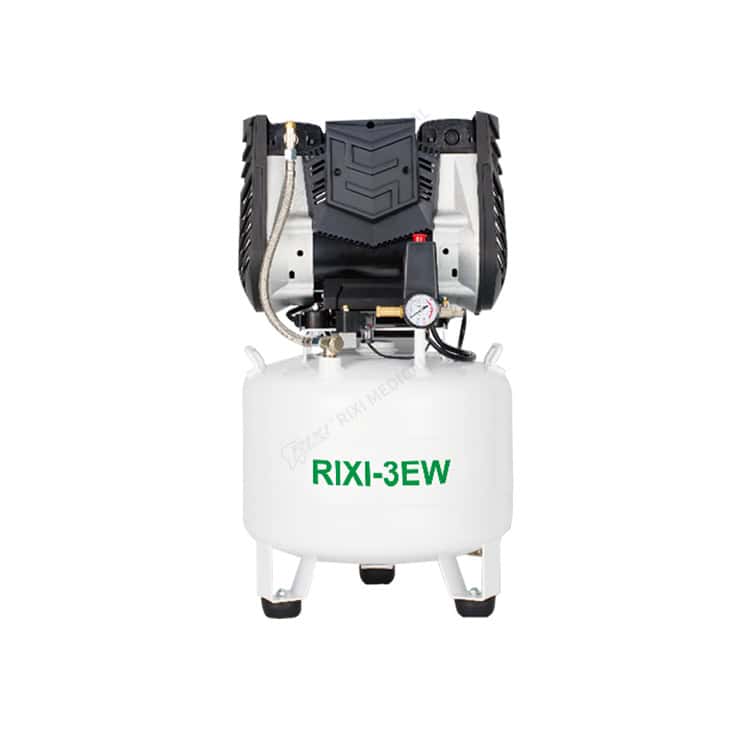
Ask the supplier to clarify open cases with model-specific evidence. RIXI Medical, a dental equipment manufacturer and supplier based in Foshan, China, can review configuration and documentation questions from the supply side. The technical support page is the appropriate route for a specific model, photograph and issue description.
Turn findings into a dated action register
End the review with actions that have an owner, due date and closure evidence. Avoid a general conclusion such as “improve support.” A better action identifies the affected SKU, the missing or outdated record, the person responsible for resolving it and the evidence required to close it.
| Finding | Owner | Closure evidence |
|---|---|---|
| Two configurations share one distributor SKU | Distributor product manager | Revised SKU matrix and separated stock labels |
| Quotation and manual show different accessory names | Supplier document owner | Approved revision with aligned terminology |
| Receiving exceptions lack carton references | Warehouse lead | Updated intake form and completed sample record |
| Open service cases have no equipment identity | Service coordinator | Case records updated with model and evidence |
| Repeat order uses an obsolete option | Account and procurement owners | Written replacement approval and impact review |
Dental distributor review checklist
- Define the review period, included product families and evidence owners.
- Reconcile supplier models, distributor SKUs and approved configuration revisions.
- Match selected quotations, orders, packing lists and receiving exceptions.
- Separate confirmed demand, quotations, cancellations and ageing stock.
- Classify service cases by equipment identity, issue type and closure status.
- Verify that current manuals, artwork and product records match the active SKU.
- Assign every corrective action an owner, date and closure document.
- Carry unresolved configuration changes into the next quotation review.
Scope note: This is a supplier-review framework, not financial, regulatory, installation or clinical advice. Product specifications and service procedures vary by model. Confirm the exact configuration and current documents with the supplier, and use locally qualified professionals where destination requirements or installation work are involved.
For a model-specific review, send RIXI Medical the active SKU list, quotation revisions and open documentation questions through the equipment enquiry page. Request written confirmation of specifications, drawings or document versions rather than a general performance promise.
Frequently asked questions
How often should a dental distributor review be completed?
Set the frequency according to order activity, product change and service volume. The important control is consistency: compare the same evidence types and close actions before they disappear into the next order cycle.
Should revenue growth be included in the shared supplier review?
The distributor may include its own sourced commercial data, but it should remain clearly separated from supplier evidence. A manufacturer should not present the distributor’s private results as a universal return or market guarantee.
What is the minimum file for a repeat-order review?
Use the current SKU and configuration register, latest quotation, purchase order, supplier confirmation, packing list, receiving exceptions, open service cases and document revisions. Add local sales or inventory data only when the owner and period are clear.
How should a distributor handle an unapproved product change?
Pause the affected approval or reorder decision, identify the exact difference, assess documents, stock, spares and service impact, and obtain written acceptance from the responsible buyer. Do not treat a similar appearance or name as approval.
Need Dental Equipment Pricing or Configuration Details?
Contact RIXI Medical for model comparison, distributor pricing, packaging information, OEM/ODM requirements and after-sales support.
Request Product Information