
Dental Autoclave Room Layout: Create a Clear One-Way Instrument Path
A well-planned sterilization room separates contaminated intake from clean storage and helps the team process instruments consistently. Equipment choice should follow the workflow, instrument volume and applicable local requirements.

An effective dental autoclave room layout supports a simple principle: used instruments enter on the contaminated side and move forward through cleaning, inspection, packaging, sterilization, cooling and clean storage. Crossing backward increases handling and makes responsibilities less clear.
Plan the instrument journey first
The exact procedure must follow the equipment instructions, instrument manufacturers’ directions and the regulations that apply in the clinic’s country. RIXI Medical supplies dental equipment from Foshan, China; local professionals remain responsible for validating the final room design and infection-control process.
Create distinct work zones
Contaminated receiving zone
Provide space for closed transport containers, personal protective equipment and initial sorting without placing used items near clean packs.
Cleaning and drying zone
Plan sinks, cleaning equipment, splash control, drainage, task lighting and enough counter space for safe handling.
Inspection and packaging zone
This area needs a clean, dry surface with good lighting for checking instruments and preparing compatible packaging.
Sterilization and cooling zone
Allow ventilation, loading clearance and a protected space where hot packs can cool without being stacked or handled prematurely.
Clean storage zone
Store processed packs away from moisture, splash, dust and contaminated traffic. Use stock rotation and clear labeling.
Equipment and infrastructure checklist
| Planning area | Questions for the project team |
|---|---|
| Autoclave capacity | How many instrument sets are processed per day, and when are peak loads? |
| Electrical supply | Does the circuit match the exact sterilizer rating and local electrical rules? |
| Water | What water quality is specified, and where will filling and draining occur? |
| Ventilation | Can heat and moisture be managed without affecting storage or staff comfort? |
| Counter space | Can dirty and clean tasks remain physically separated during busy periods? |
| Documentation | Where will cycle records, labels, indicators and maintenance logs be managed? |
| Service access | Can technicians reach the equipment without disrupting clean storage? |
Select autoclave capacity from workload
Chamber volume alone does not determine throughput. Tray configuration, cycle type, drying performance, packaging method and staff scheduling all affect the number of usable instrument sets returned to service. Estimate daily instrument demand, then include peak periods and contingency capacity for maintenance or an interrupted cycle.
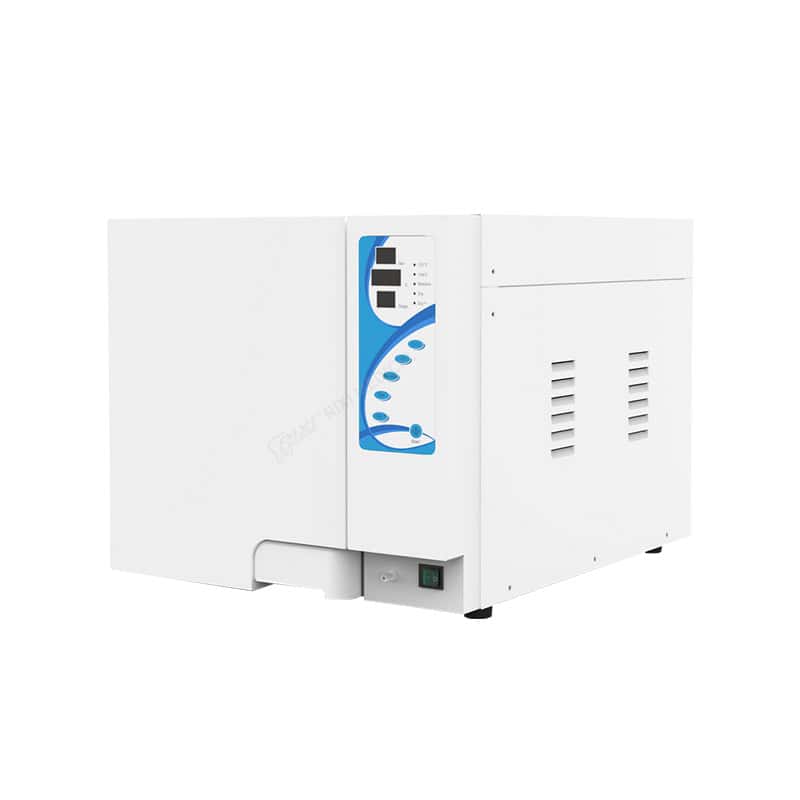
Compare the 18L front-door dental autoclave with the digital tabletop dental sterilizer. Confirm cycle specifications, load compatibility and documentation requirements before choosing equipment.
Avoid common layout mistakes
- Placing clean storage above a splash-prone contaminated sink.
- Using one crowded counter for both dirty and packaged instruments.
- Installing the sterilizer without ventilation or door-opening clearance.
- Leaving no protected area for packs to cool and dry completely.
- Undersizing electrical supply, water handling or counter space.
- Choosing equipment before calculating daily instrument-set demand.
- Blocking service panels with permanent cabinetry.
Connect cleaning, maintenance and storage
A dental handpiece oiling machine may support the manufacturer’s maintenance sequence before sterilization, while organized dental storage cabinetry can protect processed items. Browse the complete autoclave sterilizer category.
Frequently asked questions
Should contaminated and clean work share the same counter?
They should be separated as clearly as the available space and applicable guidance require. The layout should prevent used instruments from crossing back into clean preparation and storage areas.
How many autoclaves does a clinic need?
The answer depends on instrument demand, cycle time, chamber utilization, peak workload and contingency planning. Calculate usable daily throughput rather than relying only on chamber volume.
What should be confirmed before installation?
Confirm electrical rating, ventilation, loading clearance, water and drain needs, counter strength, service access and local compliance requirements.
Plan a practical sterilization equipment package
Contact RIXI Medical for autoclave specifications, product options, distributor pricing and clinic project support.
Contact RIXI MedicalNeed Dental Equipment Pricing or Configuration Details?
Contact RIXI Medical for model comparison, distributor pricing, packaging information, OEM/ODM requirements and after-sales support.
Request Product Information

