Many dental chair problems begin before the chair reaches the treatment room. For distributors, contractors and clinic owners, dental chair installation requirements should be confirmed before shipment, not after cartons arrive on site. The goal is not to replace a local installer. It is to make the handover between supplier, project team and clinic clearer.
RIXI Medical, a dental equipment manufacturer and supplier based in Foshan, China, can speak from the supply side: product configuration, packing details, utility questions, documentation and export coordination.
Separate Supplier Requirements from Local Site Work
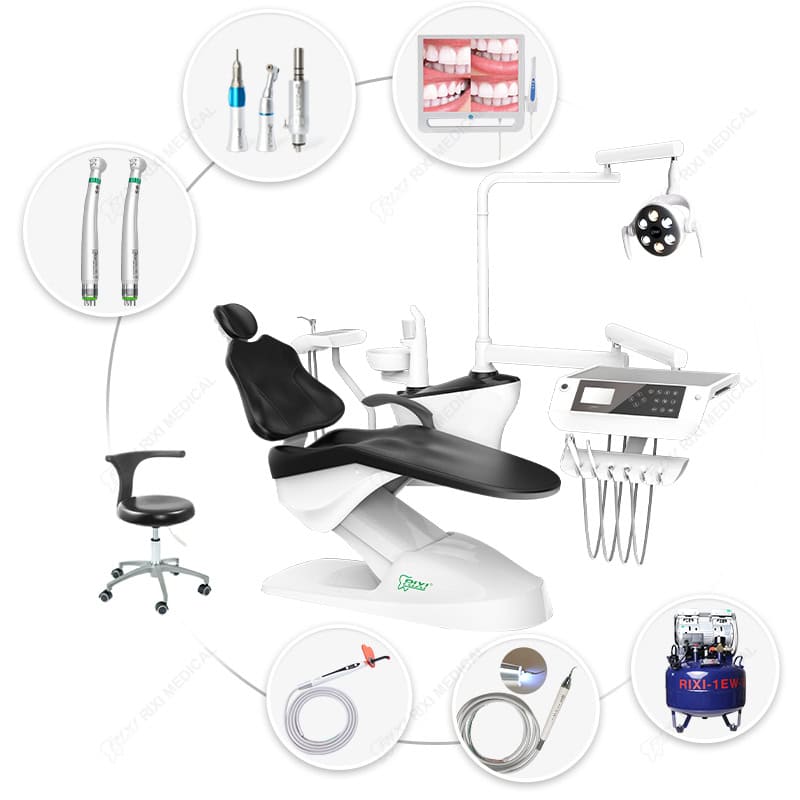
A supplier can confirm the chair model, optional accessories, utility connection points and packing information. A local contractor must still confirm floor structure, plumbing, electrical work and local code requirements. Treat these as two related but different responsibilities.
Before ordering, ask the supplier for model-specific requirements for the R5 electric dental chair or the chosen chair configuration. Then give those requirements to the contractor responsible for the room. This avoids a common mistake: choosing equipment first and discovering later that utilities or room dimensions were not prepared correctly.
Utility Checks Before Shipment
Most dental chair projects require a coordinated review of electricity, compressed air, water and drainage. Exact values vary by model and destination, so buyers should request the latest specification sheet before purchase. The following checklist is practical for distributor handover discussions:
- Confirm voltage, plug or wiring expectations and whether local adaptation is required.
- Check air compressor capacity and whether the clinic already has a suitable source.
- Confirm water supply, drainage position and any filtration or pressure considerations.
- Review floor fixing, base footprint and service access around the chair.
- Decide which utilities are prepared by the contractor and which accessories are supplied with the chair.
For clinics planning several operatories, related equipment such as an air compressor should be considered early. Compressor sizing and piping layout are project-specific, so the buyer should confirm final requirements locally.

Room Handover Checklist for Distributors
| Item | Question to Confirm | Owner |
|---|---|---|
| Chair model | Which configuration, upholstery and optional components are included? | Supplier and buyer |
| Electrical preparation | Are voltage, cable route and protection requirements confirmed locally? | Contractor |
| Air and water | Are supply points, drainage and compressor planning ready before delivery? | Contractor and clinic |
| Service clearance | Can technicians access key panels and connections after installation? | Project team |
| Documentation | Are packing list, product specification and user materials prepared? | Supplier |
When a Hydraulic Chair Changes the Discussion
Not every clinic needs the same chair structure. Some buyers compare electric and hydraulic chair options depending on budget, maintenance preference and local service access. If the project is evaluating a R3 hydraulic dental chair, the same room-preparation questions still apply, but the buyer should ask for the exact configuration sheet rather than assuming requirements match another model.
Distributors should avoid presenting installation readiness as a generic promise. A better approach is to send the model information, collect the site questions from the contractor and resolve mismatches before final confirmation.
Documents to Collect Before the Room Is Closed
Installation readiness is easier to manage when the project team collects documents before the room is finished. The distributor should request the latest product specification, packing list, accessory list and available product drawings from the supplier. The clinic or contractor should then compare those documents with the planned room layout, cabinet position and utility routes.
Photos can also prevent confusion. Before delivery, ask the contractor to share clear photos of the prepared room, floor outlet area, wall service points and any cabinet openings that may affect access. These photos are not a substitute for professional site inspection, but they help the buyer and supplier identify obvious mismatches early. If the room is part of a larger clinic build, repeat the same check for each operatory rather than assuming every room is identical.
For distributors handling multiple orders, it is useful to keep a standard handover file for each project. The file can include the quoted chair configuration, selected color, optional parts, utility notes, carton information and contact person for after-sales communication. This turns installation support into a repeatable commercial process instead of a last-minute email search.
Procurement Questions Before Confirming the Order
Before a deposit or batch order, the distributor should confirm what the supplier can provide in writing. Useful questions include whether product drawings are available, how cartons are labeled, which accessories are included, whether spare parts can be ordered later and how after-sales communication is handled.
For multi-room clinics, review the wider dental equipment category at the same time. Chairs, compressors, suction, lighting and carts can affect one another during room planning. A coordinated package reduces confusion for the project team.
After-Sales Handover for the First Week
The first week after installation is often when small communication gaps appear. A buyer may ask where a spare part is packed, which accessory belongs to which room, or how to describe an issue to the supplier. Distributors can reduce this friction by preparing a simple handover note for the clinic team.
The note should identify the chair model, serial or order reference, included accessories, routine cleaning cautions from the user material and the correct contact route for technical questions. It should also record which local party completed the installation. This is especially important when the supplier, importer, contractor and clinic are separate organizations.
For OEM/ODM buyers, after-sales handover is part of brand protection. Clear documentation helps resellers answer basic equipment questions without making unsupported promises. It also gives the supplier more accurate information if troubleshooting is required later.
Scope Note
This guide is procurement and supplier-side guidance. It does not replace local installation work, clinical training or destination-country regulatory advice. Requirements vary by jurisdiction and by model. Buyers should confirm exact specifications with the supplier and use locally qualified professionals for installation and compliance checks.
FAQ
Who should confirm dental chair installation requirements?
The supplier should confirm product-specific requirements. The local contractor should confirm site preparation, utilities and local code compliance.
Can one checklist apply to every chair model?
No. A checklist helps organize the discussion, but voltage, accessories, footprint and service access must be confirmed for the exact model and configuration.
Should distributors include installation details in quotations?
They should include clear product and utility information where available, while noting that final site work must be checked locally.
How can buyers request technical details?
Buyers can use the RIXI Medical contact page to request specifications, technical drawings, distributor pricing or OEM/ODM cooperation details.
Need Dental Equipment Pricing or Configuration Details?
Contact RIXI Medical for model comparison, distributor pricing, packaging information, OEM/ODM requirements and after-sales support.
Request Product Information