
An autoclave quotation can look inexpensive because it excludes the rack, accessories, delivery arrangements or support the buyer assumed were included. Another may show a higher total but describe a different configuration. Comparing those totals before reconciling scope creates a purchasing decision that neither supplier can reliably fulfil.
This guide is for clinic purchasing teams and project buyers reviewing competing dental autoclave offers. Its purpose is to turn each quotation into an auditable list of inclusions, exclusions and evidence. It does not prescribe processing protocols or establish that a particular machine is suitable for a clinical load.
Issue one enquiry brief to every supplier
Write a short requirement sheet before asking for revised prices. Identify the destination, intended installation, required document language, proposed instrument and packaging types, and the clinic’s approved capacity requirements. Refer to the available dental autoclave formats as a starting point, not as proof that models with similar names are interchangeable.
Require a manufacturer, exact model and configuration identifier on every offer. A description such as “tabletop sterilizer” is too broad to compare. Record supply voltage and frequency, control arrangement, rack and tray configuration, and any selected options. Ask the supplier to mark every deviation from the enquiry instead of assuming that silence means compliance.
Give the revision a date and keep superseded versions separately. Procurement disputes often begin when the invoice refers to one model while an email attachment illustrates another. The accepted configuration should be identifiable without reconstructing an entire message history.
Separate technical suitability from commercial completeness
A fully itemized offer can still describe unsuitable equipment. Have the appropriate clinical and technical reviewers establish whether the exact model supports the intended loads, packaging and approved processing arrangements. Request the current manual and relevant supporting documents; do not treat a product photograph or an unverified logo as evidence.
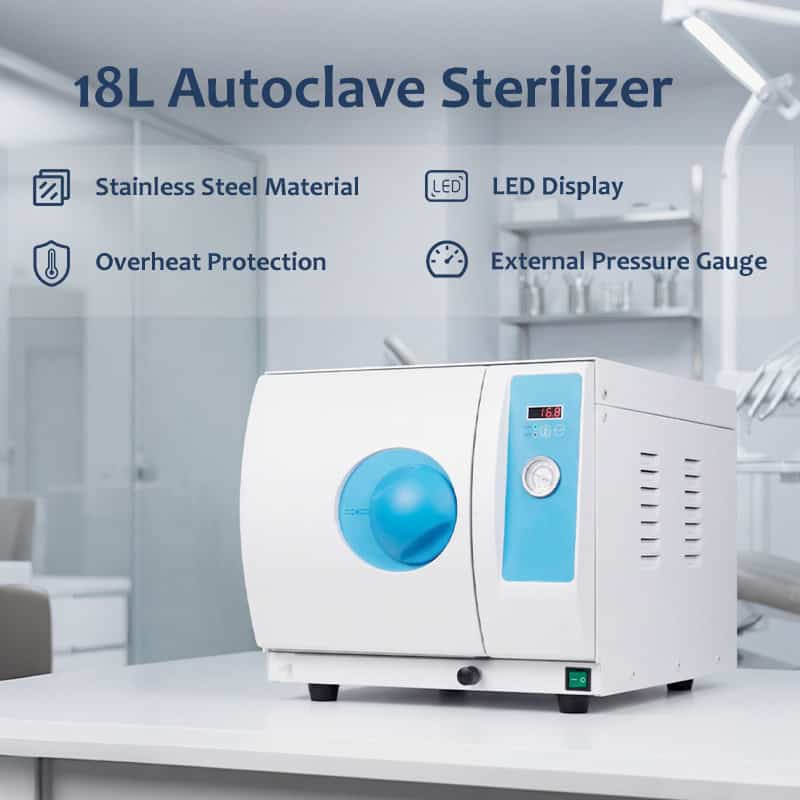
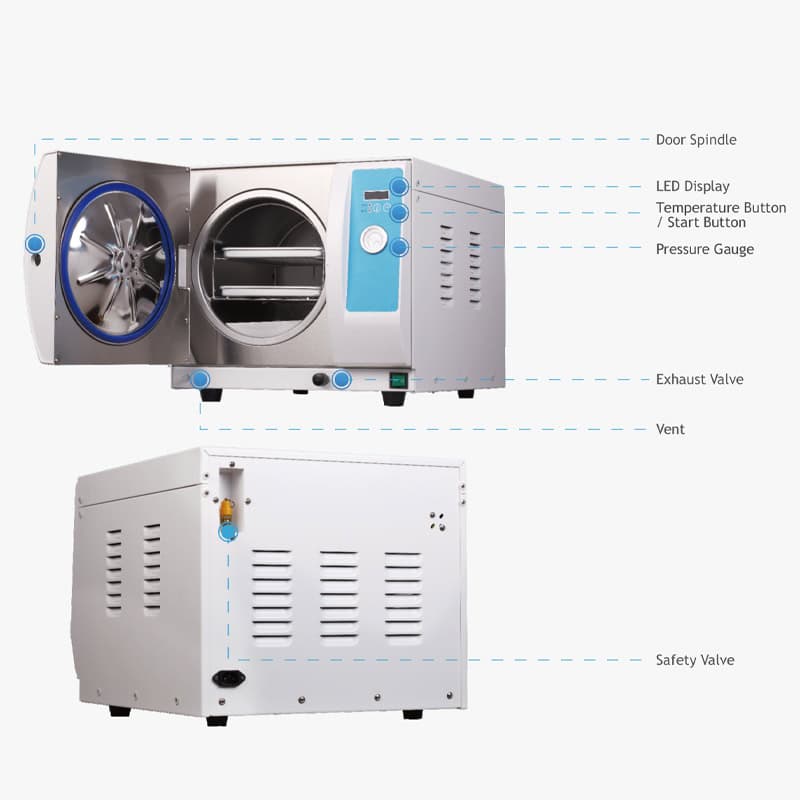
For a shortlisted LED-display tabletop autoclave, check the written specifications against the offer rather than copying specifications from another machine. A chamber capacity label does not establish usable tray space, permissible loads or equivalent cycle performance.
Once unsuitable options are set aside, compare the remaining commercial scopes. Keep missing evidence visibly marked “not confirmed.” Turning an unanswered question into a favourable assumption can make an incomplete offer appear artificially competitive.
Use a line-by-line quotation worksheet
Place suppliers in separate columns and use the same rows for each. Record a document reference or written answer beside any important inclusion. The following rows are useful where applicable; they are not a universal specification for every autoclave.
| Quote line | Ask the supplier to identify | Common comparison trap |
|---|---|---|
| Machine configuration | Model code, supply variant and selected options | Comparing different configurations as identical equipment |
| Load accessories | Included rack, trays, holders and accessory quantities | Assuming everything shown in a photograph is supplied |
| Connections | Supplied cables, hoses or other applicable fittings | Overlooking items the installation team must source |
| Documents | Manual version, drawings and agreed delivery language | Accepting a generic brochure instead of model documentation |
| Service scope | Warranty terms, exclusions and support responsibilities | Treating remote guidance as included local labour |
| Delivery basis | Packing, named delivery point and allocated charges | Comparing factory collection with delivered equipment |
If you compare a digital tabletop sterilizer with another shortlisted format, retain the technical differences in the worksheet. Do not erase meaningful distinctions simply to produce one price-ranking column. A buyer may legitimately prefer a different configuration, but that choice should be explicit.
Define where installation responsibility starts and ends
Ask who supplies the final dimensional drawing and utility schedule, who prepares the site and who checks the installed equipment. Do not assume commissioning, user orientation or site work is included because the quotation says “support.” Identify the deliverable and responsible party separately.
Electrical connections, water arrangements, drainage, ventilation and bench requirements are model-specific. Local requirements also vary. The qualified installation team should review the actual manual and site conditions before the order is released, especially where an existing room is being adapted.
Record whether the supplier provides remote assistance, a local service arrangement or neither. Confirm the language, communication channel and information needed for a support request. Do not invent a response-time commitment or assume a distributor’s standard service package applies to a direct clinic purchase.
Compare ownership costs without inventing a total
Separate the purchase price from identifiable recurring or conditional items. Ask which consumables and scheduled replacement parts apply to the offered configuration, how they are identified and whether their pricing is included or supplied separately. Avoid assigning a replacement interval that is absent from the current maintenance instructions.
Keep uncertain costs as open items rather than fabricating a lifetime ownership figure. A transparent comparison might show equipment, accessories, site preparation, delivery and documented service costs separately, with unconfirmed items highlighted. State the period and assumptions if the buyer later builds a cost model.
Inspect warranty wording for the covered components, duration, exclusions, claim procedure and responsibility for freight or labour. Ask what information is required before a part is dispatched. A warranty heading alone does not explain who will restore equipment availability at the destination.
Resolve delivery and acceptance details before approval
Document the delivery basis, named place and version of any agreed trade term. Check who is responsible for export packing, freight, insurance, import arrangements, taxes and final unloading where applicable. Obtain destination-specific advice from qualified providers rather than assuming the supplier’s offer covers every charge.
Request packed dimensions and gross weight for the final configuration, not a different brochure variant. Confirm whether accessories travel inside the machine package or in separate cartons. Photographs can support receiving checks, but they do not replace the agreed packing list.
Define acceptance evidence before payment milestones are finalized. Examples include confirmation of model identifiers, supplied accessories, document versions and visible shipment condition. Any operational acceptance or commissioning checks should follow the manufacturer’s instructions and qualified local review, not a generic test copied from another product.
RIXI Medical is a dental equipment manufacturer and supplier in Foshan, China. A clear enquiry brief helps the commercial team return a defined offer; it also helps the buyer distinguish a confirmed inclusion from a matter still awaiting technical review.
Frequently asked questions
Is the lowest quoted total the lowest-cost option?
Not necessarily. First align the equipment configuration, accessories, delivery basis and support responsibilities. A lower total with unresolved exclusions is not yet a like-for-like comparison.
Should product images define the supplied accessories?
No. Ask for an itemized accessory list with quantities. Images may show optional items or an illustrative arrangement that is not included in the accepted offer.
What if a supplier cannot provide a document?
Keep it recorded as missing and refer it to the appropriate reviewer. Do not replace required evidence with an assumption or infer suitability from a similar model.
Can a revised quotation change the configuration?
It can, so compare revisions line by line. Confirm changed model codes, options, quantities and exclusions before accepting the revised commercial terms.
Scope note: This is general purchasing guidance. Model suitability, installation and destination requirements need review by qualified professionals using current documentation.
To obtain a defined offer, request an itemized autoclave quotation with your destination, required configuration and list of inclusions to confirm.
Need Dental Equipment Pricing or Configuration Details?
Contact RIXI Medical for model comparison, distributor pricing, packaging information, OEM/ODM requirements and after-sales support.
Request Product Information
