A dental chair can look substantial in a catalog and still be unsuitable for a project that requires a higher verified load rating, more usable seat space, or easier transfer access. The word bariatric is therefore not enough for a purchase order. Clinic owners and procurement teams need a model-specific specification, drawings, and an acceptance method that can be checked before shipment.
This guide explains how to specify a bariatric dental chair without relying on appearance or generic marketing claims. It is written for clinics, distributors, contractors, and OEM/ODM buyers. It does not recommend a clinical treatment method, and it does not state that every chair shown on the RIXI website is suitable for bariatric use. Begin with the available dental chair configurations, then obtain written evidence for the exact model and revision being quoted.
Start with a verified load rating, not a product label
A useful quotation should identify the exact chair model, production revision, rated load, test basis, and any operating restrictions that affect the rating. Ask whether the stated value applies to the chair assembly as supplied or only to one component. The base, lift structure, backrest, seat, armrests, upholstery supports, fasteners, and drive system all belong to the same procurement decision.
Do not copy a capacity statement from a different model or assume that a heavier base automatically increases the rating. If an option changes the structure—such as an alternative backrest, wider cushion, different armrest, or accessory mount—ask the supplier to confirm whether the documented rating remains valid for that configuration. The purchase record should carry the same model and revision references used on the quotation, drawing, packing list, and equipment label.
Separate rated capacity from usable fit
Capacity and fit are related, but they are not interchangeable. A chair may carry the required documented load while the usable seat, backrest, armrest opening, or headrest adjustment remains unsuitable for the intended patient population. Request dimensional drawings rather than relying on overall product size.
Record the usable seat width, backrest width, armrest opening, cushion profile, foot section, lowest entry height, and the movement envelope through the full approved positioning range. Ask how armrests move and whether their position creates a restriction during entry or transfer. When detachable or swing-away parts are offered, the quotation should identify whether they are standard, optional, or unavailable on the selected model.
Upholstery also needs a defined specification. It should be linked to the approved cushion set and cleaning instructions, not described only by color. The existing dental chair materials checklist explains how buyers can control coverings, underlying support, replacement identity, and cleaning compatibility across repeat orders.
Plan entry, transfer, and staff access around the whole unit
The chair does not operate alone. Delivery consoles, cuspidor assemblies, assistant arms, lights, stools, monitors, and cabinetry can reduce the space available beside it. Review the chair at its lowest entry position and at the positions used for examination, servicing, and room cleaning. The team should be able to identify where a wheelchair, mobility aid, transfer equipment, or staff member would be placed without blocking a control, hose, or moving assembly.
For a new room, mark the full movement envelope on the floor plan before utilities and fixed cabinets are finalized. For an existing room, measure the actual clear route from the building entrance to the operatory, including doorway openings, corridor turns, lift dimensions, thresholds, and staging space. Packed dimensions may be more restrictive than the installed footprint.
Build a quotation comparison around evidence
A structured worksheet keeps capacity claims from being separated from the configuration they describe. The following fields are useful for clinic projects and distributor tenders.
| Buyer check | Evidence to request | Common ambiguity |
|---|---|---|
| Model identity | Model, revision, drawing number, equipment label | Catalog family name used instead of an exact build |
| Rated load | Signed specification and supplier test reference | Value copied from another chair or component |
| Usable dimensions | Dimensioned seat, backrest, armrest, and entry drawings | Overall width presented as usable seat width |
| Movement and access | Lowest position, motion envelope, and accessory clearances | Chair measured without delivery or assistant assemblies |
| Installation | Footprint, anchoring, utilities, floor and service-access drawing | Generic room plan not linked to the ordered revision |
| Service support | Parts list, service access, troubleshooting and replacement process | No model-controlled parts identity |
Check installation and service consequences before approval
A higher-capacity specification can affect more than the chair frame. Ask the supplier to state the electrical supply, utility connections, anchoring or floor requirements, packed weight, package breakdown, lifting or handling instructions, and required service clearances for the exact configuration. These details should be reviewed by the project contractor or locally qualified installer.
Service access deserves equal attention. Panels, motors, actuators, bearings, controls, and wiring should remain reachable after cabinetry and accessories are installed. Request an illustrated spare-parts list and establish how replacement components will be matched to the serial number or production revision. A project that cannot identify the correct part later has not completed the specification process.
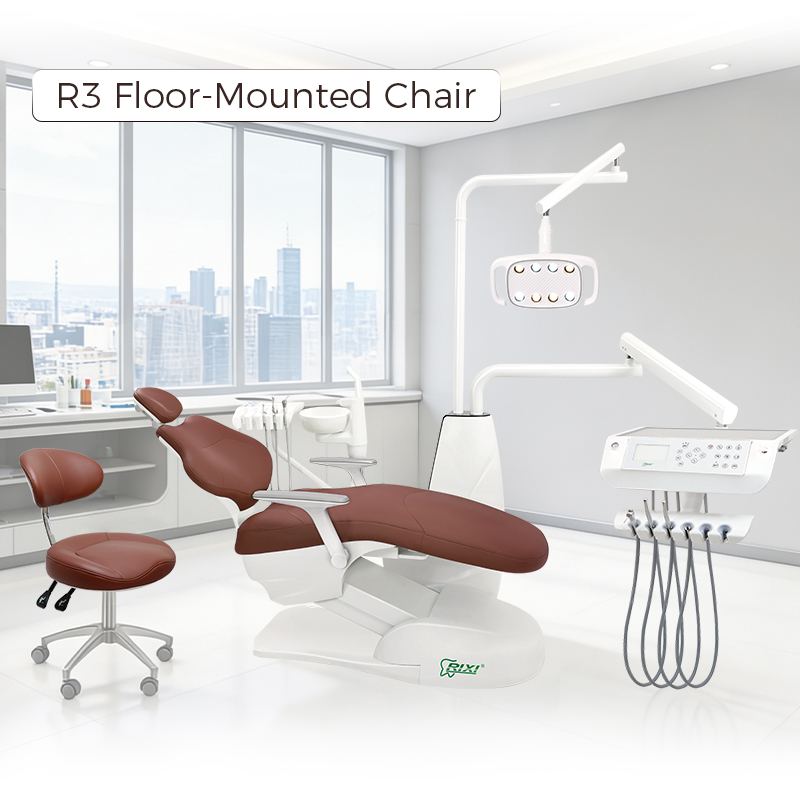
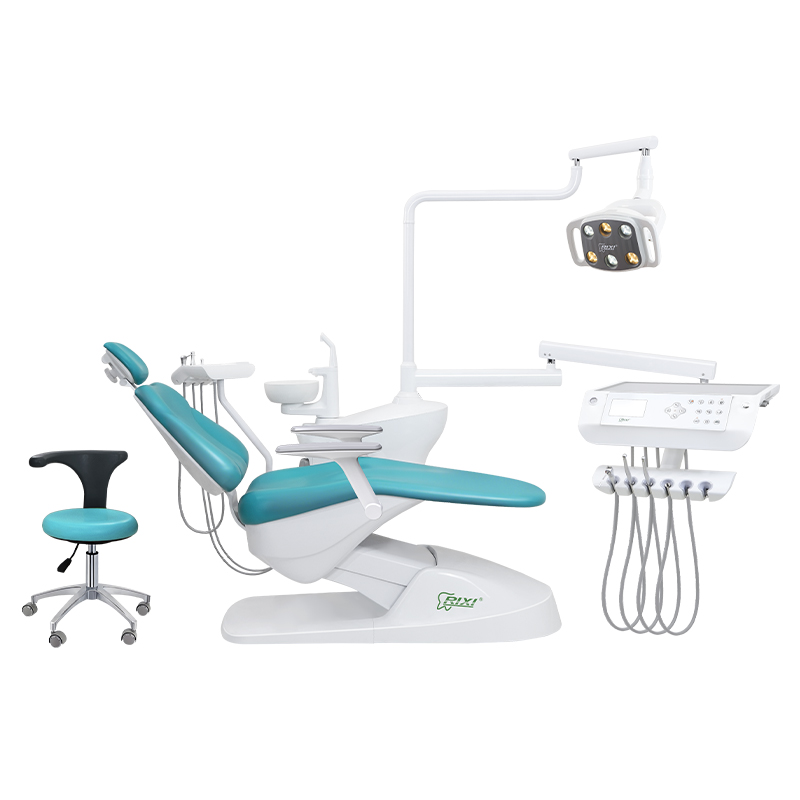
RIXI Medical is a dental equipment manufacturer and supplier based in Foshan, China. Buyers comparing the R3 floor-mounted chair, the updated R1 configuration, or the R5 chair package should request model-specific capacity and dimensional evidence. These links illustrate available configurations; they do not, by themselves, establish bariatric suitability.
Use a controlled sample and receiving checklist
For a distributor program or multi-chair project, a documented sample review can reduce later disagreement. Confirm that the sample carries the approved model identity, options, upholstery, accessories, and labels. Review dimensions and access against the signed drawing. Operate the permitted movement range according to the supplier instructions and record any interference between the chair, armrests, delivery system, assistant components, and room layout.
Receiving inspection should repeat the identity checks rather than treat the shipping carton as proof of compliance. Photograph labels, carton condition, major assemblies, and included accessories. Reconcile quantities against the packing list, note damage or missing items, and keep unresolved issues in a written discrepancy register. Functional or load-related acceptance must follow the supplier’s documented procedure and locally applicable professional requirements; improvised testing can damage equipment or create safety risks.
Questions to settle before issuing the purchase order
- Which exact model and revision carries the quoted rated load?
- Does the rating apply to the complete ordered configuration, including the selected backrest, armrests, and accessories?
- What are the usable seat, backrest, entry, and armrest-opening dimensions?
- What room, utility, floor, anchoring, delivery-route, and service clearances are required?
- Which drawings, test references, labels, instructions, and replacement-parts records will be supplied?
- How will the clinic or distributor document sample approval and receiving acceptance?
For a controlled comparison, request the capacity statement, dimensional drawings, configuration list, installation requirements, and packing scope in one document set. RIXI buyers can request model-specific specifications or technical drawings before approving a clinic project, distributor order, or OEM/ODM discussion.
Frequently asked questions
Is every wide dental chair a bariatric dental chair?
No. Visible width does not establish structural capacity. Buyers should verify both usable dimensions and the documented rated load for the exact model and revision.
Can a product photograph confirm the chair’s load rating?
No. A photograph can help identify the configuration, but the rating should come from the model-specific specification and supporting supplier records.
Should the room plan be reviewed before ordering?
Yes. Review movement, entry and transfer space, delivery and assistant assemblies, service panels, utilities, floor conditions, and the packed delivery route before fixed work is completed.
What should distributors preserve for repeat orders?
Keep the approved model and revision, drawings, option list, upholstery reference, labels, packing list, sample record, acceptance evidence, and parts identity. These records help prevent silent substitutions.
Need Dental Equipment Pricing or Configuration Details?
Contact RIXI Medical for model comparison, distributor pricing, packaging information, OEM/ODM requirements and after-sales support.
Request Product Information